Is DA a Legally Enforceable Right? SC Directs West Bengal to Pay Employee Arrears from 2008–19
Synopsis
The Supreme Court has ruled that West Bengal government employees are entitled to Dearness Allowance as a legally enforceable right. This landmark decision mandates the state to pay salary arrears dating back over a decade, highlighting the significance of legal rights in the face of fiscal constraints.
Key Takeaways
West Bengal employees have a legally enforceable right to DA.
The state must pay arrears from 2008 to 2019 .
A committee will oversee the payment process.
The decision emphasizes legal rights over fiscal constraints.
Payments are to be completed by March 6, 2026 .
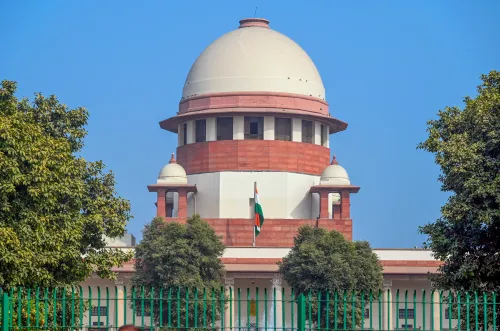
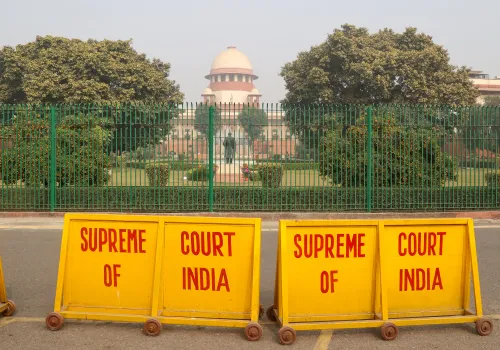
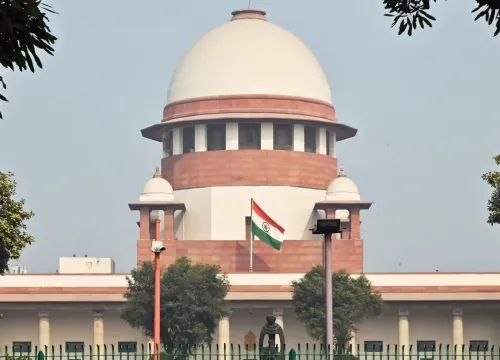
New Delhi, Feb 5 (NationPress) The Supreme Court of India affirmed on Thursday that employees of the West Bengal government possess the right to Dearness Allowance (DA) as a legally enforceable entitlement under existing statutory pay regulations. As a result, the state government has been ordered to disburse arrears owed for the period spanning from 2008 to 2019.
In conjunction with this ruling, a high-level committee has been established to devise a definitive payment schedule. This committee is composed of Justices Sanjay Karol and Prashant Kumar Mishra, who have partially upheld a 2022 judgment from the Calcutta High Court that favored state employees, asserting that their DA should align with that of Central government employees.
When addressing appeals made by the West Bengal government, the Apex Court clarified that once DA is defined in the West Bengal Services (Revision of Pay and Allowances) Rules, 2009 (ROPA) and linked to the All-India Consumer Price Index (AICPI), the state government cannot modify its calculation through subsequent office memoranda.
The Bench, led by Justice Karol, stressed that receiving Dearness Allowance is a legally enforceable right that has accrued to West Bengal's employees, emphasizing that the AICPI, as referenced in the ROPA Rules, must be adhered to for determining DA.
However, the Supreme Court allowed parts of the state government's appeal, clarifying that employees are not entitled to receive DA biannually simply because the Central government adopts such a practice.
The Supreme Court dismissed the notion that the state's financial limitations could justify withholding DA, stating that fiscal policy cannot supersede legal rights that have already been established.
“When a right is conferred upon an individual, fiscal policy cannot hinder the distribution of such rights,” the Bench articulated.
The Apex Court mandated that employees are entitled to DA arrears from 2008 to 2019, stipulating that any payments made under interim orders or this ruling cannot be reclaimed, even if future laws change.
Furthermore, a committee has been formed to oversee the execution of these directives while balancing the statutory rights of employees with the financial autonomy of the state government.
This committee will be chaired by former Supreme Court Justice Indu Malhotra and will also include former Jharkhand High Court Chief Justice Tarlok Singh Chauhan, former judge Gautam Bhiduri, and the Comptroller and Auditor General of India or a senior officer designated by the CAG. The committee is responsible for assessing the total amount due and establishing a phased payment plan in consultation with the state government. The Supreme Court has set a deadline of March 6, 2026, for this exercise, with the first payment installment due by March 31, 2026.
The Supreme Court also instructed the West Bengal government to provide comprehensive logistical support to the committee and to cover all associated expenses. Following the payment of the initial installment, the committee is to present a final report detailing the payment schedule and compliance status.
Point of View
This ruling by the Supreme Court underscores the importance of upholding legal rights in the face of financial challenges. It reinforces the accountability of state governments to fulfill their obligations towards employees, emphasizing a commitment to justice and fairness in public service.
NationPress
14 Oct 2026
Frequently Asked Questions
What did the Supreme Court rule regarding DA for West Bengal employees?
The Supreme Court ruled that West Bengal government employees have a legally enforceable right to Dearness Allowance (DA) and directed the state to pay arrears from 2008 to 2019.
What is the significance of the court's decision?
The decision reinforces the principle that legal rights cannot be disregarded due to fiscal constraints, ensuring that employees receive their entitled benefits.
Who will oversee the payment schedule for the arrears?
A high-level committee, chaired by former Supreme Court Justice Indu Malhotra, has been established to monitor the payment schedule and ensure compliance.