What Will the Supreme Court Decide in West Bengal's Dearness Allowance Case?
Synopsis
The Supreme Court is on the verge of delivering a crucial verdict regarding West Bengal's Dearness Allowance dispute. With the state government challenging a Calcutta High Court ruling, the outcome could significantly impact government employees. Will the decision be favorable for them? Stay tuned for updates!
Key Takeaways
The Supreme Court will deliver a significant ruling on Dearness Allowance .
The case began at the state administrative tribunal before moving to the Calcutta High Court .
The Calcutta High Court ruled in favor of employees, stating that Dearness Allowance is a right.
The state government has contested this ruling in the Supreme Court.
The outcome could greatly impact the financial well-being of state government employees.
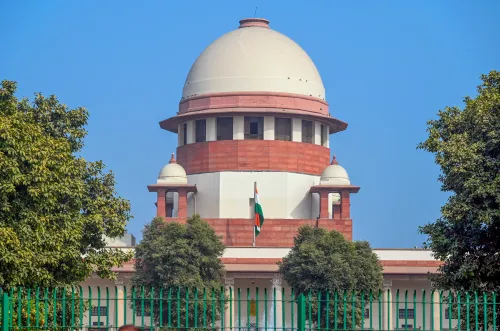
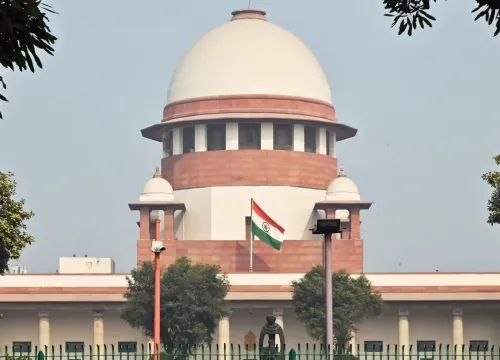
Kolkata, Feb 5 (NationPress) The Supreme Court is set to announce its ruling on Thursday concerning various petitions, notably one from the West Bengal government challenging the Calcutta High Court's 2022 decision. This ruling mandated that the state government provide Dearness Allowance equal to that of central government employees and settle arrears dating back to July 2009.
The decision will be revealed by a Division Bench of the apex court, comprising Justice Sanjay Karol and Justice Prashant Kumar Mishra.
The Supreme Court concluded the hearings on this case in September of the previous year, after which the Division Bench reserved its verdict. After a lengthy wait of nearly five months, the court will finally issue its ruling this Thursday.
Previously, the apex court instructed the state government to pay 25 percent of the overdue Dearness Allowance within six months. However, the government failed to fulfill this requirement and requested an additional six months for compliance.
Following this request, hearings were held daily for three days in August of the previous year, with further discussions in September leading to the Division Bench reserving its verdict.
The extended legal struggle regarding the payment of Dearness Allowance began at the state administrative tribunal before advancing to the Calcutta High Court.
In 2022, the Calcutta High Court sided with government employees, asserting that Dearness Allowance is a rightful claim for state employees and that they should receive it on par with their central government counterparts.
Nonetheless, the state government contested this ruling in the Supreme Court, arguing that the payment of Dearness Allowance is not obligatory nor a fundamental right for employees, thus not requiring alignment with the central rate.
The state’s legal representatives further contended that the financial frameworks of the central and state governments differ, justifying variations in Dearness Allowance rates and rendering direct comparisons inappropriate.
It remains to be seen if the Supreme Court's final ruling will bring positive news for state government employees.
Point of View
We recognize the critical nature of this case for the employees of West Bengal. The Supreme Court's forthcoming decision could reshape the landscape of employee rights within the state. It is essential for the government to consider the implications of their stance on such fundamental issues, reflecting a commitment to fair treatment and equitable compensation for all employees.
NationPress
20 Sept 2026
Frequently Asked Questions
What is the main issue in the Supreme Court case?
The main issue revolves around the West Bengal government's challenge to a Calcutta High Court ruling that mandated the state to pay its employees Dearness Allowance at the same rate as central government employees.
When will the Supreme Court deliver its verdict?
The Supreme Court is expected to announce its verdict on Thursday, following a lengthy legal process.
What was the Calcutta High Court's ruling in 2022?
In 2022, the Calcutta High Court ruled that Dearness Allowance is a right of state government employees and they should receive it on par with central government employees.
What is Dearness Allowance?
Dearness Allowance is a cost of living adjustment allowance paid to government employees to offset the impact of inflation.
Why did the state government challenge the ruling?
The state government argued that payment of Dearness Allowance is not mandatory and that the financial structures of the state and central government differ, justifying different rates.