SC reserves verdict on Pawan Khera's anticipatory bail plea in Assam case
Synopsis
The Supreme Court has reserved its verdict on whether Congress leader Pawan Khera deserves pre-arrest protection in a case that pits personal liberty under Article 21 against Assam Police's claim that forged documents — potentially with foreign involvement — demand custodial interrogation. The outcome could set a significant precedent on the threshold for anticipatory bail in politically sensitive cases.
Key Takeaways
The Supreme Court reserved its verdict on 30 April 2025 on Pawan Khera's anticipatory bail plea.
The case involves an Assam Police FIR alleging Khera made false claims about Riniki Bhuyan Sarma , including assertions about multiple foreign passports and overseas assets.
Senior advocate Abhishek Manu Singhvi argued that most offences in the FIR are bailable and custodial interrogation is disproportionate.
Solicitor General Tushar Mehta contended that forged documents — including a potentially US-registered company — require custodial investigation and alleged possible foreign interference.
The Gauhati High Court had earlier rejected Khera's bail plea, holding the case went beyond defamation simpliciter.
The FIR invokes provisions of the Bharatiya Nyaya Sanhita covering false statements, cheating, forgery, and defamation.
The Supreme Court on Thursday, 30 April 2025, reserved its verdict on a plea filed by Congress leader Pawan Khera challenging the Gauhati High Court's rejection of his anticipatory bail application in a criminal case registered by Assam Police over his alleged remarks against Riniki Bhuyan Sarma, wife of Assam Chief Minister Himanta Biswa Sarma.
Background of the Case
The First Information Report (FIR) registered by Assam Police invokes provisions of the Bharatiya Nyaya Sanhita (BNS) relating to false statements, cheating, forgery, and defamation. The charges stem from allegations that Khera publicly claimed Riniki Bhuyan Sarma possessed multiple foreign passports and undisclosed overseas assets — assertions the Assam government describes as fabricated. The Gauhati High Court had earlier rejected Khera's anticipatory bail plea, holding that the matter could not be treated as defamation simpliciter and that prima facie materials disclosed cognisable offences beyond mere reputational harm.
Arguments for the Petitioner
A Bench of Justices J.K. Maheshwari and Atul S. Chandurkar heard extensive submissions from senior advocate Abhishek Manu Singhvi, appearing for Khera. Singhvi argued that the essence of the case pertained to allegations of defamation and reputational harm, which did not justify custodial arrest or interrogation. He contended that even if the allegations were assumed at face value, there was no legal necessity for arrest, particularly when adequate safeguards could be imposed to ensure Khera's cooperation with the investigation.
Point of View
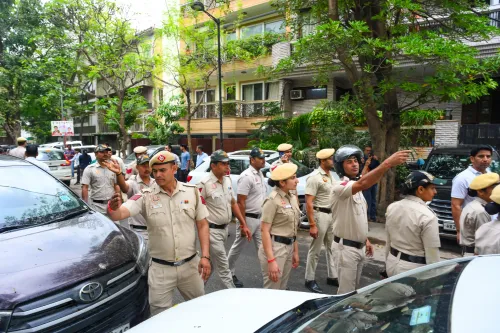
But the Solicitor General's counter — forged documents, possible foreign involvement, electoral interference — raises the stakes considerably beyond a routine defamation dispute. The Gauhati High Court's refusal to treat this as defamation simpliciter is significant; it signals that the judiciary, at the first appellate level, found prima facie substance in the graver charges. What the Supreme Court's reserved verdict will ultimately test is whether political context — 50-60 Assam Police personnel descending on Delhi, a Chief Minister's public rhetoric — is legally relevant to the bail calculus, or whether the forgery allegations stand on their own merits.
NationPress
19 Sept 2026
Frequently Asked Questions
Why has Pawan Khera approached the Supreme Court?
Pawan Khera approached the Supreme Court after the Gauhati High Court rejected his anticipatory bail application in a criminal case registered by Assam Police. The case relates to his alleged public claims that Riniki Bhuyan Sarma, wife of Assam Chief Minister Himanta Biswa Sarma, held multiple foreign passports and undisclosed overseas assets.
What are the charges against Pawan Khera in the Assam FIR?
The FIR invokes provisions of the Bharatiya Nyaya Sanhita relating to false statements, cheating, forgery, and defamation. Assam Police allege that documents Khera publicly displayed — purported passport copies belonging to the Chief Minister's wife — were doctored and fabricated.
What did the Solicitor General argue against granting bail?
Solicitor General Tushar Mehta argued that custodial interrogation is essential to identify who forged the documents, uncover accomplices, and investigate whether foreign elements were involved in fabricating materials to interfere with the electoral process. He also alleged that Khera had been absconding since the FIR was registered.
What was Abhishek Manu Singhvi's key argument in favour of bail?
Singhvi argued that most offences in the FIR are bailable in nature and that custodial arrest was disproportionate, asserting personal liberty under Article 21 of the Constitution. He also described the deployment of 50-60 Assam Police personnel in Delhi as excessive for what was essentially a defamation-linked dispute.
Why did the Gauhati High Court reject Khera's anticipatory bail?
The Gauhati High Court held that the matter could not be treated as defamation simpliciter and that prima facie materials on record disclosed cognisable offences beyond reputational harm, including forgery and fabrication of official documents.