Supreme Court upholds acquittal of 20 accused in Maharashtra Holi murder case
Synopsis
A decade after a deadly Holi-day clash in Washim, Maharashtra, the Supreme Court has shut the door on restoring convictions against 20 accused — citing tutored witnesses, a medically improbable prosecution story, and a High Court verdict that, while imperfect, crossed no threshold for reversal. The ruling underscores how evidentiary gaps can unravel even a trial court’s life-sentence verdict.
Key Takeaways
The Supreme Court on Monday dismissed appeals by the victim’s mother and the Maharashtra government against the acquittal of 20 accused in the 2014 Washim Holi murder case .
The trial court had convicted all 20 accused and sentenced them to life imprisonment for the murder of Avinash Chavhan on 18 March 2014 .
The Bombay High Court acquitted all accused in 2022 , citing failure of prosecution to prove guilt beyond reasonable doubt.
The apex court found six prosecution witnesses gave strikingly identical testimonies , raising tutoring concerns, and that medical evidence contradicted the prosecution’s version of the attack.
The Bench held the acquittal could not be reversed under Article 136 as it was a “reasonable and possible view” based on evidence on record.
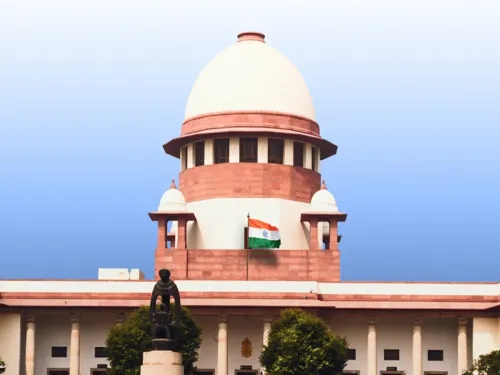
The Supreme Court on Monday declined to disturb the acquittal of 20 persons accused in a 2014 murder case stemming from a Holi-day clash in Washim district, Maharashtra, ruling that the Bombay High Court's decision to extend the benefit of doubt was a “reasonable and possible view” grounded in the evidence on record. The apex court dismissed separate appeals filed by the victim’s mother and the Maharashtra government against the High Court’s 2022 judgment.
Background: The 2014 Holi Clash
The incident occurred on 18 March 2014 in Washim district, triggered by an earlier altercation over the playing of a DJ during Holi celebrations. The trial court had convicted all 20 accused and sentenced them to life imprisonment for the murder of Avinash Chavhan and for attempting to murder three other injured victims. The Bombay High Court, after reappreciating the evidence, acquitted all the accused in 2022, finding that the prosecution had failed to prove its case beyond reasonable doubt.
Why the Supreme Court Refused to Interfere
A Bench of Justices Sanjay Karol and AG Masih identified significant inconsistencies between the eyewitness accounts and the medical evidence as the central basis for upholding the acquittal. The court noted that six prosecution witnesses had given strikingly identical testimonies — a pattern it found deeply problematic.
“The High Court was entitled to regard it as a circumstance raising a serious doubt as to whether these witnesses were speaking to what they had seen or to what they had been tutored to say. It is a settled principle that an identical and stereotyped version bears the imprint of tutoring rather than of truthful recollection,” the Justice Karol-led Bench observed.
Medical Evidence and Prosecution Gaps
The court also upheld the High Court’s reliance on medical evidence, which did not support the prosecution’s claim that four accused had repeatedly struck the deceased on the head with iron pipes. “The High Court held it to be impossible that four persons, continuously giving repeated blows upon the head with different weapons, would land every blow upon the same site. This conclusion drawn by the High Court is not the product of conjecture, but it is an inference drawn from the medical evidence,” the judgment stated.
The Supreme Court further recorded that the High Court had taken into account the absence of independent witnesses despite the incident occurring in a residential locality, unexplained delays in recording eyewitness statements, discrepancies in the FIR, lapses in handling case property, and the prosecution’s failure to explain injuries sustained by some of the accused.
Legal Standard Applied
Reiterating settled principles governing appeals against acquittal, the Bench held that an acquittal can be reversed only where it is shown to be perverse or based on a complete misreading of evidence. “It is, at the least, a reasonable and possible view and once it is such a view, it is not liable to be interfered with under Article 136 of the Constitution of India by this Court. The threshold for interference is not crossed in the present case,” the apex court observed.
The court acknowledged that the High Court’s reasoning was “not free from imperfection” but held that any marginal shortcomings did not undermine its ultimate conclusion, which rested on the medical improbability of the prosecution’s version and the unsafe identification of a large assembly based on interested and stereotyped testimony.
Outcome
“Therefore, in our considered view, the acquittal recorded by the High Court is not the product of a perverse or capricious appreciation of the evidence but a reasoned conclusion resting upon the material on record,” the court said, dismissing both appeals and declining to restore the convictions and life sentences imposed by the trial court. The ruling effectively brings to a close a decade-long legal battle over the 2014 Washim Holi violence.
Point of View
It raises questions about whether the trial court’s original conviction was ever on solid ground. For the victim’s family, a decade of litigation ends with no conviction standing — a reminder that procedural and evidentiary rigour in the early stages of a case can determine its outcome long before any appeal is filed.
NationPress
18 Sept 2026
Frequently Asked Questions
What is the 2014 Washim Holi murder case?
The case involves the murder of Avinash Chavhan on 18 March 2014 in Washim district, Maharashtra , during a clash that erupted over the playing of a DJ during Holi celebrations. The trial court convicted 20 accused and sentenced them to life imprisonment, but the Bombay High Court acquitted all of them in 2022.
Why did the Supreme Court uphold the acquittal?
The Supreme Court found that the Bombay High Court’s acquittal was a ‘reasonable and possible view’ supported by evidence. Key reasons included strikingly identical testimonies from six prosecution witnesses suggesting tutoring, and medical evidence that contradicted the prosecution’s account of the assault.
What legal standard did the Supreme Court apply?
The court applied the settled principle under Article 136 of the Constitution that an acquittal can be reversed only if it is perverse or based on a complete misreading of evidence. Since the High Court’s view was reasonable and evidence-based, the threshold for interference was not met.
Who filed appeals against the acquittal?
Two separate appeals were filed — one by the victim’s mother and one by the Maharashtra government — both challenging the Bombay High Court’s 2022 judgment. The Supreme Court dismissed both.
What happens now after the Supreme Court’s ruling?
With the Supreme Court dismissing both appeals, the acquittal of all 20 accused stands final. The convictions and life sentences imposed by the trial court will not be restored, effectively concluding the decade-long legal proceedings in this case.