Senate Hearing on Homeland Security Raises Alarm Over Rising Threats to Indian American Communities
Synopsis
A recent Senate hearing highlighted critical discussions around domestic security and law enforcement, with implications for Indian American communities. Nominee Markwayne Mullin faces scrutiny as concerns about rising threats, including cyberattacks and violence against religious sites, dominate the conversation.
Key Takeaways
Escalating Threats: Senators noted that risks are at an all-time high, with new challenges emerging.
Security for Worship Places: There's a growing emphasis on protecting religious institutions.
Cybersecurity Concerns: Cuts to cybersecurity resources have raised alarms among lawmakers.
Indian American Community Impact: The issues discussed have direct implications for Indian Americans.
Need for Balance: The hearing highlighted the tension between security measures and civil liberties.
Washington, March 19 (NationPress) A high-stakes Senate hearing regarding Homeland Security Secretary nominee Markwayne Mullin revealed escalating worries about domestic safety, law enforcement authority, and emerging threats—issues that are particularly significant for Indian American communities in the United States.
During Mullin's confirmation session on Wednesday (local time), Senators repeatedly emphasized that "the risks to our country have never been greater," referencing recent incidents of violence, cyberattacks, and activities linked to foreign entities.
The urgency of the discussion intensified following mentions of a recent attack on a Michigan synagogue and a cyber breach attributed to an Iranian-affiliated group. Senators characterized a swiftly changing threat landscape, encompassing both physical and digital dangers.
For Indian American communities, these concerns resonate on a personal level.
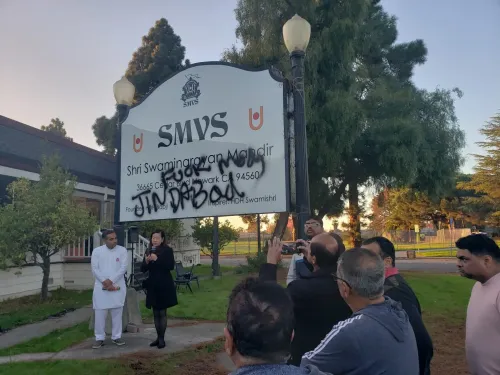
Places of worship, such as Hindu temples and Sikh gurdwaras, have increasingly sought enhanced security measures in recent years. The hearing underscored the importance of federal programs aimed at safeguarding these institutions.
"Collaboration is essential," Mullin stated, addressing worries about assaults on religious sites. He expressed willingness to collaborate with legislators to enhance security grants intended for at-risk communities.
Senators remarked that religious establishments throughout the US are allocating substantial resources toward private security measures. This includes diaspora communities that often depend on federal assistance for surveillance systems, barriers, and emergency preparedness.
The hearing also raised broader issues concerning cyber threats.
Criticism was directed at the cuts to cybersecurity personnel and resources within the Department of Homeland Security. Lawmakers cautioned that adversaries are "intensifying their cyber assaults against the United States."
This issue has notable connections to India.
Professionals of Indian descent play a crucial role in the US technology and cybersecurity sectors. Any restructuring or staffing modifications within federal cyber agencies could indirectly impact collaboration, hiring trends, and bilateral cyber initiatives between Washington and New Delhi.
Mullin affirmed that the department would prioritize the recruitment of "the best and brightest" to tackle cyber threats. He highlighted the necessity of a skilled workforce to counter evolving challenges.
The hearing also laid bare significant divisions regarding the balance between security and civil liberties.
Democratic lawmakers expressed concerns about the actions of immigration enforcement agencies, including the use of force and operations within communities. Conversely, Republicans insisted that stronger enforcement is vital for national security.
Mullin positioned himself as a mediator between the two perspectives.
He remarked that the department's primary mission is "to safeguard the homeland," while also stressing the importance of rebuilding trust. "We aim to restore peace of mind and confidence in the agency," he stated.
This balance is especially pertinent for diaspora communities.
Indian-Americans, among the fastest-growing and economically influential immigrant groups in the US, are deeply woven into sectors such as technology, healthcare, and academia. Simultaneously, they remain attuned to changes in law enforcement practices and public safety issues.
The hearing also shed light on operational challenges within the DHS.
Mullin noted the strain on the workforce, pointing out that tens of thousands of employees continued to work without pay during the current funding standstill. "They show up every single day to fulfill their duties," he remarked.
Lawmakers warned that such conditions could compromise readiness amid heightened risks.
The discussion also encompassed emergency response and disaster management—areas where coordination between federal and local agencies is crucial. Mullin stated that reforms are necessary to expedite federal aid and enhance efficiency.
"It is unacceptable for reimbursement to take years," he concluded.
Point of View
Particularly for Indian American communities. As threats escalate, the balance between security measures and civil liberties remains a contentious issue that demands careful consideration.
NationPress
19 Sept 2026
Frequently Asked Questions
What were the main issues addressed during the Senate hearing?
The hearing focused on domestic security, law enforcement powers, rising threats, and the implications for Indian American communities.
Why is the safety of places of worship a concern?
Recent attacks on religious sites, including synagogues and temples, have prompted increased calls for enhanced security measures.
How do cyber threats relate to the hearing?
Lawmakers expressed concerns over cybersecurity cuts and the increasing frequency of cyberattacks from foreign adversaries.
What role do Indian-origin professionals play in U.S. cybersecurity?
Indian-origin professionals are integral to the U.S. technology and cybersecurity sectors, influencing collaboration and initiatives.
What is the significance of Mullin's comments on restoring trust?
Mullin emphasized the importance of rebuilding trust in the agency amid concerns about civil liberties and enforcement practices.