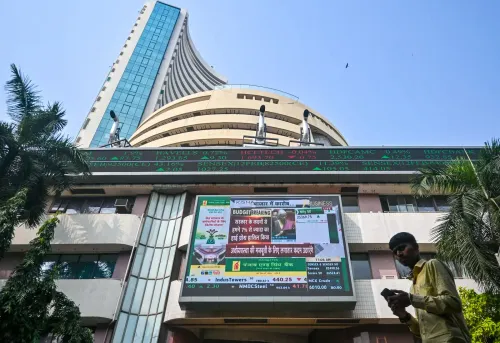
Sensex falls 374 points, Nifty below 24,000 as oil prices and bond yields weigh
Synopsis
Indian equities logged a third straight day of losses on 2 September, with the Sensex shedding 374 points and the Nifty slipping below 24,000. The double threat of surging crude oil prices and rising bond yields has put bulls firmly on the back foot, and analysts warn the correction could deepen to the 23,700–23,730 zone before any meaningful recovery.
Key Takeaways
Sensex fell 373.93 points (0.49%) to close at 76,570.35 on 2 September .
Nifty50 dropped 141.35 points (0.59%) to settle at 23,914.45 , slipping below the 24,000 mark.
This marks the third consecutive session of losses for Indian benchmark indices.
Eicher Motors , Wipro , and Bajaj Auto were the biggest Nifty losers; Nifty Auto fell more than 2% .
Analysts see further downside risk toward 23,700–23,730 if the index stays below 24,000 .
The Nifty Oil and Gas index was a rare gainer, benefiting from the crude price spike.
The BSE Sensex extended its losing streak to a third consecutive session on Wednesday, 2 September, closing 373.93 points or 0.49% lower at 76,570.35, as a sharp rise in crude oil prices stoked fresh inflation fears and climbing bond yields eroded the appeal of equities. The broader Nifty50 mirrored the weakness, shedding 141.35 points or 0.59% to settle at 23,914.45 — slipping below the psychologically significant 24,000 mark.
What Drove the Selloff
The twin pressures of elevated crude oil prices and rising bond yields kept investor sentiment firmly cautious through the session. Higher oil prices raise the spectre of renewed inflationary pressure on the domestic economy, squeezing corporate margins and household consumption simultaneously. Rising yields, meanwhile, make fixed-income instruments comparatively more attractive, prompting rotation away from equities.
This is the third consecutive session of losses for Indian benchmark indices, underscoring a sustained shift in risk appetite rather than a one-off reaction.
Biggest Losers on the Nifty
Among Nifty50 constituents, Eicher Motors, Wipro, and Bajaj Auto emerged as the steepest decliners, amplifying the drag on the headline index. The Nifty Auto index bore the sharpest sectoral blow, falling more than 2% — the worst-performing sector of the session. The Nifty IT and Nifty Media indices also underperformed.
Broader Market and Sectoral Snapshot
The broader market offered little relief. The Nifty MidCap index closed 0.53% lower, while the Nifty SmallCap index declined 0.33%, signalling that selling pressure was not confined to large-caps alone. The only notable exception was the Nifty Oil and Gas index, which bucked the broader trend to emerge as one of the session's better-performing sectoral indices — a direct beneficiary of the crude price surge.
Technical Outlook and What Analysts Say
Market analysts flagged that bearish momentum is likely to persist in the near term. A sell-on-rise strategy is seen as the preferred approach as long as the Nifty remains below the 24,000 level. On the downside, analysts warned that the correction could extend toward the 23,700–23,730 band if selling pressure intensifies.
With global cues still unfavourable — particularly on the oil and rates front — markets are likely to remain on edge heading into the next few sessions.
Point of View
Both of which deteriorate when oil runs hot. Rising bond yields compound the problem by raising the cost of capital for leveraged businesses and making equities look expensive on a relative basis. The market is essentially pricing in a scenario where the Reserve Bank of India's rate-cut window narrows further. If crude does not retreat, the 23,700 support band analysts are citing may not hold for long.
NationPress
17 Oct 2026
Frequently Asked Questions
Why did the Sensex and Nifty fall on 2 September?
The Sensex fell 373.93 points and the Nifty dropped 141.35 points on 2 September primarily due to a spike in crude oil prices, which raised inflation concerns, and rising bond yields, which made equities less attractive to investors. It was the third consecutive session of losses for Indian benchmark indices.
What is the Nifty technical outlook after the fall?
Analysts recommend a sell-on-rise strategy as long as the Nifty remains below the 24,000 level. On the downside, the correction could extend toward the 23,700–23,730 zone, according to market experts.
Which sectors and stocks were the worst hit?
The Nifty Auto index was the worst-performing sector, falling more than 2%. Eicher Motors, Wipro, and Bajaj Auto were the biggest individual losers on the Nifty. The Nifty IT and Nifty Media indices also underperformed during the session.
Were there any gainers amid the broad market weakness?
The Nifty Oil and Gas index bucked the broader trend and was among the better-performing sectoral indices on the day, directly benefiting from the rise in crude oil prices.
How did the broader market perform?
The broader market also remained under pressure, with the Nifty MidCap index closing 0.53% lower and the Nifty SmallCap index declining 0.33%, indicating that the selling was not limited to large-cap stocks.