Seoul court orders North Korea to pay ₩44.6 billion over 2020 Kaesong liaison office demolition
Synopsis
For the first time, a South Korean court has ordered North Korea to pay ₩44.6 billion over the dramatic 2020 demolition of the Kaesong liaison office — but with no enforcement mechanism, the ruling is historic in symbolism and near-impossible to execute.
Key Takeaways
Seoul Central District Court on 16 September 2026 ordered North Korea to pay 44.6 billion won (US$32.5 million) in compensation.
The award covers ₩10.25 billion for the liaison office building and ₩34.45 billion for an adjacent damaged support facility.
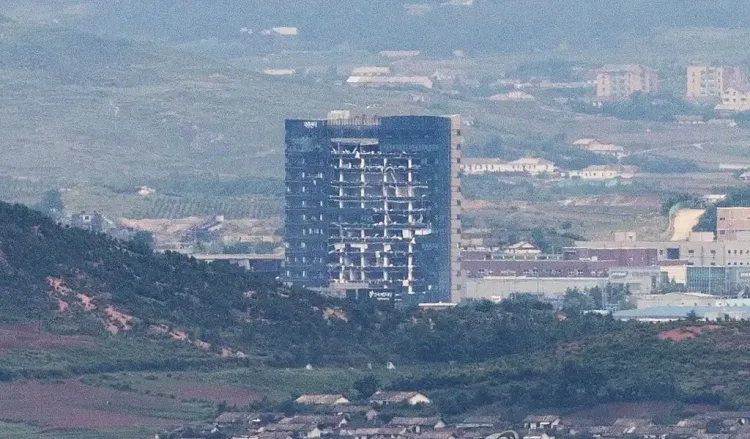
North Korea blew up the Kaesong liaison office on 16 June 2020 , protesting Seoul's failure to stop anti-Pyongyang leaflet campaigns by defectors.
The lawsuit, filed by South Korea's unification ministry in June 2023 , was the first legal action the South Korean government has taken against the North.
South Korea has no enforcement mechanism to compel Pyongyang to pay, making actual collection highly unlikely.
The unification ministry said it 'respects the ruling' and called for inter-Korean dialogue to resume.
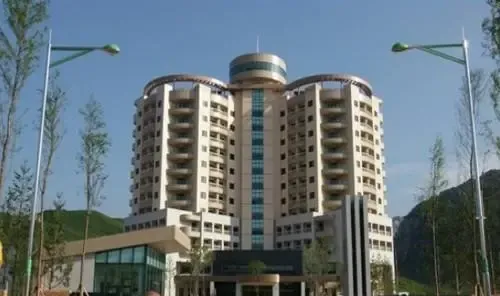
A Seoul Central District Court ruled on Wednesday, 16 September 2026, that North Korea must pay approximately 44.6 billion won (US$32.5 million) in compensation to the South Korean government for the 2020 demolition of the inter-Korean liaison office building in the North's border town of Kaesong. The verdict came three years and three months after Seoul first filed the lawsuit — and marks the first time South Korea's government has taken legal action against Pyongyang over the incident.
What the Court Decided
The court effectively granted the full amount of 44,626,410,722 won claimed by the plaintiff, according to reports. No specific reasoning was provided alongside the ruling. North Korea sent no representative to the proceedings, and the verdict is expected to stand unchallenged, as Pyongyang is unlikely to respond or appeal.
Background: How the Liaison Office Was Destroyed
The two Koreas had jointly opened the liaison office in Kaesong in September 2018, during a period of rare diplomatic warmth following inter-Korean summit talks in April 2018. The office was designed to facilitate cross-border exchange and cooperation. It suspended operations in January 2020 amid concerns over the Covid-19 pandemic.
On 16 June 2020, North Korea blew up the building in protest over Seoul's failure to prevent North Korean defectors from sending anti-Pyongyang leaflets across the border. South Korea's unification ministry subsequently filed a lawsuit against the North in June 2023, seeking compensation for the destruction — a historically unprecedented step.
Scale of the Damages Claimed
The ministry estimated total damages at 10.25 billion won for the liaison office building itself and 34.45 billion won for an adjacent support facility that was seriously damaged in the demolition, bringing the combined claim to the full 44.6 billion won the court has now awarded.
The Enforcement Challenge
Despite the legal victory, actually collecting the compensation is a different matter. South Korea has no enforceable mechanism to compel Pyongyang to make the payment — a predicament that has dogged previous civil lawsuits brought against North Korea. The symbolic weight of the ruling may therefore exceed its practical financial impact.
Seoul's Response and Outlook
South Korea's unification ministry said it 'respects the court's ruling and will seek necessary measures.' In a statement, the ministry added: 'The ministry hopes that inter-Korean dialogue resumes, and the two Koreas can resolve all pending issues through dialogue.' The ruling underscores the depth of the diplomatic freeze between Seoul and Pyongyang, and experts note that any realistic prospect of collection hinges on a political thaw that currently appears remote.
Point of View
And Pyongyang's silence in the proceedings signals exactly the contempt it holds for Seoul's judiciary. What the case does achieve is establishing a legal precedent: state-to-state compensation claims against North Korea are viable in South Korean courts. That precedent could matter if inter-Korean relations ever normalise and asset settlement becomes a negotiating issue. For now, the ruling functions more as diplomatic messaging than as a mechanism for restitution — a reminder, framed in won, of the cost of Pyongyang's provocations.
NationPress
16 Sept 2026
Frequently Asked Questions
What did the Seoul court rule regarding North Korea and the Kaesong liaison office?
The Seoul Central District Court ruled on 16 September 2026 that North Korea must pay 44.6 billion won (US$32.5 million) in compensation to the South Korean government for demolishing the inter-Korean liaison office in Kaesong in June 2020. The court granted the full amount claimed by the plaintiff.
Why did North Korea demolish the Kaesong liaison office in 2020?
North Korea blew up the building on 16 June 2020 in protest over Seoul's failure to stop North Korean defectors from sending anti-Pyongyang leaflets across the border. The office had already suspended operations in January 2020 due to Covid-19 concerns.
Is this the first time South Korea has sued North Korea?
Yes. The unification ministry's lawsuit, filed in June 2023, was the first time the South Korean government had taken direct legal action against North Korea. Previous civil suits had been brought by private citizens, but a state-level claim was unprecedented.
Will South Korea actually be able to collect the compensation from North Korea?
Collection is considered highly unlikely. South Korea has no legal or practical mechanism to compel Pyongyang to make the payment, a problem that has frustrated earlier civil lawsuits against the North as well. The ruling's impact is largely symbolic and precedent-setting.
What was the Kaesong inter-Korean liaison office?
The liaison office was a joint facility opened in Kaesong, North Korea, in September 2018 to support inter-Korean communication, exchange, and cooperation. It was established during a period of diplomatic engagement following the April 2018 inter-Korean summit, before being demolished by North Korea in June 2020.