ED raids six Kolkata locations in APM Group chit fund case
Synopsis
The Enforcement Directorate simultaneously raided six locations across Kolkata on 16 September, targeting the APM Group — a suspected Ponzi entity accused of collecting unauthorised public deposits via MLM schemes and routing funds through shell companies. With TMC leaders previously arrested in similar probes, the case carries both financial and political weight in West Bengal.
Key Takeaways
The Enforcement Directorate (ED) conducted raids at six locations across Kolkata on 16 September 2026 in a multi-crore chit fund case.
Operations began at 7 am in the Narkeldanga area of North Kolkata, targeting a local businessman's residence.
The suspect Ponzi entity, APM Group , allegedly collected unauthorised public deposits through MLM schemes and routed money via a shell company .
Raids targeted the owner's residence and homes of linkmen ; ED officials were questioning multiple persons at the time of reporting.
West Bengal has been a hotbed of Ponzi fraud since 2012 , with earlier cases involving Saradha Group and Rose Valley Group .
Past ED and CBI investigations into similar West Bengal Ponzi cases have led to arrests of senior Trinamool Congress (TMC) leaders.
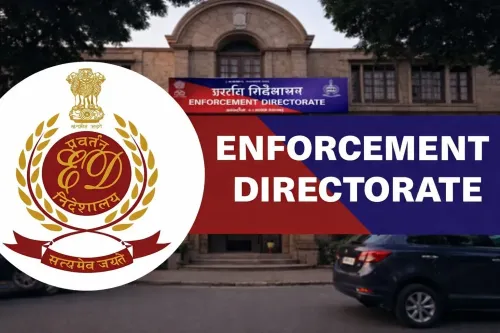
The Enforcement Directorate (ED) on Wednesday, 16 September 2026, launched simultaneous raids and search operations across six locations in Kolkata in connection with a multi-crore chit fund case linked to the APM Group, a suspected Ponzi entity. The coordinated operation, backed by Central Armed Police Forces (CAPF), marks one of the agency's largest single-day enforcement actions in West Bengal in recent months.
How the Raids Unfolded
According to sources aware of the development, the first team of ED officials reached the residence of a Narkeldanga-based businessman in North Kolkata at approximately 7 am. The businessman is learnt to have collected public deposits by promising lucrative returns, subsequently investing them across multiple sectors.
Five additional ED teams then fanned out across North and South Kolkata, conducting simultaneous searches at locations connected to the same case. At the time of reporting, all six operations were still ongoing, with ED officials questioning individuals linked to the Ponzi entity.
The APM Group Modus Operandi
Sources said that public deposits were collected under the banner of APM Group, which then routed funds through a separate corporate entity that reportedly functioned primarily as a shell company. Investigators allege the money was raised through multi-level marketing (MLM) schemes, with investors promised high returns — a classic Ponzi structure.
Critically, sources indicated that these deposits were collected without proper authorisation from the relevant regulatory authorities. Raids on 16 September targeted not only the residence of the entity's owner but also the homes of the owner's linkmen, suggesting the probe has widened beyond the principal accused.
West Bengal's Long History with Ponzi Fraud
The ED's action comes against the backdrop of West Bengal being identified as a persistent hub of Ponzi activity since at least 2012. The state witnessed some of India's largest chit fund collapses, including the Saradha Group run by Sudipto Sen and the Rose Valley Group owned by Gautam Kundu, both of which defrauded millions of depositors.
The ED and the Central Bureau of Investigation (CBI) have maintained long-running separate probes into multiple such entities. The investigations have, over the years, led to the arrest of several senior leaders of the All India Trinamool Congress (TMC) for alleged links to Ponzi operators, making such cases politically charged in the state.
What Happens Next
The outcome of Wednesday's searches — including any seizures, arrests, or fresh summons — is expected to determine the next phase of the probe. Given the pattern of earlier West Bengal Ponzi cases, formal arrests and property attachment orders under the Prevention of Money Laundering Act (PMLA) are among the likely next steps if incriminating evidence is recovered.
Point of View
Raising questions about why similar structures were allowed to operate long after those earlier collapses put regulators on notice. More critically, the political dimension cannot be ignored: past arrests of TMC leaders in Ponzi-linked cases have always generated intense pushback from the state government, potentially complicating federal-state cooperation in the investigation. The real test of this probe's credibility will be whether it reaches the financial beneficiaries — not just the frontmen — and whether any recovered assets are actually returned to depositors.
NationPress
16 Sept 2026
Frequently Asked Questions
What is the APM Group chit fund case in Kolkata?
APM Group is a suspected Ponzi entity in Kolkata that allegedly collected unauthorised public deposits from investors by promising high returns through multi-level marketing schemes, then routed the funds through a shell company. The Enforcement Directorate raided six locations linked to the case on 16 September 2026.
Why did the ED raid six locations in Kolkata on 16 September?
The ED conducted the raids to investigate charges of embezzlement of public deposits collected by APM Group under a chit fund scheme. Investigators allege the deposits were raised without regulatory authorisation and laundered through a shell corporate entity.
Who is being targeted in the Kolkata ED raids?
The primary target is a Narkeldanga-based businessman believed to be the owner or operator of the APM Group Ponzi entity. Raids were also conducted at the residences of the owner's alleged associates, or 'linkmen', with multiple persons being questioned by ED officials.
How does this case connect to West Bengal's earlier Ponzi scams?
West Bengal has been a hotbed for Ponzi schemes since 2012, with high-profile collapses including the Saradha Group run by Sudipto Sen and the Rose Valley Group owned by Gautam Kundu. The ED and CBI have run long-term probes into multiple such entities, and the APM Group case follows a strikingly similar modus operandi.
What legal action could follow the Kolkata ED raids?
If incriminating evidence is recovered, the ED is likely to issue formal arrests and attach properties under the Prevention of Money Laundering Act (PMLA). In past West Bengal Ponzi cases, such raids have been followed by provisional attachment orders and chargesheets targeting both promoters and their financial networks.