South Korea Supreme Court orders Seoul to pay ₩42.1 bn park usage fee
Synopsis
South Korea's Supreme Court has ruled that the Seoul city government must pay 42.1 billion won in usage fees for the land beneath the beloved Gyeongui Line Forest Park — a verdict that exposes the legal fault lines between municipal ambition and state property law, and could reshape how Korean cities structure agreements over publicly used government land.
Key Takeaways
South Korea's Supreme Court on Wednesday upheld the ruling ordering Seoul city government to pay 42.1 billion won (US$29.8 million) to the Korea National Railway .
The fees cover the period from November 2020 to May 2023 for use of land beneath the Gyeongui Line Forest Park .
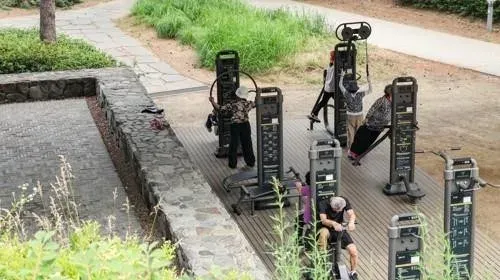
The park, built between 2008 and 2016 , stretches 6.3 kilometres through the Mapo ward and is popularly known as 'Yeontral Park' .
A 2011 revision to the State Property Act enforcement decree outlawed free leases of state-owned land exceeding one year, triggering the dispute.
A district court had initially sided with Seoul in 2024 , but the appellate and Supreme courts overturned that decision.
South Korea's Supreme Court on Wednesday upheld an appellate ruling ordering the Seoul city government to pay 42.1 billion won (approximately US$29.8 million) in usage fees to the Korea National Railway for the land beneath the Gyeongui Line Forest Park. The verdict ends a multi-year legal dispute over whether the municipal government had the right to occupy state-owned land free of charge.
Background to the Dispute
The Gyeongui Line Forest Park is a 6.3-kilometre linear green corridor running through the western ward of Mapo in Seoul. Built between 2008 and 2016 over former above-ground railroad tracks — after sections of the Gyeongui Line were relocated underground — the park quickly became a popular urban retreat, earning the informal nickname 'Yeontral Park'.
In 2010, the Seoul city government and the Korea National Railway, a public entity under the transport ministry, signed an agreement allowing the municipality to use the state-owned land free of charge. That arrangement began to unravel in April 2011, when the Enforcement Decree of the State Property Act was revised to prohibit free leases of state-owned land lasting more than one year.
How the Fee Was Imposed
Following the regulatory change, the Korea National Railway declined to renew the free-use permit. It subsequently levied 42.1 billion won in state property usage fees covering the period from November 2020 to May 2023. The Seoul city government responded by filing a lawsuit in February 2021, seeking to nullify the charges.
Court Rulings at Each Stage
A district court initially ruled in favour of the Seoul city government in 2024, finding merit in the municipality's position. However, an appellate court overturned that decision in February, siding with the Korea National Railway. The Supreme Court on Wednesday affirmed the appellate verdict, stating that it is difficult to recognise that the Seoul city government holds the right to occupy or use the park site free of charge, or that it holds a legal position to justify such occupation or use.
Implications for Seoul and Urban Parks
The ruling sets a significant precedent for how South Korean municipalities manage public infrastructure built on state-owned land. Notably, the Gyeongui Line Forest Park remains open to the public — the dispute concerns financial liability between government bodies, not public access. This case highlights the tension between urban greening initiatives and the legal frameworks governing state property, a challenge not unique to Seoul. With the ruling now final, the Seoul city government will need to settle the outstanding fee, and future agreements of this nature are likely to be structured with greater legal scrutiny.
Point of View
And this case signals that goodwill agreements are no substitute for watertight statutory frameworks.
NationPress
26 Sept 2026
Frequently Asked Questions
What is the Gyeongui Line Forest Park at the centre of this ruling?
The Gyeongui Line Forest Park is a 6.3-kilometre linear public park in the Mapo ward of Seoul, built between 2008 and 2016 over former above-ground railroad tracks after sections of the Gyeongui Line were moved underground. Its popularity earned it the nickname 'Yeontral Park'.
Why does Seoul have to pay the usage fee?
South Korea's Supreme Court ruled that the Seoul city government does not have the legal right to occupy or use the state-owned park land free of charge. A 2011 revision to the Enforcement Decree of the State Property Act prohibited free leases of state-owned land for more than one year, effectively invalidating the original 2010 free-use agreement.
How much must Seoul pay and for what period?
Seoul must pay 42.1 billion won (approximately US$29.8 million) to the Korea National Railway, covering state property usage fees for the period from November 2020 to May 2023.
How did the lower courts rule before the Supreme Court verdict?
A district court ruled in favour of the Seoul city government in 2024, but an appellate court overturned that decision in February. The Supreme Court on Wednesday affirmed the appellate court's ruling against Seoul.
Does this ruling affect public access to the park?
No. The legal dispute is between the Seoul city government and the Korea National Railway over financial liability for land use. The Gyeongui Line Forest Park remains open to the public and is not affected by the court's ruling.