Yoon Suk Yeol sentenced to 30 years in drone infiltration case
Synopsis
A Seoul court has sentenced former South Korean President Yoon Suk Yeol to 30 years in prison — not for the martial law declaration itself, but for engineering the crisis that preceded it. The ruling establishes that the October 2024 drone infiltrations into North Korea were a deliberate provocation designed to manufacture a national security emergency, making this one of the most consequential judicial findings in South Korea's post-war political history.
Key Takeaways
Yoon Suk Yeol sentenced to 30 years in prison by the Seoul Central District Court on 12 June .
Convicted of benefiting the enemy and abuse of power for ordering drone infiltrations into North Korea in October 2024 .
Former Defence Minister Kim Yong-hyun also sentenced to 30 years ; former counterintelligence chief Yeo In-hyung received 15 years .
Court ruled the operation was designed to provoke Pyongyang and justify Yoon's 3 December 2024 martial law declaration.
Yoon previously sentenced to life imprisonment in February 2025 for insurrection; he has appealed both rulings.
Yoon's legal team filed an appeal against Friday's ruling within hours of the verdict.
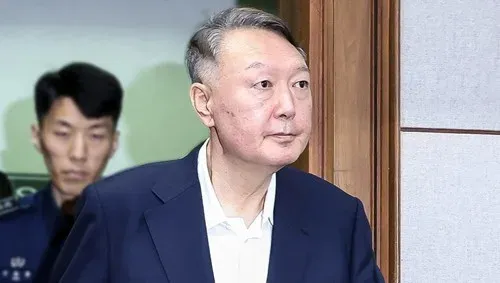
Former South Korean President Yoon Suk Yeol was sentenced to 30 years in prison by a Seoul court on Friday, 12 June, after being found guilty of ordering covert drone infiltrations into North Korea to manufacture cross-border tensions — tensions he allegedly intended to use as justification for his December 2024 martial law declaration. The verdict by the Seoul Central District Court matched the sentencing recommendation made by special counsel Cho Eun-suk.
What the Court Found
The court convicted Yoon on charges of benefiting the enemy and abuse of power, ruling that he had ordered the drone operation in October 2024 specifically to provoke Pyongyang and exploit the resulting security escalation as a pretext for his 3 December martial law declaration, according to reports citing Yonhap News Agency.
'In order to create conditions for martial law, the defendants decided to use the military tactic of psychological warfare to incite North Korea and induce a provocation, and use that to prompt an armed provocation, such as a local conflict, or create a national security crisis situation resulting from heightened military tension,' the court stated in its ruling.
The court further said the actions amounted to 'betraying' the people's expectation that the president and the defence minister would deploy military force only for legitimate purposes, and noted a personal motivation behind the operation.
Co-Accused Also Sentenced
Former South Korean Defence Minister Kim Yong-hyun was also sentenced to 30 years — exceeding the 25-year term sought by the special counsel — for his role in the drone operations. Yeo In-hyung, former head of the Defence Counterintelligence Command, received a 15-year sentence for his involvement, while Kim Yong-dae, former chief of the Drone Operations Command, was handed a three-year sentence suspended for five years.
The Defence's Position
Yoon's legal team argued that the drone deployment was a legitimate military operation, undertaken in direct response to North Korea's launches of trash-carrying balloons into South Korea during 2024. The team filed an appeal against Friday's ruling within hours of the verdict being delivered.
The court rejected this line of defence, ruling that the operation had instead undermined South Korea's own security interests by exposing its military assets to North Korea and, as a result, strengthening the North's military readiness.
Background: A Pattern of Convictions
Friday's sentencing is the latest in a series of legal blows against Yoon, who remains in custody and faces multiple ongoing trials connected to his failed martial law bid. Notably, in February 2025, he was sentenced to life imprisonment for leading an insurrection through his martial law declaration — a ruling he has also appealed.
The October 2024 drone episode had already strained inter-Korean relations: Pyongyang publicly accused Seoul of infiltrating drones and dropping propaganda leaflets over the North Korean capital. Then-Defence Minister Kim initially denied the accusation; the defence ministry subsequently said it could neither confirm nor deny it. The court's ruling on Friday effectively settled that ambiguity, at least in the judicial record.
With multiple appeals now in motion, Yoon's legal battles are far from over — and the verdicts continue to reshape South Korea's political and security landscape.
Point of View
Judicially, that the security crisis preceding his martial law declaration was not organic but engineered. That finding is more damaging to South Korea's institutional credibility than the martial law attempt itself — it suggests a sitting president was willing to compromise national security and expose military assets to an adversary for domestic political survival. The life imprisonment verdict for insurrection and now a 30-year term for enemy-benefiting charges together construct a picture of systematic abuse that South Korean courts have been unusually swift to pursue. Whether the appeals courts sustain these verdicts will determine whether this becomes a landmark in democratic accountability or a prolonged political spectacle.
NationPress
26 Oct 2026
Frequently Asked Questions
Why was Yoon Suk Yeol sentenced to 30 years in prison?
Yoon was sentenced to 30 years by the Seoul Central District Court on 12 June for ordering drone infiltrations into North Korea in October 2024 to provoke Pyongyang and use the resulting tensions as justification for his December 2024 martial law declaration. He was convicted on charges of benefiting the enemy and abuse of power.
What was the drone infiltration operation in October 2024?
In October 2024, South Korean drones reportedly infiltrated North Korean airspace and dropped propaganda leaflets over Pyongyang. North Korea publicly accused Seoul of the operation; South Korea's defence ministry initially denied it and later said it could neither confirm nor deny the accusation. Friday's court ruling confirmed the operation was ordered by Yoon.
Who else was convicted alongside Yoon Suk Yeol?
Former Defence Minister Kim Yong-hyun was sentenced to 30 years — above the 25 years sought by the special counsel. Former Defence Counterintelligence Command chief Yeo In-hyung received 15 years, and former Drone Operations Command chief Kim Yong-dae received a three-year suspended sentence.
Has Yoon been convicted before this ruling?
Yes. In February 2025, Yoon was sentenced to life imprisonment for leading an insurrection through his martial law declaration. He has appealed that verdict. Friday's 30-year sentence relates to a separate charge concerning the drone infiltration operations.
What happens next in Yoon's legal proceedings?
Yoon's legal team filed an appeal against the 30-year drone infiltration verdict within hours of the ruling on 12 June. He also has an outstanding appeal against his February 2025 life imprisonment sentence. Multiple trials linked to his martial law bid remain ongoing.