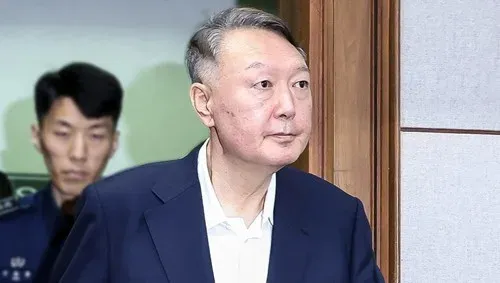
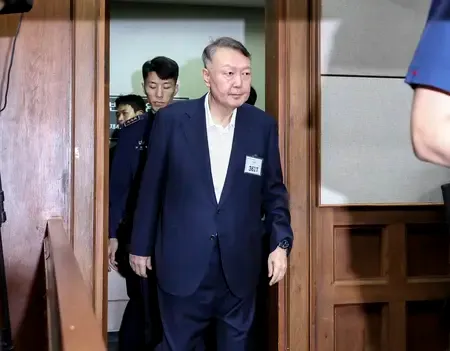
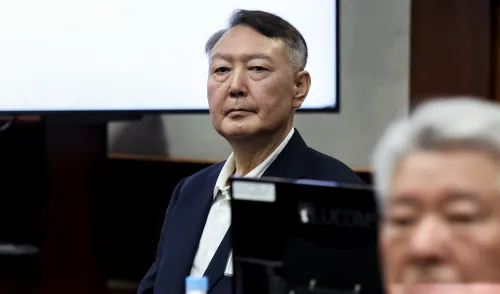
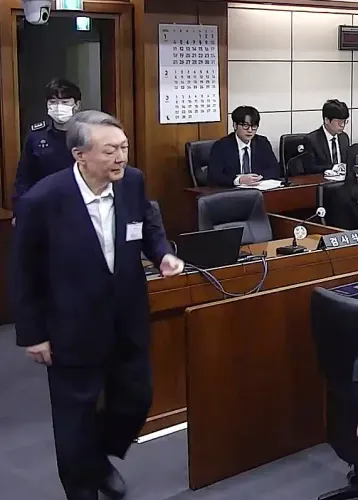
South Korea ex-Justice Minister Park Sung-jae jailed 25 years for martial law insurrection
Synopsis
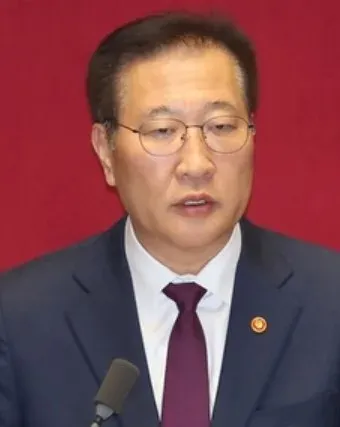
South Korea's former Justice Minister Park Sung-jae has been handed a 25-year prison term — heavier than prosecutors even requested — for his role in the December 2024 martial law crisis. With a former president serving life, a former PM convicted, and now a Justice Minister jailed, South Korea's post-martial-law reckoning is dismantling an entire Cabinet in real time.
Key Takeaways
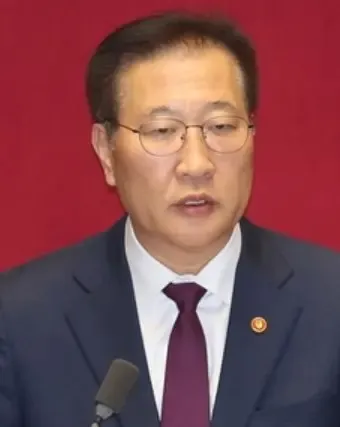
Park Sung-jae , South Korea's former Justice Minister, was sentenced to 25 years in prison on 22 June by the Seoul Central District Court .
The sentence exceeded the 20-year term sought by special counsel Cho Eun-suk 's team.
Park was convicted of playing a key role in an insurrection and abusing his power following Yoon Suk Yeol 's 3 December 2024 martial law declaration.
Former President Yoon Suk Yeol was sentenced to life imprisonment in February; he has appealed.
Former Prime Minister Han Duck-soo and former Defence Minister Kim Yong-hyun have also been convicted in the same insurrection case.
The court dismissed anti-graft charges against Park, ruling they fell outside the special counsel's mandate.
South Korea's former Justice Minister Park Sung-jae was sentenced to 25 years in prison on Monday, 22 June after the Seoul Central District Court found him guilty of playing a key role in an insurrection linked to former President Yoon Suk Yeol's short-lived martial law declaration. The sentence exceeded the 20-year term sought by the special counsel's team and was followed by Park's immediate detention, with the court citing concerns over potential evidence destruction.
What the Court Found
The court convicted Park on two charges: playing a key role in an insurrection and abusing his power. Prosecutors argued that Park had convened a senior ministry officials' meeting in the immediate aftermath of Yoon's 3 December 2024 martial law declaration — a meeting allegedly aimed at reviewing the dispatch of prosecutors to a martial law-supporting body and assessing the capacity of correctional facilities, reportedly to accommodate politicians and key figures expected to be arrested.
Park was also found to have ordered ministry officials responsible for imposing travel bans to report for duty during the crisis period.
The Court's Verdict in Its Own Words
'The defendant ultimately turned his back on his duty of upholding the Constitution at the idea that the insurrection could succeed, choosing to instead take part in it,' the court stated in its ruling.
Where Park Fits in the Broader Convictions
Park's sentencing adds to a growing list of senior officials convicted in connection with Yoon's martial law bid. Former Prime Minister Han Duck-soo and former Defence Minister Kim Yong-hyun have also been found guilty of playing a key role in the insurrection. In February, Yoon himself was sentenced to life imprisonment for leading the insurrection; he has since appealed that ruling.
Notably, this is the first time in South Korea's modern democratic history that a sitting president's martial law declaration has triggered cascading criminal convictions across an entire Cabinet tier — a constitutional rupture with few precedents in the region.
Charges Dismissed and Pending Matters
The court dismissed additional charges against Park for allegedly violating the anti-graft law, ruling that the matter fell outside the special counsel's investigation mandate. A separate set of charges — that Park gave inappropriate orders to subordinates at the request of Yoon's wife, Kim Keon Hee, in May 2024, to check details of a prosecution inquiry into her corruption allegations — had also been part of the indictment but were addressed separately.
What Comes Next
With Park now in custody and Yoon's appeal pending, South Korea's courts face continued pressure to resolve the full legal fallout of the December 2024 martial law episode. The special counsel's investigation remains active, and further proceedings involving other officials connected to the incident are expected in the months ahead.
Point of View
A prime minister, a defence minister, and now a justice minister have all been convicted in the same insurrection chain. This is not a peripheral purge of loyalists; it is the systematic judicial dismantling of an entire executive tier. The unresolved question is whether Yoon's appeal, still pending, will test the judiciary's independence under a new political climate — or whether the convictions will hold and set a durable precedent for accountability at the highest levels of Korean governance.
NationPress
20 Sept 2026
Frequently Asked Questions
Why was Park Sung-jae sentenced to 25 years in prison?
Park Sung-jae was convicted by the Seoul Central District Court of playing a key role in an insurrection and abusing his power in connection with former President Yoon Suk Yeol's declaration of martial law on 3 December 2024. The court found that Park convened a senior officials' meeting to facilitate actions in support of the martial law, including reviewing correctional facility capacity reportedly to detain politicians.
How does Park's sentence compare to what prosecutors sought?
The special counsel's team had sought a 20-year prison term for Park Sung-jae. The Seoul Central District Court went further, handing down a 25-year sentence and ordering Park's immediate detention over concerns he might destroy evidence.
Who else has been convicted in South Korea's martial law insurrection case?
Former President Yoon Suk Yeol was sentenced to life imprisonment in February for leading the insurrection and has appealed. Former Prime Minister Han Duck-soo and former Defence Minister Kim Yong-hyun have also been convicted of playing a key role in the insurrection. Park Sung-jae is the latest senior official to be found guilty.
What charges against Park were dismissed?
The court dismissed additional charges against Park for allegedly violating South Korea's anti-graft law, ruling that those matters fell outside the special counsel's investigation mandate.
What is the current status of Yoon Suk Yeol's case?
Former President Yoon Suk Yeol was sentenced to life imprisonment in February for leading the insurrection through his short-lived imposition of martial law on 3 December 2024. He has appealed the ruling, and that appeal remains pending.