South Korea Unification Minister urges shift from 'denuclearisation first' North Korea policy
Synopsis
South Korea’s Unification Minister has publicly broken with the decades-old denuclearisation-first framework, arguing it has handed North Korea 30 years of unchecked nuclear development. His call for a freeze-reduction-denuclearisation roadmap — backed, he says, by China — and an immediate resumption of US-North Korea talks marks one of Seoul’s most explicit diplomatic pivots in years.
Key Takeaways
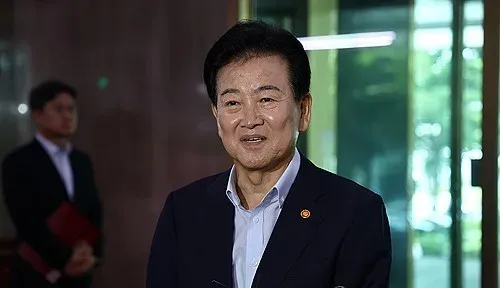
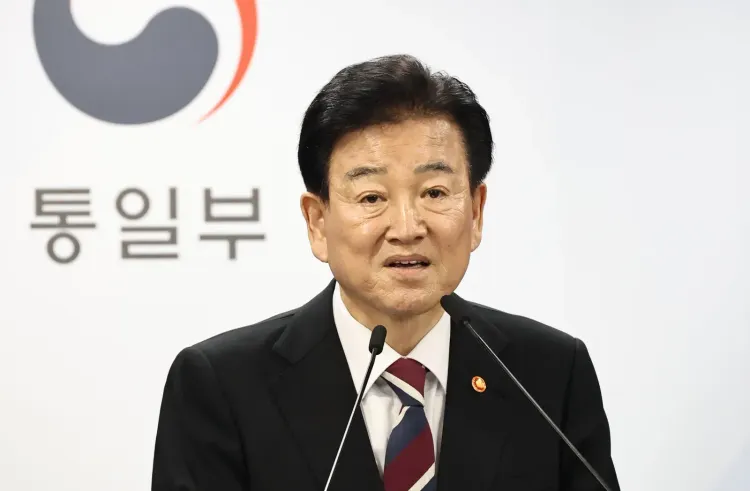
Unification Minister Chung Dong-young called for abandoning the ‘denuclearisation first’ precondition in talks with North Korea on 26 June .
He proposed a three-stage roadmap: freeze, reduction, and denuclearisation — prioritising a halt before full disarmament.
Chung argued the current approach has given North Korea 30 years to advance its nuclear capabilities during diplomatic standoffs.
China has reportedly expressed support for this phased, pragmatic approach.
Chung urged immediate resumption of US-North Korea talks based on the framework agreed at the 2018 Singapore Summit .
He said renewed bilateral dialogue could unlock broader four-party talks involving the US, China, and both Koreas.
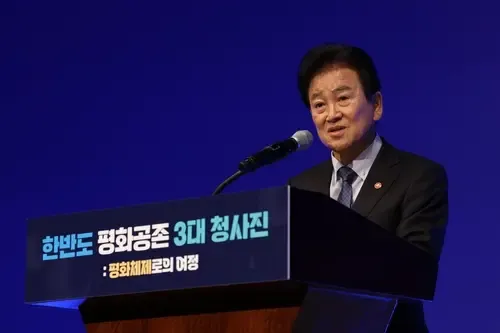
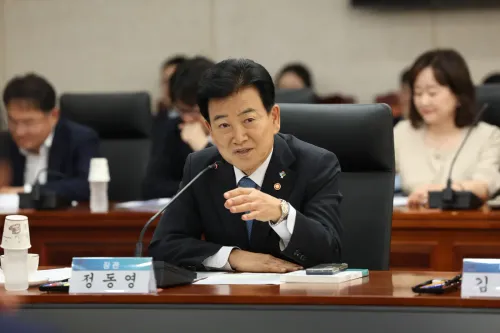
South Korea's Unification Minister Chung Dong-young on Friday, 26 June called for abandoning the longstanding policy of treating denuclearisation as the sole precondition for engaging North Korea, arguing that this rigid stance has been a primary driver of three decades of diplomatic stagnation with Pyongyang. Chung made the remarks in a keynote address at the Korean Peninsula Symposium in Seoul.
The Core Argument
Chung contended that every time peace talks collapsed over the denuclearisation precondition, North Korea exploited the resulting vacuum to accelerate its nuclear and weapons programmes. “As the past 30 years have shown, whenever peace talks were halted by the denuclearisation hurdle, North Korea used that time to further advance its nuclear capabilities,” he said.
He called the current approach fundamentally broken, insisting that a peace regime cannot be held hostage to a sequencing logic that has repeatedly failed. “We must move away from the old notion that a peace regime can only be discussed after the North Korean nuclear issue is resolved,” Chung said. “We need to pursue a phased and pragmatic solution. It is time for a paradigm shift.”
A Three-Stage Roadmap
Chung outlined a structured, phased framework as an alternative: a three-step process of freeze, reduction, and denuclearisation. Under this model, halting and scaling down the North’s nuclear programme would precede full denuclearisation, rather than the other way around. He noted that China has also expressed support for this pragmatic approach, potentially broadening the diplomatic coalition behind it.
Critically, Chung argued that any such process must begin with direct dialogue between Washington and Pyongyang. He invoked the 2018 Singapore Summit between North Korea and the United States, urging both sides to immediately resume talks aimed at ending mutual hostility and establishing a new bilateral relationship.
The Case for US-North Korea Dialogue
Chung stressed that renewed US-North Korea engagement would act as a catalyst for broader multilateral diplomacy. “The resumption of US-North Korea dialogue will serve as a powerful catalyst for opening four-party talks among the US, China and the two Koreas, who are the key stakeholders in achieving lasting peace on the Korean Peninsula,” he said.
Recalling past breakthroughs, Chung pointed out that meaningful progress on the Korean Peninsula has historically occurred only when South Korea and the United States actively sought to engage Pyongyang rather than condition dialogue on prior concessions.
Broader Context and Implications
Chung’s remarks represent a significant policy signal from within the South Korean government, coming at a time when the Korean Peninsula remains one of the world’s most intractable security flashpoints. North Korea has continued to expand its nuclear arsenal and missile capabilities, with analysts broadly agreeing that the denuclearisation-first framework has yielded little measurable progress since the early 1990s.
The call for a phased approach echoes arguments made by several former diplomats and academics, but its articulation by a sitting Unification Minister carries institutional weight. Whether Washington and Pyongyang will respond to the overture remains to be seen, but Chung’s address signals that Seoul is prepared to advocate for a fundamental recalibration of the diplomatic playbook.
Point of View
And whether the Trump administration, which has shown its own unorthodox appetite for direct Pyongyang engagement, sees an opening here.
NationPress
25 Sept 2026
Frequently Asked Questions
What did South Korea’s Unification Minister say about North Korea policy?
Unification Minister Chung Dong-young called for moving away from the ‘denuclearisation first’ approach, arguing it has stalled diplomacy for 30 years and allowed North Korea to expand its nuclear capabilities. He proposed a phased roadmap of freeze, reduction, and denuclearisation instead.
What is the phased approach Chung Dong-young proposed for North Korea?
Chung proposed a three-stage process — freeze, reduction, and denuclearisation — in which halting and scaling down North Korea’s nuclear programme would come before full disarmament. He said China has also expressed support for this pragmatic framework.
Why does Chung argue the current denuclearisation-first policy has failed?
Chung contends that every time peace talks collapsed over the denuclearisation precondition, North Korea used the diplomatic downtime to further develop its nuclear and missile capabilities. He said this pattern has repeated itself across 30 years of failed negotiations.
What role does the 2018 Singapore Summit play in Chung’s proposal?
Chung cited the 2018 Singapore Summit between North Korea and the United States as the agreed basis for resuming talks, urging both sides to immediately restart dialogue to end mutual hostility and build a new bilateral relationship.
How would renewed US-North Korea talks affect broader regional diplomacy?
According to Chung, a resumption of US-North Korea dialogue would catalyse four-party talks involving the United States, China, South Korea, and North Korea — the key stakeholders he identified as essential for achieving lasting peace on the Korean Peninsula.