South Korea Unification Ministry defends North Korea peace push amid cabinet rift
Synopsis
South Korea's cabinet is quietly divided over how far to reach toward Pyongyang. The Unification Ministry wants to drop the 'main enemy' label and pursue four-way security talks — but the Foreign Minister called that 'idealistic,' and President Lee himself urged caution. With North Korea refusing all dialogue and classifying inter-Korean ties as 'hostile,' Seoul's peace push is straining against both external silence and internal scepticism.
Key Takeaways
South Korea's Unification Ministry on 6 August reaffirmed its push for peaceful coexistence with North Korea despite a challenging environment.
Unification Minister Chung Dong-young said President Lee Jae Myung had personally urged the ministry to 'be patient' and keep working.
The ministry proposed dropping the 'main enemy' label for North Korea and using its official name, the DPRK , as a trust-building measure.
Foreign Minister Cho Hyun publicly called the proposed four-way dialogue among the two Koreas, the US , and China 'idealistic' and 'not achievable.' North Korea has refused all dialogue with Seoul and has designated inter-Korean relations as those between two hostile nations .
The foreign ministry later sought to present a unified front, stating that policy is coordinated through the National Security Council .
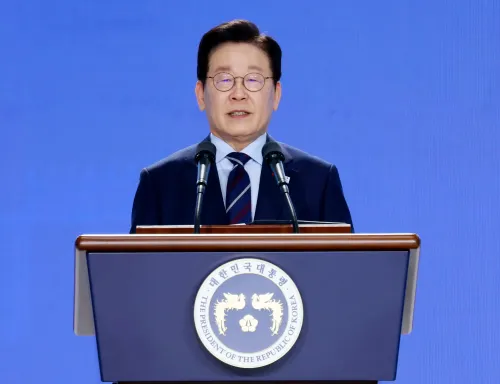
South Korea's Unification Ministry on Thursday, 6 August reaffirmed its commitment to pursuing peaceful coexistence with North Korea, pushing back against scepticism from within the government and insisting its approach is 'the most realistic and practical' available under the circumstances. The statement came a day after President Lee Jae Myung struck a cautious note on the ministry's initiatives during a policy briefing.
What the Ministry Said
'The ministry will continue efforts for peaceful coexistence with North Korea to bear fruit, keeping in mind the president's call for patience,' the ministry said in an official statement. It stressed the need for 'ceaseless' efforts to 'create even the smallest opportunity to bring peace in challenging conditions,' signalling that Seoul intends to remain proactive despite Pyongyang's continued silence.
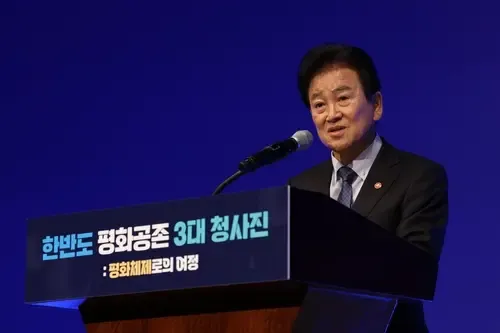
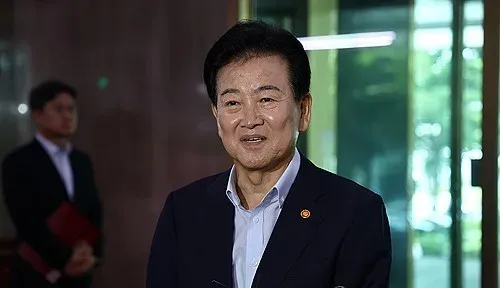
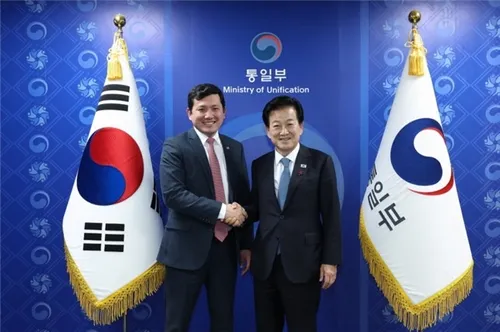
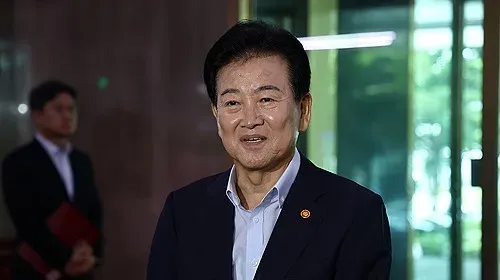
Unification Minister Chung Dong-young, speaking to reporters on his way to work Thursday, said President Lee had personally endorsed the effort. 'The president said it must feel like a cry that goes unanswered,' Chung said. 'But he told us to keep working toward peaceful coexistence, and to be patient.'
The Naming Dispute and Trust-Building Proposals
At the centre of the controversy is a ministry proposal to drop the 'main enemy' label applied to North Korea and refer to it by its official name — the Democratic People's Republic of Korea (DPRK) — as part of a broader trust-building strategy. South Korea currently uses 'North Korea' rather than the official designation, as Seoul does not recognise the two Koreas as separate states under the 1991 Inter-Korean Basic Agreement. The proposal has drawn concern that the Lee government may be leaning too dovish toward a Pyongyang that has shown no reciprocal signs of softening.
Divisions Within the Government
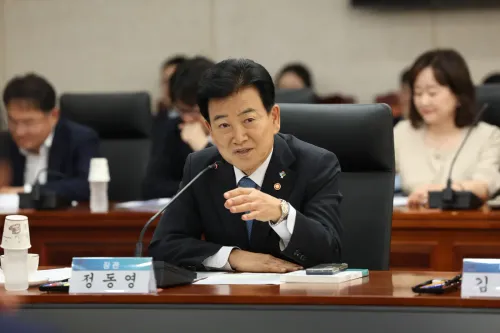
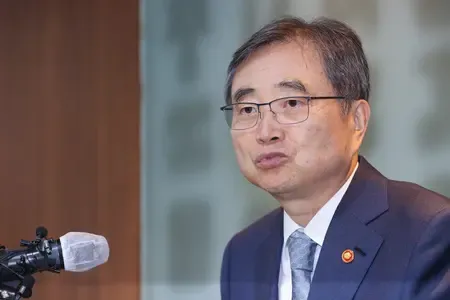
The most visible sign of internal disagreement came from Foreign Minister Cho Hyun, who called a proposed four-way dialogue among the two Koreas, the United States, and China to address security issues on the Korean Peninsula 'idealistic.' 'It would be great if that vision came true. But realistically, our ministry does not see it as achievable,' Cho said, adding that the plan had not been coordinated across government departments.
Chung pushed back directly. 'We only can change reality only if we have idealism,' he said. 'I believe we can help move the government forward when we cooperate with each other.' The foreign ministry later attempted to paper over the rift, with spokesperson Park Il stating that the government's North Korea policy 'remains consistent' and is pursued 'through close coordination among relevant departments, centred around the National Security Council.'
Context: Pyongyang's Posture
A senior foreign ministry official said Cho's scepticism stemmed from the reality that North Korea has refused to engage with any of Seoul's outreach. 'We are doing everything we can to make even the slightest breakthrough, at a time when North Korea does not respond at all to calls for dialogue and has designated inter-Korean relations as those between two hostile nations,' the official said. Any multiparty security dialogue, the official added, would require 'additional consultations and fine-tuning' before becoming viable.
President Lee himself had warned during Wednesday's briefing that well-intentioned policies can be 'exploited for political gain,' urging careful deliberation. The exchange underscores a broader tension within the Lee administration between diplomatic ambition and geopolitical realism on the Korean Peninsula — a fault line that Pyongyang's intransigence is only widening.
Point of View
But it runs ahead of any reciprocal signal from Pyongyang. President Lee's own hedging — endorsing patience while warning against political exploitation — suggests he is not fully behind either camp. A government visibly divided on its most sensitive foreign policy file hands North Korea a strategic advantage it does not need to earn.
NationPress
20 Sept 2026
Frequently Asked Questions
What is South Korea's Unification Ministry proposing toward North Korea?
The ministry is pushing for a policy of peaceful coexistence with North Korea, which includes dropping the 'main enemy' label and referring to North Korea by its official name, the Democratic People's Republic of Korea (DPRK), as a trust-building measure. It has also proposed four-way security dialogue involving the two Koreas, the United States, and China.
Why is there a rift within the South Korean government over North Korea policy?
Foreign Minister Cho Hyun publicly called the Unification Ministry's four-way dialogue proposal 'idealistic' and said the foreign ministry does not see it as achievable, adding that the plan had not been coordinated across departments. This contradicted Unification Minister Chung Dong-young's position and revealed tensions within the Lee administration over how dovish to be toward Pyongyang.
What has North Korea's response been to South Korea's outreach?
North Korea has refused all dialogue with Seoul and has formally designated inter-Korean relations as those between two hostile nations. A senior South Korean foreign ministry official confirmed that Pyongyang has not responded to any calls for dialogue.
What did President Lee Jae Myung say about the Unification Ministry's initiatives?
President Lee struck a cautious tone during a policy briefing on Wednesday, warning that well-intentioned policies can be exploited for political gain and urging careful deliberation. However, Unification Minister Chung said Lee also privately told the ministry to continue working toward peaceful coexistence and 'be patient.'
Why does South Korea not use North Korea's official name, DPRK?
South Korea currently uses 'North Korea' rather than the Democratic People's Republic of Korea because Seoul does not recognise the two Koreas as separate states under the 1991 Inter-Korean Basic Agreement. The Unification Ministry's proposal to shift to the official name is therefore a significant symbolic and legal step.