South Korea, US reaffirm Korean Peninsula denuclearisation goal amid omission row
Synopsis
A missing word in a diplomatic readout has set off alarm bells in Seoul. Both the South Korean and US readouts of the Cho Hyun-Rubio call omitted 'denuclearisation' — and with Trump declining to confirm it remains his goal while eyeing a fresh meeting with Kim Jong-un, questions are mounting over whether Washington is quietly walking away from a decades-old cornerstone of its North Korea policy.
Key Takeaways
Seoul's foreign ministry on 25 August reaffirmed the US-South Korea commitment to Korean Peninsula denuclearisation after the term was absent from both countries' diplomatic readouts.
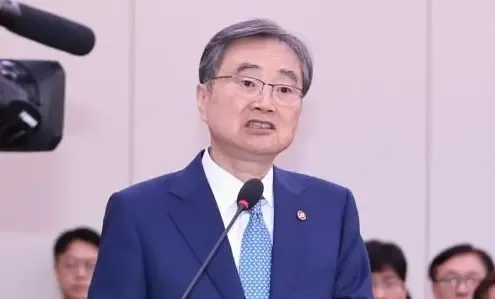
Foreign Minister Cho Hyun and US Secretary of State Marco Rubio spoke on Monday ; neither country's readout explicitly mentioned denuclearisation.
Ministry spokesperson Park Do-sun cited the joint statement from the South Korea-US summit in November last year as the standing policy baseline.
US President Donald Trump has said he expects to meet Kim Jong-un again this year but declined to confirm denuclearisation remains his objective.
South Korea and the US scaled back combined military exercises last week at Trump's direction, seen as a conciliatory gesture toward Pyongyang .
South Korea and the United States remain firmly committed to the denuclearisation of the Korean Peninsula, Seoul's foreign ministry said on Tuesday, 25 August, pushing back against speculation triggered by the conspicuous absence of the term from official readouts of the latest call between the two countries' top diplomats.
What the Readouts Said — and Didn't
The South Korean foreign ministry's press release on Monday's phone call between Foreign Minister Cho Hyun and US Secretary of State Marco Rubio referred to 'the resolution of the North Korean nuclear issue' but stopped short of explicitly invoking the word 'denuclearisation.' The US State Department's separate readout went further in its omission — it made no mention of Pyongyang's nuclear programme at all.
State Department spokesperson Tommy Pigott said only that Rubio had stressed the need for both nations to 'remain in close coordination on matters that are integral to the alliance.'
Seoul's Clarification
Ministry spokesperson Park Do-sun, speaking at a regular press briefing, sought to dispel concerns. 'South Korea and the US have consistently maintained the goal of peace, stability and denuclearisation on the Korean Peninsula, as stated in the joint explanatory material following the South Korea-US summit in November last year,' he said.
Park added that the two allies have been pursuing their North Korea policies 'through close coordination to achieve the aforementioned goal,' and confirmed that related discussions took place during the foreign ministers' latest call.
The Trump Factor
The episode has sharpened questions over whether the administration of US President Donald Trump is quietly downgrading the long-standing objective of denuclearising North Korea as Trump seeks to reengage with North Korean leader Kim Jong-un. Trump has said he expects to meet Kim again later this year, while declining last week to confirm whether denuclearisation remains his stated goal in pursuing that engagement.
Notably, South Korea and the US also scaled back their combined military exercises last week at Trump's direction — a move widely interpreted as a conciliatory signal toward Pyongyang. This is the latest in a series of gestures that critics argue could erode the alliance's deterrence posture.
What This Means for the Alliance
The diplomatic ambiguity comes at a sensitive moment. Any perceived softening of the US position on denuclearisation could complicate Seoul's own security calculus, particularly as North Korea continues to advance its nuclear and missile capabilities. Analysts note that language in diplomatic readouts is rarely accidental — the omission, even if later walked back, signals a potential recalibration in Washington's approach.
How the two allies manage this gap in public messaging — and whether a formal joint statement reaffirming denuclearisation follows — will be closely watched in the weeks ahead.
Point of View
Not a miscommunication. Seoul's swift public clarification reveals the anxiety: if Washington deprioritises denuclearisation to secure a Trump-Kim photo opportunity, South Korea is left holding a security guarantee that may be quietly hollowing out. The real test will come when — and if — Trump sits across from Kim Jong-un and the question of nuclear weapons is on the table.
NationPress
9 Oct 2026
Frequently Asked Questions
Why did South Korea's foreign ministry issue a clarification on denuclearisation?
Seoul's foreign ministry clarified its stance after neither the South Korean nor the US readout of the Cho Hyun-Rubio phone call on Monday explicitly mentioned denuclearisation. Ministry spokesperson Park Do-sun reaffirmed that both countries remain committed to the goal, citing the joint statement from their November summit.
What did the US State Department say about the North Korea nuclear issue?
The US State Department's readout of the call made no mention of North Korea's nuclear programme or denuclearisation. Spokesperson Tommy Pigott said only that Secretary Rubio stressed the need for both nations to 'remain in close coordination on matters that are integral to the alliance.'
Is Trump moving away from the goal of denuclearising North Korea?
Questions are growing over this. Trump has said he expects to meet North Korean leader Kim Jong-un again later this year but declined last week to confirm whether denuclearisation remains his objective in pursuing that engagement. The omission from diplomatic readouts has deepened those concerns.
Why did the US and South Korea scale back military exercises?
South Korea and the US scaled back their combined military exercises last week at President Trump's direction. The move is widely seen as a conciliatory gesture toward Pyongyang, consistent with Trump's broader effort to reengage with North Korean leader Kim Jong-un.
What is the standing US-South Korea position on Korean Peninsula denuclearisation?
According to Seoul, the joint policy baseline is the statement issued after the South Korea-US summit in November last year, which explicitly included peace, stability, and denuclearisation of the Korean Peninsula as shared goals. Park Do-sun said that position has not changed.