South Korea reaffirms Korean Peninsula denuclearisation after Kim-Xi summit
Synopsis
The Kim-Xi summit in Pyongyang made headlines for what it left out — any mention of North Korea's nuclear programme. While Beijing publicly called for expanded military cooperation with Pyongyang for the first time, Seoul is watching carefully, reaffirming denuclearisation as a non-negotiable goal even as the regional calculus quietly shifts.
Key Takeaways
South Korea's foreign ministry reaffirmed denuclearisation of the Korean Peninsula as a 'consistent goal' on 9 June .
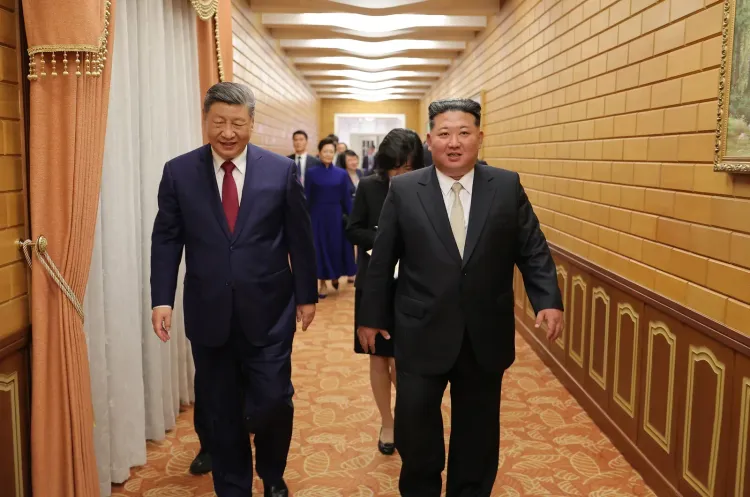
Kim Jong-un and Xi Jinping met in Pyongyang on Monday ; neither side's readout mentioned North Korea's nuclear programmes.
Xi publicly called for expanded China-North Korea military cooperation — described by Seoul as the first known public instance of such a call.
Chinese Defence Minister Dong Jun accompanied Xi , unlike during Xi's 2019 Pyongyang visit when no defence minister was present.
South Korea is monitoring the situation, with officials cautioning it is 'too early to draw conclusions' on the nuclear silence.
South Korea's foreign ministry on Tuesday, 9 June reaffirmed its commitment to denuclearising the Korean Peninsula, a day after North Korean leader Kim Jong-un and Chinese President Xi Jinping held a summit in Pyongyang that conspicuously omitted any reference to nuclear issues.
Seoul's Position on Denuclearisation
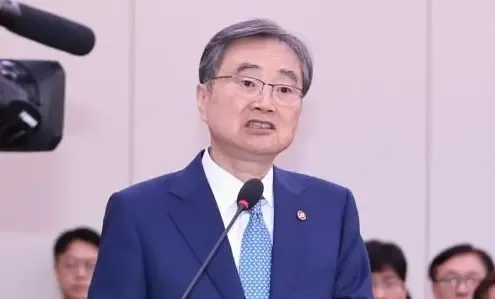
At a regular press briefing in Seoul, foreign ministry spokesperson Park Il stated that the denuclearisation of North Korea 'remains a consistent goal of the international community.' He left no ambiguity about South Korea's own stance: 'Our government will continue to uphold the goal of denuclearising the Korean Peninsula without wavering,' Park said.
Park also noted that China has repeatedly reaffirmed its position on Korean Peninsula issues remains unchanged, and pointed to last month's US-China summit, at which both sides confirmed denuclearisation of North Korea as a shared objective.
What the Kim-Xi Summit Covered — and What It Did Not
According to Pyongyang's state media, Monday's summit between Kim and Xi centred on expanding bilateral cooperation across the economy, trade, military, science, and healthcare. China's state news agency Xinhua reported that Xi reaffirmed Beijing's commitment to protecting North Korea's interests. Notably, North Korea's own media made no mention of military cooperation — a discrepancy that analysts are likely to scrutinise.
The complete absence of any reference to North Korea's nuclear programmes or the broader Korean Peninsula situation drew attention, though a South Korean official struck a cautious tone, noting it was 'too early to draw conclusions' and that sensitive discussions may have occurred behind closed doors.
Military Cooperation Flag Raises Concern
South Korea's unification ministry flagged Xi's public call for expanded military cooperation between Beijing and Pyongyang as 'the first known case in which the subject has been raised publicly,' according to a ministry official. Seoul said it was monitoring the situation closely for any developments.
Notably, Chinese Defence Minister Dong Jun accompanied Xi on this visit — a departure from Xi's 2019 trip to Pyongyang, when no defence minister was part of the Chinese delegation. South Korean officials suggested the inclusion may signal a shift in Beijing's intentions, though they stopped short of drawing firm conclusions.
Regional and International Context
The summit comes against a backdrop of deepening China-North Korea ties and sustained international pressure over Pyongyang's nuclear ambitions. Park expressed hope that exchanges between the North and China, including Xi's latest Pyongyang visit, would 'contribute to peace and stability on the Korean Peninsula.' This is the first high-profile Kim-Xi summit in several years, and its timing — amid ongoing US-China strategic competition — adds a layer of geopolitical complexity to an already fraught regional dynamic.
How Beijing chooses to balance its stated support for denuclearisation with its expanding ties to Pyongyang will be closely watched in the weeks ahead.
Point of View
But the first public call for expanded military cooperation with Pyongyang — delivered by Xi himself — complicates that framing considerably. Seoul's careful, calibrated response reflects a government that cannot afford to alienate China while also holding the line on denuclearisation. The presence of Defence Minister Dong Jun in the delegation is the kind of signal that intelligence agencies read carefully, even when diplomats publicly counsel patience. If China's military engagement with North Korea deepens, the already fragile architecture of multilateral pressure on Pyongyang's nuclear programme faces a new stress test.
NationPress
24 Oct 2026
Frequently Asked Questions
What did South Korea say after the Kim-Xi summit in Pyongyang?
South Korea's foreign ministry reaffirmed on 9 June that denuclearising the Korean Peninsula 'remains a consistent goal of the international community.' Spokesperson Park Il said Seoul would continue to uphold this goal 'without wavering,' despite the summit's silence on nuclear issues.
Why was the Kim-Xi summit significant?
The summit was the first high-profile meeting between Kim Jong-un and Xi Jinping in several years, held in Pyongyang on Monday. It was notable both for the broad cooperation agenda agreed — spanning economy, trade, military, and science — and for the complete absence of any reference to North Korea's nuclear programmes.
What is the concern about China-North Korea military cooperation?
Xi Jinping publicly called for expanded military cooperation with North Korea during the summit — something South Korea's unification ministry described as the first known public instance of such a call. The presence of Chinese Defence Minister Dong Jun in the delegation, absent from Xi's 2019 Pyongyang visit, has heightened Seoul's concern.
Did the summit address North Korea's nuclear programme?
Neither side's official readout mentioned North Korea's nuclear programmes or the broader Korean Peninsula security situation. South Korean officials noted it was 'too early to draw conclusions,' allowing that sensitive discussions may have taken place privately and not been disclosed.
What is the US position on denuclearising North Korea?
According to South Korea's foreign ministry, the United States and China confirmed at their summit last month that denuclearisation of North Korea is a shared objective. Seoul cited this as evidence of continued international alignment on the issue, even amid the ambiguity surrounding the Kim-Xi meeting.