South Korea's Unification Minister: Two Koreas must lead peninsula peace
Synopsis
As summits between the US, China, Russia, and North Korea reshape peninsular geopolitics, South Korea's Unification Minister is sounding an alarm: Seoul risks becoming a bystander in its own backyard. Minister Chung Dong-young's blunt warning — that external powers have 'overridden the constant' — signals growing anxiety inside the Lee administration about being sidelined on the very issue that defines South Korea's national future.
Key Takeaways
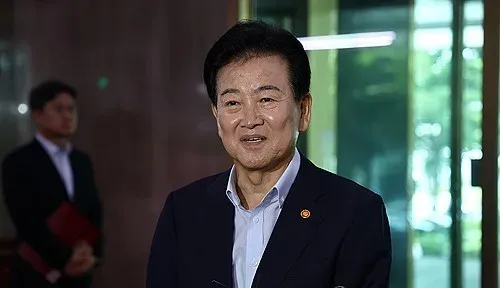
Unification Minister Chung Dong-young declared on 17 June that South and North Korea — not outside powers — must lead on Korean Peninsula security issues.
Chung warned that external nations have 'overridden the constant,' calling it 'a tragedy.' He recalled a 2005 meeting in Pyongyang with Kim Jong-il , who reportedly said: 'We should be bold and decide our own destiny.' President Lee Jae Myung reaffirmed his belief in dialogue with North Korea during a speech in Rome , calling the June 15, 2000 declaration a 'historic turning point.' North Korea has remained unresponsive to Seoul 's overtures and reportedly continues to define inter-Korean ties as relations between two 'hostile' states.
The Lee administration has suspended propaganda loudspeaker campaigns and pledged not to pursue unification by absorption.
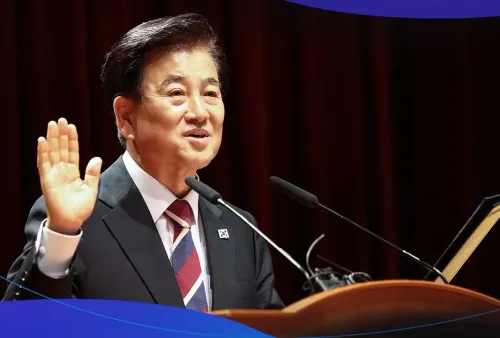
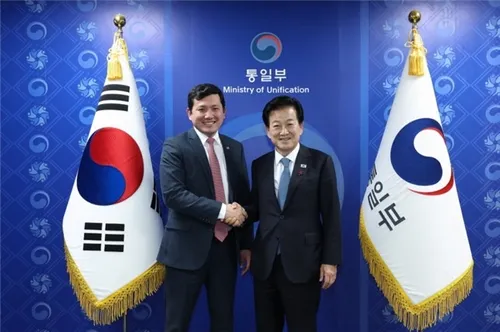
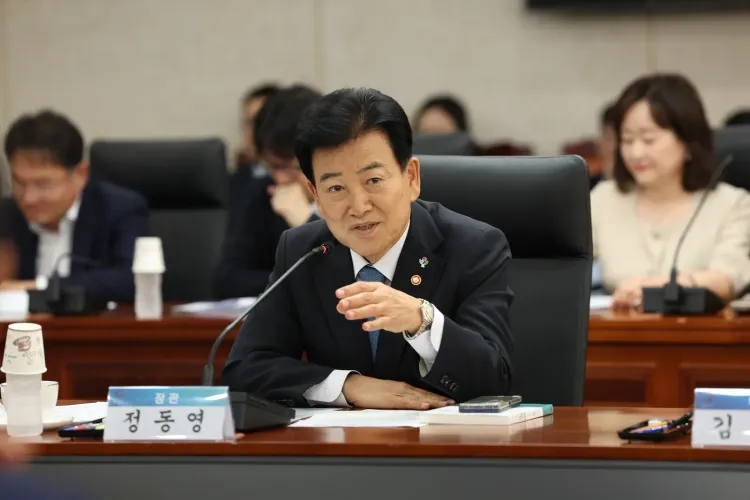
South Korea's Unification Minister Chung Dong-young on Wednesday, 17 June asserted that South Korea and North Korea — not external powers — must remain the primary drivers of resolving security issues on the Korean Peninsula. His remarks came at the fourth meeting of the ministry's peace advisory council, held at the Office of Inter-Korean Dialogue in Seoul.
Key Remarks by the Unification Minister
'The leading players on Korean Peninsula issues are South and North Korea. That is the constant,' Chung told the council. He warned that outside nations have increasingly overshadowed that dynamic: 'Other countries are only variables. But they have come to override the constant. That is a tragedy.'
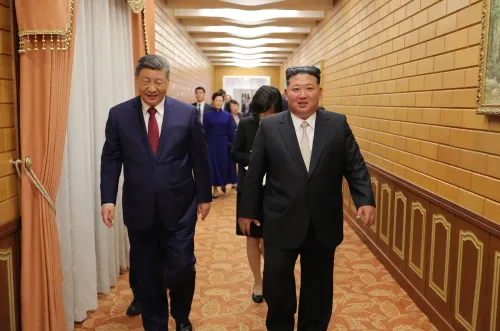
His remarks are widely seen as reflecting concern that Seoul risks being sidelined as global attention gravitates back toward the peninsula — particularly following a series of high-profile summits involving the United States, China, Russia, and North Korea, and as a reported US-Iran peace deal appears to wind down one major flashpoint.
Chung's 2005 Pyongyang Visit and Kim Jong-il's Words
During the same event, the minister recalled his 2005 visit to Pyongyang, where he met Kim Jong-il — father of current North Korean leader Kim Jong-un — on the occasion of the fifth anniversary of the June 15 Inter-Korean Joint Declaration, a landmark peace accord aimed at building mutual trust between the two Koreas.
Chung said both sides agreed then that the two Koreas should take the initiative in building peninsula peace. He quoted the late Kim Jong-il as saying: 'We should be bold and decide our own destiny.'
President Lee's 'Ember of Hope' Message from Rome
On Sunday, South Korean President Lee Jae Myung echoed a similar spirit while speaking in Rome at a special Mass held at the Basilica of Saint Paul Outside the Walls, celebrated by South Korea-born Cardinal Lazzaro You Heung-sik under the theme of peace and solidarity.
President Lee invoked the June 15, 2000 inter-Korean joint statement — describing it as a 'historic turning point' — and reaffirmed his belief that dialogue with Pyongyang remains possible. 'I firmly believe the ember of that hope is still alive,' he said.
Lee cited the reunions of families separated by the 1950–53 Korean War as a tangible outcome of that declaration, and pointed to humanitarian exchanges it enabled as evidence that progress is achievable. He also noted his administration's steps to ease tensions, including the suspension of propaganda loudspeaker campaigns directed at North Korea.
'We have also made it clear that we will not seek unification by absorption or unilateral (ideological) competition,' Lee said. '(We) will continue efforts to prevent accidental conflicts between the South and the North and to restore military trust.'
North Korea's Posture and the Broader Context
North Korea has thus far remained unresponsive to Seoul's overtures since the Lee administration took office in June. Pyongyang reportedly remains firm in its refusal to relinquish its nuclear weapons and missile programmes, and has formally defined inter-Korean relations as those between two 'hostile' countries.
President Lee acknowledged the difficult global backdrop — citing the prolonged Russia-Ukraine war and the Middle East conflict — while noting the peninsula itself has 'slid back to an era of rupture and severed dialogue.' He nonetheless expressed gratitude to the Vatican for its support, arguing that peace on the Korean Peninsula could contribute to, and be reinforced by, global solidarity.
What Comes Next
With external powers actively reshaping the geopolitical landscape around the peninsula, the Lee administration faces the dual challenge of keeping inter-Korean channels open while ensuring Seoul is not reduced to a spectator in negotiations that directly affect its security. The administration says it plans to 'do everything it can to overcome the ceasefire and build a peace system.'
Point of View
China, and Russia are all independently engaging Pyongyang. The Lee administration's restraint posture (no loudspeakers, no absorption rhetoric) is a necessary confidence-building gesture, but North Korea's formal 'hostile states' doctrine makes reciprocal gestures unlikely in the near term. The real risk is that Seoul ends up performing peace optics for a domestic and Vatican audience while the peninsula's actual security architecture is negotiated elsewhere. President Lee's Rome speech was symbolically rich but strategically thin on new offers.
NationPress
16 Sept 2026
Frequently Asked Questions
What did South Korea's Unification Minister say about the Korean Peninsula?
Unification Minister Chung Dong-young said on 17 June that South and North Korea — not external powers — must be the primary drivers of resolving Korean Peninsula security issues. He warned that outside nations have 'overridden' that principle, calling it 'a tragedy.'
Why is South Korea concerned about being sidelined on peninsula issues?
A series of recent summits among the United States, China, Russia, and North Korea has shifted global attention back to the peninsula, raising concerns in Seoul that it could be marginalised in negotiations directly affecting its security. Minister Chung's remarks reflect that anxiety.
What did President Lee Jae Myung say about North Korea in Rome?
President Lee, speaking at the Basilica of Saint Paul Outside the Walls in Rome, reaffirmed his belief that the 'ember of hope' for inter-Korean dialogue is still alive. He cited the June 15, 2000 inter-Korean joint declaration as a historic precedent and pledged to prevent accidental conflicts and restore military trust.
How has North Korea responded to South Korea's peace overtures?
North Korea has remained unresponsive to the Lee administration's overtures since it took office in June. Pyongyang reportedly continues to refuse giving up its nuclear and missile programmes and has formally defined inter-Korean relations as those between two 'hostile' countries.
What steps has the Lee administration taken to ease inter-Korean tensions?
The Lee administration has suspended propaganda loudspeaker campaigns directed at North Korea and has publicly stated it will not pursue unification by absorption or unilateral ideological competition. It has also pledged ongoing efforts to prevent accidental military conflicts and rebuild trust.