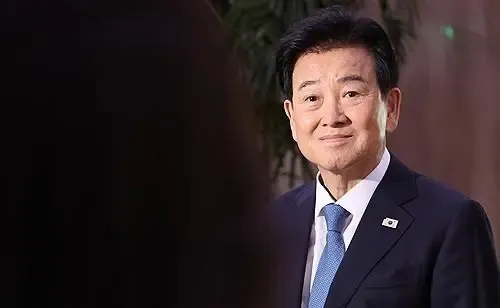
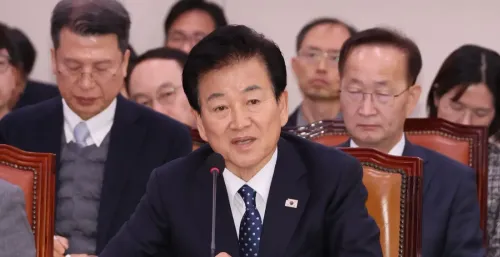
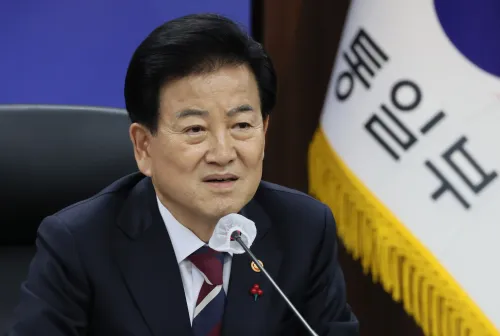
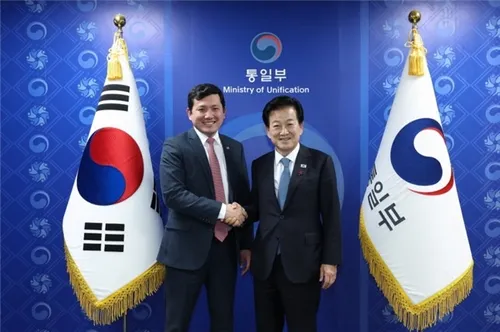
South Korea-US alliance intact despite tensions, says Unification Minister Chung
Synopsis
South Korea's Unification Minister Chung Dong-young is pushing back hard against opposition claims that Seoul's alliance with Washington is fraying — calling resignation demands 'ideological smear' and describing last month's Lee-Trump summit as a 'milestone.' The row over intelligence-sharing restrictions tied to North Korea's Kusong facility shows how quickly a minister's past remarks as a lawmaker can become a live diplomatic liability.
Key Takeaways
Unification Minister Chung Dong-young declared on 12 October 2026 that the South Korea-US alliance faces no fundamental problem despite acknowledged tensions.
The controversy centres on US restrictions on intelligence-sharing following Chung's earlier comments about a suspected North Korean uranium enrichment facility in Kusong .
Chung clarified those remarks were made in July last year during his parliamentary confirmation hearing — before he became a minister.
The National Intelligence Service (NIS) denied reports that overall US intelligence-sharing volumes had dropped, saying cooperation on North Korean missiles and military capabilities continues.
The main opposition People Power Party (PPP) has called for Chung's dismissal and that of NIS Director Lee Jong-seok , charges Chung dismissed as 'ideological smear.' Last month's Lee Jae Myung-Donald Trump summit in New York was described by Chung as a 'milestone' for South Korean national interests.
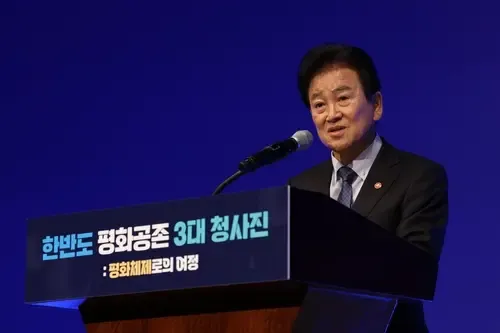
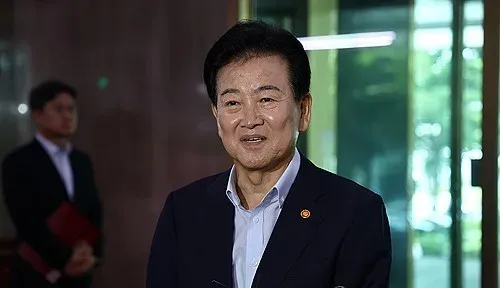
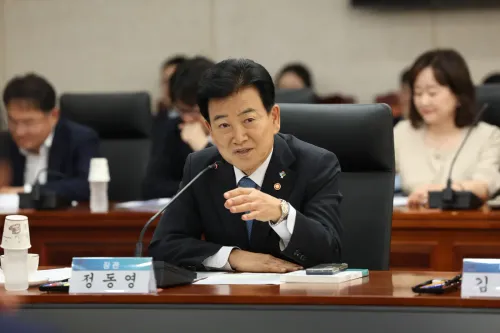
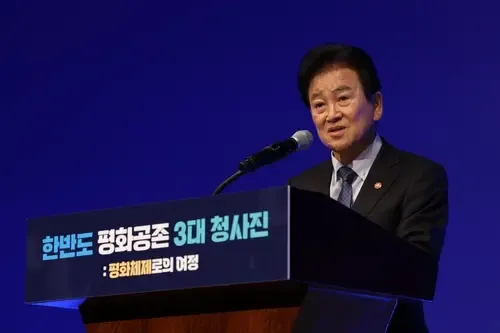
South Korea's Unification Minister Chung Dong-young on Monday, 12 October firmly rejected opposition claims that the South Korea-US alliance is deteriorating, asserting that shared values hold the partnership together even when national interests diverge. Chung's remarks came during a meeting with reporters in Seoul, amid mounting political pressure over a controversy tied to intelligence-sharing restrictions imposed by Washington.
Background to the Dispute
The controversy stems from Chung's earlier comments about a suspected North Korean uranium enrichment facility in Kusong, which critics say prompted the United States to place restrictions on intelligence-sharing with South Korea. The main opposition People Power Party (PPP) has accused Chung of undermining the bilateral alliance and demanded his dismissal, along with that of National Intelligence Service (NIS) Director Lee Jong-seok.
Chung pushed back strongly, arguing that the remarks in question were made in July last year — during his confirmation hearing as a lawmaker, not as a serving government minister. 'The original remarks about the Kusong facility were made during my confirmation hearing in July last year,' he said. 'I explained the circumstances to US officials and asked the South Korean ambassador to the United States to explain them as well.'
Minister Defends Alliance, Cites Lee-Trump Summit
Chung described the alliance as fundamentally sound, maintaining that diverging interests between allies are neither unusual nor alarming. 'An alliance shares values, but interests can be aligned or conflicting,' he said. 'There is absolutely nothing wrong with the South Korea-US alliance right now. What is wrong with it?'
He also characterised last month's summit between South Korean President Lee Jae Myung and US President Donald Trump in New York as a 'milestone' in advancing South Korea's national interests, framing it as evidence of a functioning and productive alliance.
NIS Pushes Back on Intelligence-Sharing Reports
On Sunday, the National Intelligence Service (NIS) acknowledged restrictions in certain areas but said the two countries continued to cooperate across a broad range of intelligence matters — including North Korean missiles and conventional military capabilities. The NIS also directly denied reports that the overall volume of intelligence shared by Washington had declined, offering a measure of institutional reassurance amid the political row.
Chung Dismisses Opposition Calls as 'Ideological Smear'
Chung rejected PPP demands for his resignation without qualification. 'Such calls for dismissal and resignation demands are just ideological smear,' he said. 'What should be driven out in 2026 is ideological labelling.' He stressed that South Korea, like other US allies, retains the right to protect its own national interests and strategic autonomy — and that doing so does not constitute an attack on the alliance itself.
With the intelligence-sharing dispute unresolved in public perception and opposition pressure continuing, the coming weeks are likely to test whether Chung's reassurances are sufficient to contain the political fallout or whether the controversy deepens into a broader foreign policy debate ahead of South Korea's legislative calendar.
Point of View
Leaving the core accusation partially unanswered. The real risk for Seoul is not the substance of the dispute but its timing: any perception of a weakened intelligence channel with Washington emboldens Pyongyang and invites harder bargaining from the Trump administration on trade and defence cost-sharing. Opposition parties know this, which is why the 'ideological smear' charge cuts both ways.
NationPress
12 Oct 2026
Frequently Asked Questions
Why is South Korea's Unification Minister Chung Dong-young under pressure?
Chung is facing opposition calls for his dismissal over remarks he made about a suspected North Korean uranium enrichment facility in Kusong, which critics say prompted the United States to restrict intelligence-sharing with South Korea. He argues the remarks were made during his parliamentary confirmation hearing in July last year, before he became a minister, and have been misattributed to him in his current role.
Has the US reduced intelligence sharing with South Korea?
The National Intelligence Service (NIS) acknowledged restrictions in certain specific areas but denied reports that the overall volume of US-shared intelligence had declined. It said cooperation on North Korean missiles and conventional military capabilities is continuing.
What did the Lee Jae Myung-Trump summit in New York achieve?
Minister Chung described the summit between South Korean President Lee Jae Myung and US President Donald Trump in New York last month as a 'milestone' in advancing South Korea's national interests. No further details of specific outcomes were disclosed in his remarks.
Who is demanding Chung Dong-young's dismissal and why?
The main opposition People Power Party (PPP) and other critics have called for the dismissal of both Chung and NIS Director Lee Jong-seok, arguing that Chung's comments damaged the South Korea-US alliance. Chung rejected the demands as 'ideological smear.'
What is South Korea's position on balancing US demands with its own interests?
Minister Chung stated that South Korea, like other US allies, must protect its own national interests and autonomy and cannot simply accept every demand from Washington. He maintained this stance is fully compatible with a strong alliance, citing shared values as the foundation of the partnership.