South Korea rules out denuclearisation precondition for North Korea talks
Synopsis
South Korea's Unification Minister has flatly rejected the 'denuclearise first' framework that has long gridlocked Korean diplomacy, pushing instead for a simultaneous 'basket' approach covering peace, nuclear freeze, and economic ties. Combined with a court ordering Pyongyang to pay USD 32.5 million for the Kaesong demolition, Seoul is sending two sharply contrasting signals to the North in a single day.
Key Takeaways
Unification Minister Chung Dong-young said on 17 September 2026 that demanding denuclearisation as a precondition makes inter-Korean dialogue impossible.
Seoul advocates a 'basket' approach — simultaneous progress on ending the Korean War, nuclear freeze, Pyongyang-Washington normalisation, and economic cooperation.
Chung argued the 1950–53 armistice must be replaced with a formal peace regime for lasting stability on the Korean Peninsula.
A South Korean court ordered North Korea to pay ₩44.6 billion (USD 32.5 million) for demolishing the Kaesong inter-Korean liaison office in 2020 .
Seoul confirmed it will not pursue further lawsuits against Pyongyang, citing the practical impossibility of enforcing court rulings against the North.
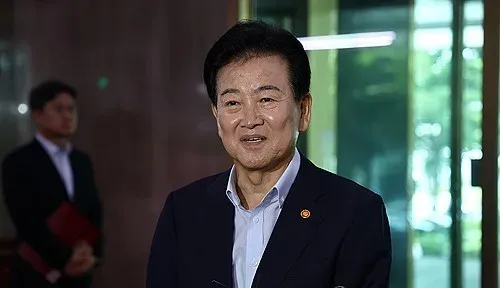
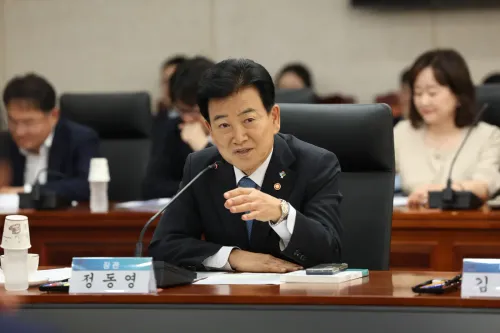
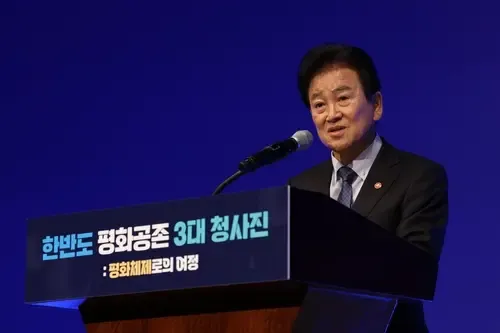
South Korea's Unification Minister Chung Dong-young on Thursday, 17 September 2026, declared that resuming dialogue with North Korea would never be feasible if Pyongyang is required to denuclearise before negotiations begin. The remarks were made at a ministry-hosted academic forum in Seoul on peaceful coexistence with the North, signalling a significant reframing of the Lee Jae Myung administration's inter-Korean policy.
Rejecting the 'Action First' Approach
Minister Chung was unequivocal in dismissing the long-standing Western-backed formula of demanding nuclear concessions upfront. 'We cannot start any discussion by repeating the past approach — action first, compensation later, with denuclearisation as a precondition,' he said, warning that such a stance would keep any dialogue permanently grounded. His remarks represent a notable departure from the framework previously championed by South Korea's conservative administrations and broadly aligned with US policy toward Pyongyang.
The 'Basket' Approach to Korean Peace
In place of sequential steps, Chung advocated what he described as a 'basket' approach — handling multiple issues simultaneously rather than making progress in one area contingent on another. The basket encompasses an end to the Korean War, institutionalising peaceful coexistence, normalising relations between Pyongyang and Washington, halting North Korea's nuclear programme, and reviving inter-Korean economic cooperation. The minister argued these issues are 'interconnected and mutually reinforcing' and must advance in tandem. This comes amid years of stalled inter-Korean engagement following the collapse of the 2019 Hanoi summit between then-US President Donald Trump and North Korean leader Kim Jong-un.
Armistice System as a Structural Obstacle
Chung also argued that lasting peace on the Korean Peninsula is structurally constrained by the current armistice arrangement. The 1950–53 Korean War ended with an armistice agreement — not a formal peace treaty — leaving the two Koreas technically still at war. 'This is why the Lee Jae Myung administration has argued the armistice on the Korean Peninsula should be replaced with a peace regime,' he said. Replacing the armistice with a legally binding peace treaty has been a recurring demand from Seoul's progressive governments, though it has historically faced resistance from Washington and Pyongyang alike.
Court Ruling Over Kaesong Demolition
Separately, Minister Chung addressed a landmark court ruling issued a day earlier, in which a South Korean court ordered North Korea to pay the South Korean government ₩44.6 billion (approximately USD 32.5 million) for demolishing the inter-Korean liaison office in the North Korean border town of Kaesong in 2020. The North blew up the joint liaison office building on 16 June 2020, reportedly in protest of Seoul's failure to prevent North Korean defectors from sending anti-Pyongyang leaflets across the border. Chung called the demolition 'a wrong thing to do that shocked the South Korean public' and confirmed the ruling established it was both illegal and a violation of inter-Korean agreements.
No Further Legal Action Planned
Despite the ruling's significance, Chung said Seoul has no plans to pursue additional lawsuits against Pyongyang — including over the demolition of South Korean-built tourism facilities at the Mount Kumkang resort, which occurred between 2019 and early 2025. 'It is practically impossible to execute a court ruling against North Korea,' he told a parliamentary session, citing enforcement constraints. The government's restrained posture on litigation appears calibrated to preserve diplomatic space, even as legal accountability is acknowledged symbolically. How Pyongyang responds to both the court ruling and Seoul's renewed outreach overture will shape the near-term trajectory of inter-Korean relations.
Point of View
Regardless of the sequencing on offer. The 'basket' approach sounds balanced in theory but risks giving Pyongyang leverage to stall on nuclear commitments while pocketing economic benefits, a pattern the North has exploited before. Meanwhile, the Kaesong court ruling creates a symbolic accountability moment that Seoul is already walking back on enforcement grounds — a tension between legal principle and diplomatic pragmatism that the Lee Jae Myung government has yet to resolve publicly. Washington's posture on the denuclearisation precondition will ultimately determine whether Seoul's reframing gains any traction with the North.
NationPress
17 Sept 2026
Frequently Asked Questions
Why does South Korea oppose denuclearisation as a precondition for North Korea talks?
Unification Minister Chung Dong-young argues that making denuclearisation a precondition has historically prevented any dialogue from getting started. Seoul now backs simultaneous progress on multiple fronts under a 'basket' approach, rather than sequential steps where nuclear concessions must come first.
What is South Korea's 'basket' approach to North Korea?
The 'basket' approach calls for handling several interconnected issues at the same time — ending the Korean War, institutionalising peaceful coexistence, normalising Pyongyang-Washington relations, freezing North Korea's nuclear programme, and reviving inter-Korean economic cooperation. Minister Chung argues these issues are mutually reinforcing and cannot be resolved one by one.
What was the Kaesong liaison office demolition and why did a court rule on it?
North Korea demolished the inter-Korean liaison office in the border town of Kaesong on 16 June 2020, reportedly to protest Seoul's failure to stop North Korean defectors from sending anti-Pyongyang leaflets across the border. A South Korean court on 16 September 2026 ordered Pyongyang to pay ₩44.6 billion (USD 32.5 million) to the South Korean government, ruling the act illegal and a violation of inter-Korean agreements.
Will South Korea file more lawsuits against North Korea over property damage?
No. Minister Chung said the government has no plans to file additional lawsuits, citing the practical impossibility of enforcing court rulings against North Korea. South Korean-built tourism facilities at the Mount Kumkang resort were also demolished between 2019 and early 2025, but Seoul will not seek legal redress for those either.
Why does the Korean War armistice matter for peace talks today?
The 1950–53 Korean War ended with an armistice — a ceasefire agreement — rather than a formal peace treaty, meaning the two Koreas remain technically at war. Minister Chung argued this structural arrangement is an obstacle to lasting peace, and that the Lee Jae Myung administration wants it replaced with a formal peace regime.