South Korea, US aligned on North Korea denuclearisation: FM Cho
Synopsis
South Korean FM Cho Hyun has confirmed Seoul and Washington are aligned on North Korea denuclearisation — but his candid admission that Pyongyang will likely seek talks as a nuclear-armed state signals just how difficult the road ahead is. With Trump eyeing a Kim revival and US midterms looming, Seoul is navigating one of its most complex diplomatic moments in years.
Key Takeaways
South Korean FM Cho Hyun confirmed on 6 October 2026 that Seoul and Washington share an aligned stance on North Korea denuclearisation .
US President Donald Trump had raised concern in August by declining to confirm denuclearisation as his goal; the US later reaffirmed commitment to 'complete' denuclearisation.
Cho said North Korea would likely seek any future dialogue on the basis of its status as a nuclear-armed state — 'That is how I expect it will start.' Seoul has demanded an official explanation and apology from Ukraine over the public disclosure of the transfer of two North Korean POWs .
High-level South Korea-China talks are planned on the sidelines of the APEC summit in Shenzhen in November .
Seoul is closely watching the US midterm elections in November for their impact on Congressional support for the bilateral alliance.
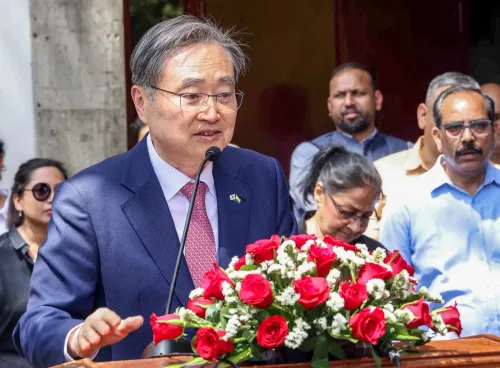
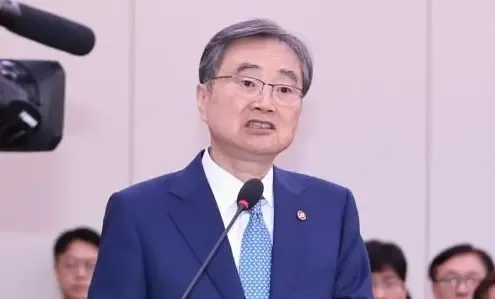
South Korean Foreign Minister Cho Hyun said on Tuesday, 6 October 2026 that South Korea and the United States remain fully aligned in their policy toward North Korea and are committed to the goal of denuclearising the Korean Peninsula. The remarks came during a parliamentary audit of the foreign ministry in Seoul, where Cho addressed a range of diplomatic concerns spanning Pyongyang, Washington, Beijing, Moscow, and Kyiv.
Seoul-Washington Alignment on North Korea
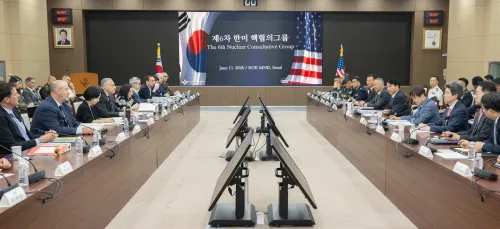
'Through multiple summit meetings, South Korea and the US have confirmed their aligned policy stance toward North Korea and their commitment to coordination,' Cho said. He added that Seoul has maintained 'close consultations' with Washington to encourage North Korea to return to dialogue and negotiations, while also pressing for 'constructive roles' from China and Russia.
The minister stressed the government's commitment to achieving 'substantive progress' through a phased and practical approach — one aimed at first halting, then reducing, and ultimately dismantling North Korea's nuclear capabilities.
Why the Denuclearisation Question Has Resurfaced
The reaffirmation comes amid renewed speculation about a possible shift in US policy. In August, US President Donald Trump declined to answer a reporter's question on whether denuclearisation remained his objective in reengaging with North Korean leader Kim Jong-un, raising concern in Seoul and among observers that Washington might settle for a lesser goal such as arms control or mere tension reduction. The US government subsequently reaffirmed its commitment to the 'complete' denuclearisation of North Korea, though the episode has kept the question alive.
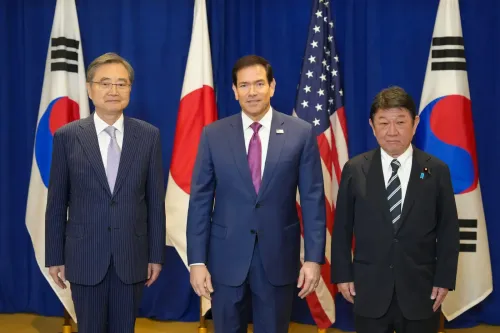
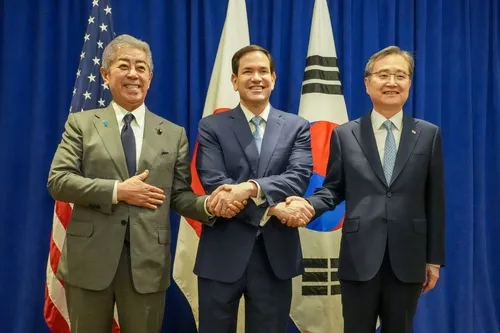
Trump has expressed renewed interest in reviving personal diplomacy with Kim, recalling the three summits held during his first term. Asked about the prospects for resumed US-North Korea talks, Cho confirmed that 'several working-level consultations' have already taken place, and that he personally raised the issue at a recent South Korea-US foreign ministers' meeting in Washington.
On whether North Korea would likely seek any future dialogue on the basis of its status as a nuclear-armed state, Cho said plainly: 'That is how I expect it will start.'
Seoul's Demand for a Seat at the Table
Cho pushed back against the possibility of Washington reaching any agreement with Pyongyang without first consulting Seoul. He said the US 'would not reach any separate agreement with the North without consulting South Korea or notify Seoul only after reaching an agreement.' The comment reflects a longstanding South Korean anxiety: that bilateral US-North Korea diplomacy could sideline Seoul on matters central to its own security.
Cho also flagged close attention to the US midterm elections scheduled for November, with the ministry pledging to monitor results and 'further expand support for the South Korea-US alliance in the US Congress.'
China, Russia, and the Ukraine Dispute
On relations with China, Cho said Seoul plans to pursue high-level exchanges with Beijing on the sidelines of the Asia-Pacific Economic Cooperation (APEC) summit in Shenzhen in November. He indicated that sensitive issues, including Taiwan, would be managed carefully 'so that they do not hamper the momentum of developing bilateral relations.'
Regarding Russia, Cho said Seoul has conveyed 'grave concerns' over ongoing military cooperation between North Korea and Russia and has called for its suspension through direct communication with Moscow.
A separate diplomatic row with Ukraine also surfaced during the audit. The South Korean government has demanded an official explanation and apology from Ukrainian President Volodymyr Zelensky over his public disclosure of the transfer of two North Korean prisoners of war (POWs) to Seoul — a matter Seoul says was agreed upon privately between the two countries. A statement from Zelensky's office denying any such confidentiality agreement has deepened the friction.
With the US midterm elections approaching and Trump-Kim diplomacy potentially on the horizon, Seoul's diplomatic balancing act across multiple fronts is set to intensify in the weeks ahead.
Point of View
But the cracks beneath it are visible. His frank acknowledgement that North Korea will almost certainly demand talks as a de facto nuclear state is a significant admission — one that quietly narrows the gap between Seoul's stated goal and the pragmatic reality Washington may be gravitating toward. The Ukraine POW dispute, meanwhile, is a rare public rupture with a country Seoul has quietly supported, and it signals that South Korean diplomacy is under pressure on multiple flanks simultaneously. The real stress test comes if and when Trump and Kim meet again: Seoul's insistence that it will not be bypassed is credible only so long as Washington chooses to honour it.
NationPress
6 Oct 2026
Frequently Asked Questions
What did South Korean FM Cho Hyun say about North Korea denuclearisation?
FM Cho Hyun said on 6 October 2026 that South Korea and the United States are fully aligned in their North Korea policy and remain committed to the denuclearisation of the Korean Peninsula. He described a phased approach aimed at halting, reducing, and ultimately dismantling North Korea's nuclear capabilities.
Why has the US commitment to North Korea denuclearisation been questioned?
In August 2026, US President Donald Trump declined to answer a reporter's question on whether denuclearisation remained his objective in reengaging with Kim Jong-un, fuelling concern that Washington might accept a lesser goal such as arms control. The US government subsequently reaffirmed its commitment to 'complete' denuclearisation.
What did FM Cho say about North Korea's likely negotiating position?
Cho said he expects North Korea to seek any future dialogue on the basis of its status as a nuclear-armed state, stating plainly, 'That is how I expect it will start.' This reflects a widely held assessment that Pyongyang will not enter talks that presuppose it surrendering its nuclear arsenal from the outset.
What is the diplomatic dispute between South Korea and Ukraine about?
South Korea has demanded an official explanation and apology from Ukrainian President Volodymyr Zelensky after he publicly disclosed the transfer of two North Korean prisoners of war to Seoul — a matter Seoul says was agreed upon privately. Zelensky's office subsequently denied any confidentiality agreement had been made.
What is South Korea's plan for engaging China and Russia on North Korea?
FM Cho said Seoul plans high-level exchanges with Beijing on the sidelines of the APEC summit in Shenzhen in November, managing sensitive issues like Taiwan carefully. On Russia, Seoul has directly conveyed 'grave concerns' over North Korea-Russia military cooperation and has called for its suspension.