South Korea, US reaffirm North Korea denuclearisation goal at NCG meeting
Synopsis
As North Korea vows to never give up its nuclear weapons and China's summit with Kim Jong-un produced no denuclearisation reference, South Korea and the US used their sixth NCG meeting to explicitly reaffirm that goal — a pointed diplomatic signal that the Washington-Seoul alliance is holding the line even as Beijing appears to shift its position.
Key Takeaways
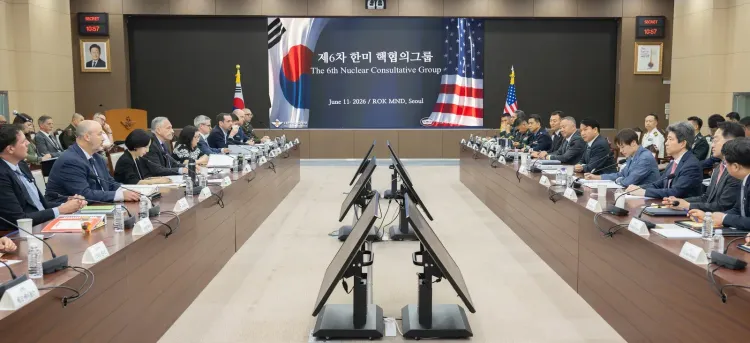
South Korea and the US held the sixth NCG meeting in Seoul on 11 June 2025 , reaffirming their shared goal of North Korea's denuclearisation .
The meeting was led by Deputy Defence Minister Kim Hong-cheol and US official Robert Soofer .
The US reiterated its extended deterrence commitment, covering the full range of military capabilities including nuclear assets.
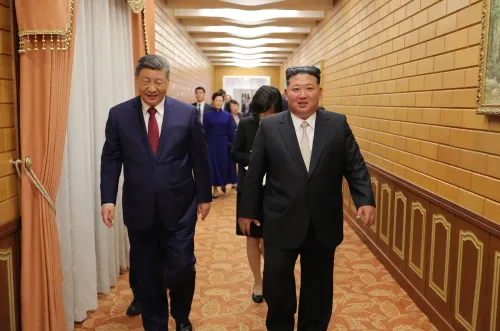
The denuclearisation reference is notable as China made no such mention during the Xi Jinping–Kim Jong-un summit in Pyongyang earlier this week.
South Korea and the EU separately warned on Wednesday that North Korea will 'never be accepted as a nuclear-weapon state' under international treaty.
The NCG was launched in July 2023 under the Washington Declaration to strengthen US deterrence credibility for South Korea.
South Korea and the United States reaffirmed on Thursday, 11 June their shared commitment to the denuclearisation of North Korea, following the sixth meeting of the Nuclear Consultative Group (NCG) held in Seoul. The bilateral session focused on strengthening US extended deterrence against the North's escalating nuclear and missile capabilities.
Key Developments at the NCG Meeting
The joint statement issued after Thursday's talks confirmed that 'the two sides agreed to continue advancing the activities of the NCG in order to strengthen the alliance and extended deterrence amid North Korea's evolving nuclear and missile capabilities and a changing security environment.' The allies also signed a document on NCG security guidelines to protect information related to NCG activities and consultations.
The meeting was led by Deputy Defence Minister for Policy Kim Hong-cheol on the South Korean side and Robert Soofer, US Deputy Assistant Secretary of War for Nuclear Deterrence and Countering Weapons of Mass Destruction, on the American side.
Why the Denuclearisation Reference Matters
The explicit reaffirmation of denuclearisation is notable given the diplomatic backdrop. Earlier this week, Chinese President Xi Jinping met North Korean leader Kim Jong-un in Pyongyang — and their summit produced no reference to North Korea's denuclearisation. Analysts have interpreted Beijing's silence as a tacit endorsement of Pyongyang's nuclear ambitions, a reading that lends additional weight to Seoul and Washington's deliberate inclusion of the term in their joint statement.
Notably, on Wednesday, the leaders of South Korea and the European Union also issued a joint statement warning that North Korea 'will never be accepted as a nuclear-weapon state under the international nonproliferation treaty or have any other status in that regard.'
What Extended Deterrence Means
Extended deterrence refers to the US pledge to deploy its full spectrum of military capabilities — including nuclear assets — in defence of its ally South Korea. At Thursday's meeting, Washington reiterated this commitment and the two sides assessed ongoing planning for nuclear contingencies on the Korean Peninsula, including how Seoul's conventional military capabilities would support US nuclear missions if required.
Background: The NCG and the Washington Declaration
The NCG was established in July 2023 under the Washington Declaration, adopted by the leaders of both countries as a dedicated platform to enhance the credibility of US extended deterrence commitments to South Korea. Thursday's session was the sixth such meeting, reflecting the group's growing operational role as Pyongyang has intensified efforts to consolidate its status as a nuclear-armed state and publicly vowed never to abandon its weapons programme.
What Comes Next
With North Korea showing no signs of returning to dialogue and China signalling strategic alignment with Pyongyang, the Seoul-Washington alliance is expected to deepen its nuclear planning coordination. The NCG's next steps — including further consultations on contingency planning — will be closely watched as a barometer of how the alliance intends to manage an increasingly nuclear-capable North Korea.
Point of View
Holding the denuclearisation line publicly is now as much about signalling to China as it is about pressuring Pyongyang. The deeper question is whether the NCG's contingency planning — however robust — can substitute for a diplomatic track that has been effectively dormant since 2019. Hardware and deterrence posture can manage risk; they cannot resolve it.
NationPress
20 Sept 2026
Frequently Asked Questions
What is the Nuclear Consultative Group (NCG) between South Korea and the US?
The NCG is a bilateral platform launched in July 2023 under the Washington Declaration to strengthen the credibility of the US extended deterrence commitment to South Korea against North Korean nuclear threats. Thursday's session in Seoul was the sixth meeting of the group.
What did South Korea and the US agree on at the 11 June NCG meeting?
The two sides reaffirmed their shared goal of denuclearising North Korea and agreed to continue advancing NCG activities to strengthen the alliance. They also discussed nuclear contingency planning on the Korean Peninsula and signed new NCG security guidelines.
Why is the denuclearisation reference significant given China's recent actions?
Chinese President Xi Jinping met North Korean leader Kim Jong-un in Pyongyang earlier this week without any mention of denuclearisation in their joint communiqué. Analysts have interpreted Beijing's silence as tacit backing for Pyongyang's nuclear buildup, making Seoul and Washington's explicit reaffirmation a pointed diplomatic contrast.
What does US extended deterrence mean for South Korea?
Extended deterrence is the US commitment to use its full range of military capabilities — including nuclear weapons — to defend South Korea if it is attacked. The US reiterated this pledge at the 11 June NCG meeting and discussed how Seoul's conventional forces would support US nuclear missions in a contingency.
What has North Korea said about its nuclear programme?
North Korea has intensified efforts to consolidate its status as a nuclear-armed state and has publicly vowed never to abandon its nuclear weapons programme, according to reports. Pyongyang's position has made diplomatic progress on denuclearisation effectively stalled since 2019.