Can Shah Bano's Heir Stop the Movie 'Haq' Before Its Premiere?
Synopsis
With the highly anticipated movie 'Haq' set for release, a legal battle has erupted as Shah Bano's daughter seeks to halt its premiere. The film, inspired by a landmark court case, faces allegations of unauthorized use of personal history. This unfolding drama raises questions about representation and consent in storytelling.
Key Takeaways
The film 'Haq' dramatizes a significant Supreme Court ruling.
Siddiqua Begum Khan has filed a petition against the film.
The case raises important questions about consent in storytelling.
Filmmakers argue the work is inspired by public court records.
The legal battle may delay the film's release.
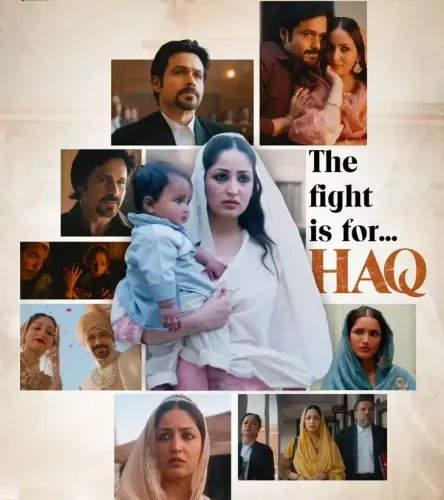
Indore, Nov 4 (NationPress) As the release date of the Yami Gautam Dhar-Emraan Hashmi film 'Haq' approaches on November 7, it faces a legal challenge in the Madhya Pradesh High Court. Siddiqua Begum Khan, the daughter of the renowned Shah Bano Begum, has submitted a petition objecting to the film's unauthorized portrayal of her mother's personal narrative without the family's consent.
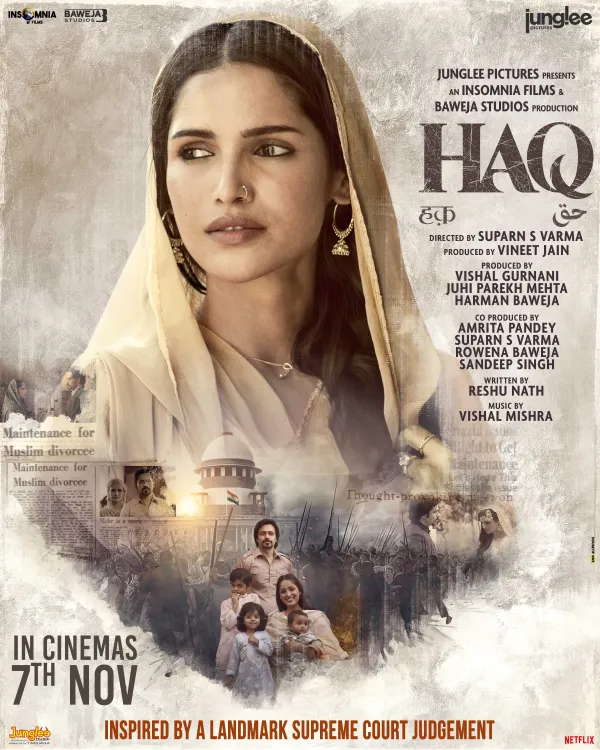
Directed by Suparn S Varma and produced by Junglee Pictures and Baweja Studios, 'Haq' dramatizes the landmark 1985 Supreme Court ruling in 'Mohd. Ahmed Khan v. Shah Bano Begum'.
This pivotal ruling revolutionized traditional norms, stating that a divorced Muslim woman is entitled to financial support from her ex-husband under Section 125 of the Criminal Procedure Code.
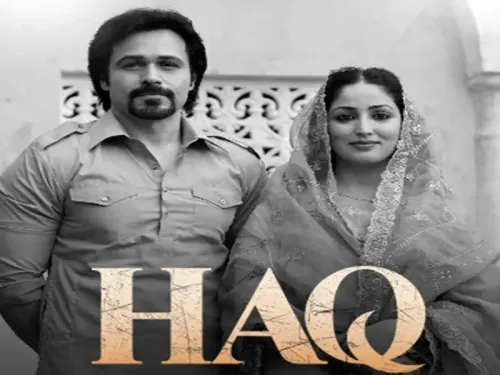
In the film, actress Yami Gautam portrays Shazia Bano, a character inspired by Shah Bano, who battles in court against Abbas, played by Emraan Hashmi.
The narrative is derived from the book 'Bano: Bharat Ki Beti' authored by Jigna Vora. During a court session at the Indore Bench presided by Justice Pranay Verma, attorney Tousif Warsi represented Siddiqua.
He asserted, 'This movie is not merely inspired—it's a complete replication of Shah Bano's personal hardships. The teasers misrepresent her and transform genuine suffering into fictional accounts. We, the daughters, never granted permission. The CBFC approved it without thorough review!'
He referred to a prior legal notice sent to the filmmakers and the CBFC.
Warsi criticized the trailers for fabricating false events while using her mother's authentic name and life. The producers countered by highlighting a disclaimer in the film.
They argued that 'Haq' is 'fictional storytelling' based on public court documents—thus, no explicit permission is needed. Legal representatives from the CBFC remarked, 'Anything in public records can be freely utilized; it's merely inspired and does not harm anyone.'
Justice Verma noted, 'If she has faced struggles, shouldn’t that be acknowledged rather than disparaged? This could be seen as a person advocating for her rights.' However, the court noted that the disclaimer was not available in the court documents, leading to a postponement of the case.
The bench requested the production of the disclaimer the following day; the session is set to continue on Tuesday.
Point of View
The ongoing legal battle surrounding 'Haq' raises critical questions about ownership of personal narratives in film. It highlights the tension between artistic expression and the rights of individuals whose stories are portrayed. The situation demands a careful examination of consent and representation, ensuring that filmmakers respect the legacies of those whose lives inspire their work.
NationPress
20 Sept 2026
Frequently Asked Questions
What is the movie 'Haq' about?
The movie 'Haq' is based on the landmark Supreme Court case 'Mohd. Ahmed Khan v. Shah Bano Begum,' which addressed financial rights for divorced Muslim women.
Who is challenging the film?
Siddiqua Begum Khan, the daughter of Shah Bano Begum, is challenging the film, claiming it portrays her mother's private life without consent.
What legal action has been taken?
A petition has been filed in the Madhya Pradesh High Court, seeking a ban on the film's release due to unauthorized use of personal stories.
What stance do the filmmakers take?
The filmmakers assert that 'Haq' is fictionalized content based on public records, and a disclaimer is included to clarify this.
When is the film scheduled to release?
The film 'Haq' is set to release on November 7.