Amit Shah Defends BJP's Stance on Speaker Motion, Citing Historical Precedents
Synopsis
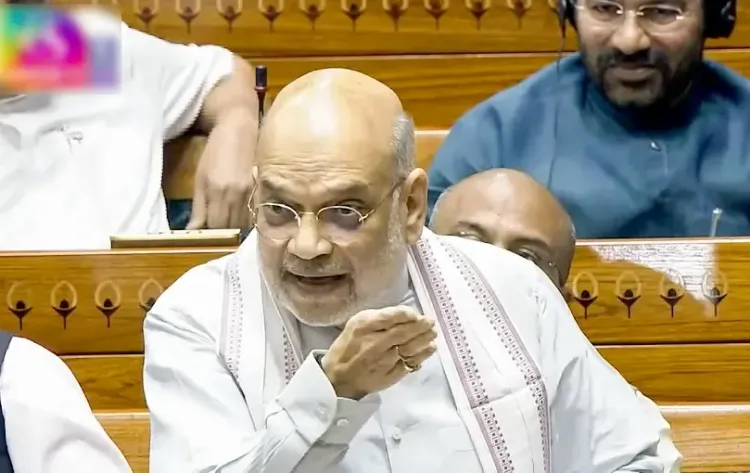
In a recent address to the Lok Sabha, Union Home Minister Amit Shah defended the BJP's position regarding the no-confidence motion against Speaker Om Birla, referencing historical examples to counter the Opposition's claims about the Deputy Speaker's appointment.
Key Takeaways
Amit Shah defended the BJP's approach to the no-confidence motion against Speaker Om Birla .
Historical examples were cited to challenge the Opposition's claims about the Deputy Speaker's role.
Shah emphasized the BJP's commitment to parliamentary integrity.
The current Speaker stepped down immediately after the motion was filed.
No Speaker has been removed from office since Independence.
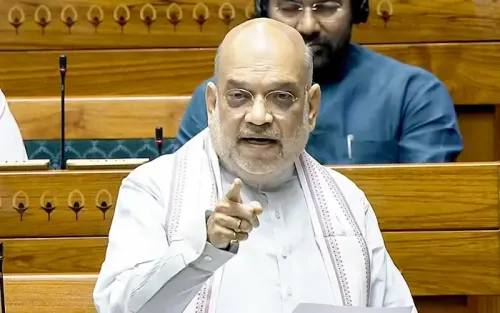
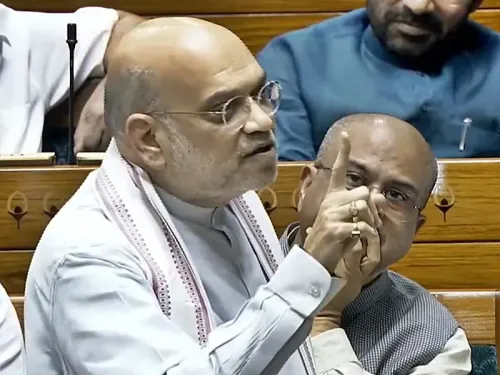
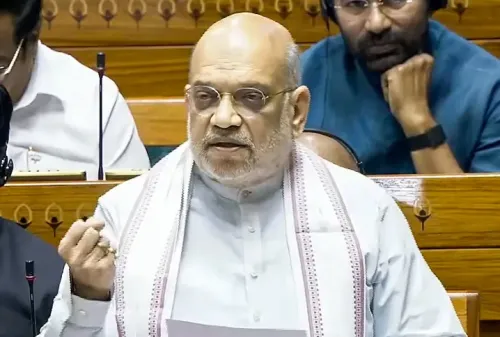
New Delhi, March 11 (NationPress) Union Home Minister Amit Shah addressed the Lok Sabha on Wednesday amidst discussions surrounding the no-confidence motion against Speaker Om Birla. He emphasized that historical precedents challenge the claims made by the Opposition regarding the necessity of appointing a Deputy Speaker.
Shah pointed out that during the three notable instances in parliamentary history where no-confidence motions were raised against a Lok Sabha Speaker, the proceedings were overseen by a Deputy Speaker. He countered the Opposition's criticism regarding the lack of a Deputy Speaker by highlighting that previous governments had followed a different approach.
He cited examples from 1966 and 1987, noting that on both occasions, a Deputy Speaker was present, and the position was not vacant. However, he mentioned that the Congress had appointed its own members to fill this role.
Shah remarked that the Congress now views the Deputy Speaker position as their entitlement, despite historical records showing that they had previously occupied the role themselves. He argued that this undermines their moral authority to criticize the current vacancy.
Moreover, he pointed out that the Congress had even placed a member from the ruling party in a role they claim is intended for the Opposition, which he characterized as typical behavior of the Congress during its governance.
Shah referenced instances where Congress members held the Deputy Speaker position, such as M.A. Ayyangar in 1954 and Krishnamoorthy Rao in 1966. He indicated that unlike past practices, the current government has opted to leave this position vacant, allowing space for the Opposition, whereas prior administrations filled the role with their own party members.
He contrasted the actions of past Speakers with that of Birla, explaining that during the Congress-led governments, Speakers remained in their positions for up to 14 days even after a no-confidence motion was introduced against them. In contrast, Birla promptly stepped down from presiding over the House once the motion was submitted and refrained from occupying the Chair while the motion is under review.
"Unlike previous instances, the current Speaker vacated the Chair right after the notice was submitted and will return only after the House has made a decision on the motion," Shah stated.
Highlighting the differences in parliamentary behavior between the BJP and the Congress, Shah noted that in the last seventy years, the BJP has not been involved in any no-confidence motions against Lok Sabha Speakers.
"The BJP has never been part of any of these motions, as we prioritize upholding parliamentary principles and the integrity of the Chair. It was the Samajwadi Party and the Communist Party that initiated motions against the Chair during Congress administrations, and now they find themselves aligned with the Congress," Shah commented.
The no-confidence motion against Lok Sabha Speaker Om Birla was filed by Opposition MPs in February and has reportedly garnered support from over 100 members.
Opposition parties have charged the Speaker with bias, pointing to the suspension of several Opposition MPs and the denial of speaking time to key members, including Leader of the Opposition Rahul Gandhi.
This motion has been initiated under Article 94 of the Constitution, which pertains to the resignation, vacation, and removal of the Speaker and Deputy Speaker of the Lok Sabha. The Constitution allows for the removal of the Speaker through a resolution passed by a majority of the House; however, no Speaker has ever been removed from office since Independence.
Historically, there have been three attempts to oust a Speaker, all of which were unsuccessful.
In 1954, a resolution led by J.B. Kripalani, leader of the Praja Socialist Party, was moved against the first Lok Sabha Speaker G.V. Mavalankar, but it was rejected by the House after deliberation.
In 1966, the SP MPs submitted a notice against Speaker Sardar Hukam Singh, but it did not progress as it lacked the necessary support from MPs.
In 1987, Somnath Chatterjee, a leader from the CPI(M), moved a resolution against Speaker Balram Jakhar, but it too was defeated after discussion in the House.
Point of View
The discussion surrounding the no-confidence motion against Speaker Om Birla highlights the ongoing political tensions and the BJP's commitment to maintaining parliamentary integrity, as articulated by Home Minister Amit Shah. The historical context provided by Shah serves to reinforce the BJP's position in this debate.
NationPress
26 Sept 2026
Frequently Asked Questions
What was Amit Shah's main argument regarding the no-confidence motion?
Amit Shah argued that historical precedents indicate that the Deputy Speaker has always presided over such motions, challenging the Opposition's claims about the necessity of appointing a Deputy Speaker.
How did Shah contrast the current Speaker's actions with past Speakers?
He noted that past Speakers often remained in their positions for extended periods after a no-confidence motion was introduced, whereas Speaker Om Birla stepped down immediately after the motion was filed.
What historical examples did Shah reference?
Shah cited instances from 1966 and 1987 where past Speakers had the Deputy Speaker present during no-confidence motions, contrasting with the current government's decision to leave the position vacant.
What constitutional article governs the removal of the Speaker?
The removal of the Speaker is governed by Article 94 of the Constitution, which outlines the procedures for vacation, resignation, and removal.
Have any Speakers been removed from office since Independence?
No, historically, there have been three attempts to remove a Speaker, but none have succeeded since Independence.