Rajasthan CM Bhajanlal Sharma launches ₹924 crore projects for Udaipur division
Synopsis
Rajasthan CM Bhajanlal Sharma personally oversaw the launch of 1,452 projects worth ₹924 crore in Udaipur division on Saturday, making tribal welfare, cultural preservation, and rural infrastructure the centrepiece of a sweeping state push — backed by national schemes worth ₹24,000 crore and a state-level employment drive that has already filled 1.90 lakh posts.
Key Takeaways
Rajasthan CM Bhajanlal Sharma launched 1,452 projects worth ₹924 crore in the Udaipur division on 26 September 2026 .
423 projects worth ₹256 crore were inaugurated, with 1,029 projects worth ₹668 crore receiving foundation stones.
The state has set up 530 Van Dhan Vikas Kendras across eight districts and raised the student mess allowance to ₹3,250 per month.
Loans worth ₹925 crore were disbursed under the Dr Bhimrao Ambedkar Rajasthan Dalit-Tribal Enterprise Promotion Scheme .
1.90 lakh posts filled during the government's tenure; recruitment underway for 1.22 lakh more , with a calendar for 1.25 lakh posts scheduled for 2026 .
Daytime electricity supply for farmers across Rajasthan targeted by 2027 .
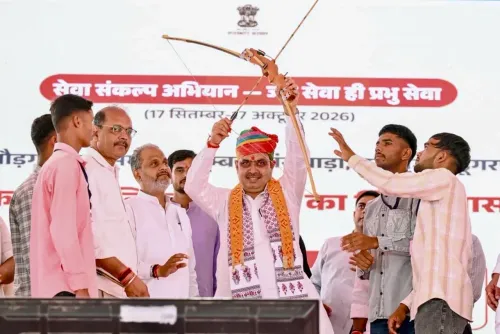
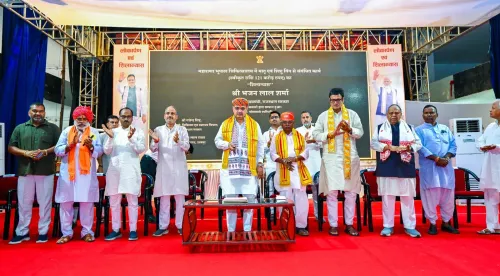
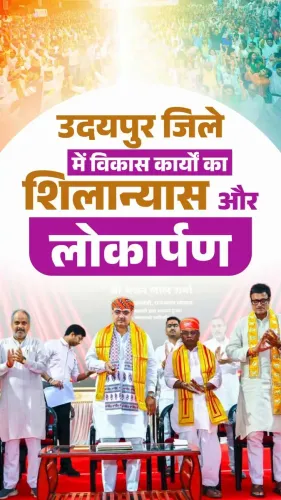
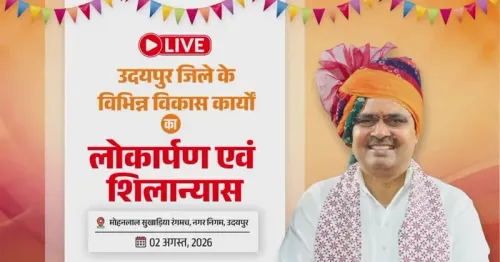
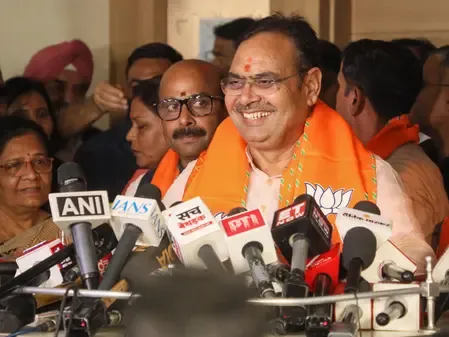
Rajasthan Chief Minister Bhajanlal Sharma on Saturday, 26 September 2026, inaugurated and laid foundation stones for development projects worth ₹924 crore spanning seven districts of the Udaipur division, with a strong emphasis on preserving tribal art, culture, and livelihoods. The event, held in Pratapgarh, covered 1,452 projects in total across sectors ranging from roads and healthcare to education and skill development.
Key Developments at the Pratapgarh Programme
Sharma inaugurated 423 projects worth ₹256 crore dedicated to tribal regions, covering 14 power projects worth ₹87 crore, 15 drinking water and irrigation projects worth ₹75 crore, seven road projects worth ₹22 crore, and 19 school-related projects worth ₹9 crore. Additional works encompassed healthcare, skill development, environmental conservation, hostels, and tribal welfare.
Foundation stones were laid for 1,029 projects worth ₹668 crore, including 299 road projects worth ₹429 crore, 562 rural development projects worth ₹73 crore, and six major health infrastructure projects worth ₹71 crore. Sharma also launched Aadipar, the first honey product under the Vangiri brand introduced by Rajasangh, aimed at promoting minor forest produce from tribal areas.
Tribal Welfare and Cultural Preservation
Sharma underscored the state government's commitment to preserving tribal heritage while creating economic opportunities through organisations such as Rajasangh and CONFED, which aim to connect tribal communities with better markets and fair pricing. He referenced the Gram Vikas Chaupal held at Bambori as a model for engaging directly with local communities on cultural and development needs.
At the national level, Sharma highlighted schemes under Prime Minister Narendra Modi, including the ₹24,000 crore PM-JANMAN scheme and the Dharti Aaba Janjatiya Gram Utkarsh Abhiyan, which target housing, electricity, clean water, healthcare, and roads for over 60,000 tribal villages nationwide. The expansion of Eklavya Model Residential Schools and hostel infrastructure was also noted.
State-Level Schemes and Livelihood Measures
Among Rajasthan-specific interventions, Sharma cited the establishment of 530 Van Dhan Vikas Kendras across eight districts and a new skill development centre in Udaipur. The monthly mess allowance for students was raised to ₹3,250, and 250 new Maa-Badi centres were sanctioned, bringing the total inaugurated under the Adi-Karmyogi Abhiyan to 5,947.
Honorariums for educators, assistants, sanitation workers, and health workers at Maa-Badi centres were also increased. A total of 2.36 lakh agricultural minikits were distributed to tribal farmers, and loans worth ₹925 crore were disbursed under the Dr Bhimrao Ambedkar Rajasthan Dalit-Tribal Enterprise Promotion Scheme. The Saundh Mati-Adi Dharohar documentation scheme was launched to record and preserve tribal art forms.
Employment, Infrastructure, and Water Projects
On the employment front, Sharma stated that 1.90 lakh posts had been filled during the government's tenure, with recruitment actively underway for 1.22 lakh posts and a calendar issued for 1.25 lakh posts planned for 2026. E-libraries and e-Mitra services are being rolled out at panchayat level through Atal Gyan Kendras.
On water availability, agreements have reportedly been signed with other states related to the Ramjal Setu link, Yamuna water sharing, Narmada, and Kishau projects. The government has also set a target of providing daytime electricity supply to farmers across Rajasthan by 2027. Revenue Minister Hemant Meena affirmed that Pratapgarh and the broader division were witnessing accelerated development, particularly in drinking water, roads, healthcare, education, and electricity.
The scale of Saturday's programme signals the state government's intent to position tribal welfare and rural infrastructure as flagship priorities heading into the next phase of governance in Rajasthan.
Point of View
452 projects across seven districts in a single ceremony reflects the BJP government's need to demonstrate visible delivery in tribal-dominated constituencies ahead of future electoral cycles. The parallel invocation of central schemes like PM-JANMAN and the Dharti Aaba Abhiyan allows Sharma to co-brand with Modi, a pattern that has defined the 'double-engine government' playbook since 2023. What deserves scrutiny is whether the ₹668 crore in foundation stones will translate into completed projects on time — Rajasthan has a mixed record on project completion within announced timelines. The cultural preservation angle, from Saundh Mati documentation to the Adi Gaurav Samman, is noteworthy but harder to measure; unless backed by sustained funding and community buy-in, heritage schemes risk becoming ceremonial rather than transformative.
NationPress
26 Sept 2026
Frequently Asked Questions
What is the total value of projects launched by Rajasthan CM Bhajanlal Sharma in Udaipur division?
Chief Minister Bhajanlal Sharma inaugurated or laid foundation stones for 1,452 projects worth ₹924 crore in the Udaipur division on 26 September 2026. The projects span seven districts and cover roads, health, education, drinking water, electricity, and tribal welfare.
Which tribal welfare schemes were highlighted at the Pratapgarh event?
Sharma highlighted both central and state-level schemes, including the ₹24,000 crore PM-JANMAN scheme and the Dharti Aaba Janjatiya Gram Utkarsh Abhiyan targeting over 60,000 tribal villages. At the state level, measures included 530 Van Dhan Vikas Kendras, the Dr Bhimrao Ambedkar Rajasthan Dalit-Tribal Enterprise Promotion Scheme, and the Saundh Mati-Adi Dharohar tribal art documentation initiative.
How many government jobs has Rajasthan filled under the Bhajanlal Sharma government?
According to Sharma, 1.90 lakh posts have been filled during the government's tenure. Recruitment is actively underway for 1.22 lakh additional posts, and a calendar has been issued for 1.25 lakh posts to be filled in 2026.
What is Aadipar, the product launched at the Pratapgarh event?
Aadipar is the first honey product under the Vangiri brand, introduced by Rajasangh to promote and market minor forest produce sourced from tribal areas of Rajasthan. Its launch is part of the broader effort to create new livelihood and market access opportunities for tribal communities.
What is the target for electricity supply to farmers in Rajasthan?
The Rajasthan government has set a target of providing daytime electricity supply to farmers across the state by 2027. Water-related agreements have also reportedly been signed with other states covering the Ramjal Setu link, Yamuna water sharing, Narmada, and Kishau projects.