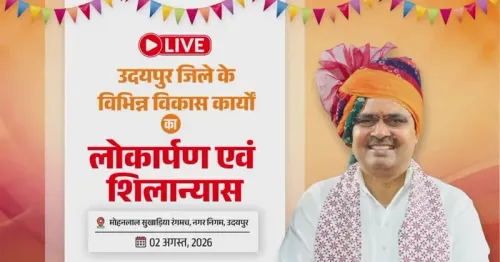
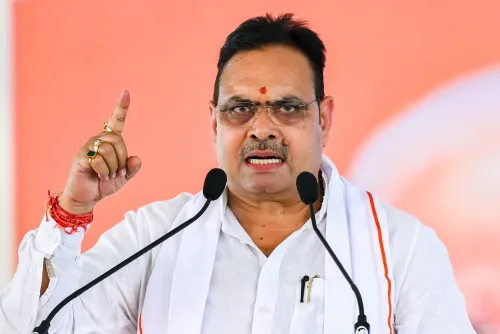
CM Bhajanlal Sharma lays foundation for 436 projects in Udaipur
Synopsis
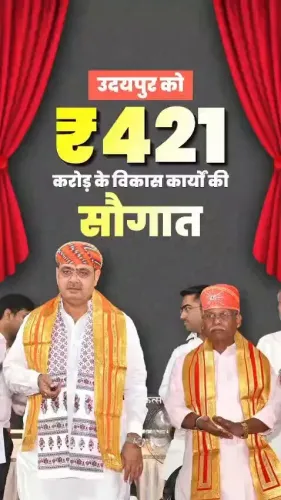
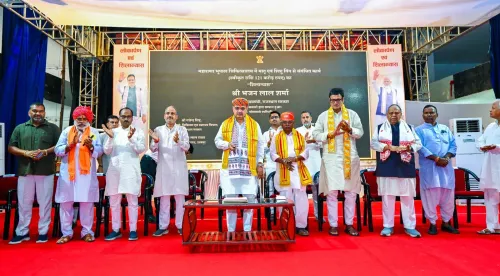
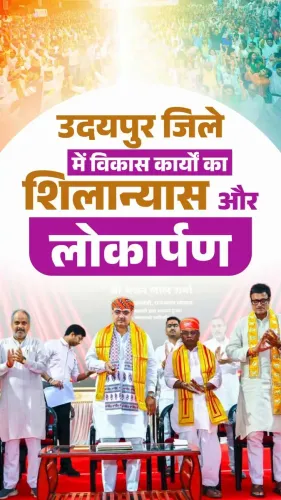
Chief Minister Bhajanlal Sharma laid foundation stones for 436 infrastructure projects worth over Rs 373 crore in Udaipur on 3 August 2026, under the state's 'Aapno Agraṇī Rājasthān' campaign, targeting the heritage city's civic and tourism-linked urban needs.
Key Takeaways
436 infrastructure projects worth over Rs 373 crore received foundation-stone laying in Udaipur on 3 August 2026 .
Chief Minister Bhajanlal Sharma , in office since December 2023 , led the announcement under the BJP state government.
The initiative is tagged under the 'Aapno Agraṇī Rājasthān' campaign, the government's urban development branding effort.
Udaipur was previously selected under the national Smart Cities Mission in 2015 , giving it a history of targeted central investment.
Execution timelines and follow-through budget allocations will determine whether the scale of the announcement translates to on-ground impact for residents and the tourism sector.
Over Rs 373 crore and 436 projects — that is the scale of the infrastructure push Chief Minister Bhajanlal Sharma has just unlocked for Udaipur, the lake city that anchors Rajasthan's tourism economy. The Chief Minister's Office of Rajasthan announced the foundation-stone laying on Monday, 3 August 2026, framing it as a defining step in the state's urban development agenda.
What Rs 373 crore is meant to do for Udaipur
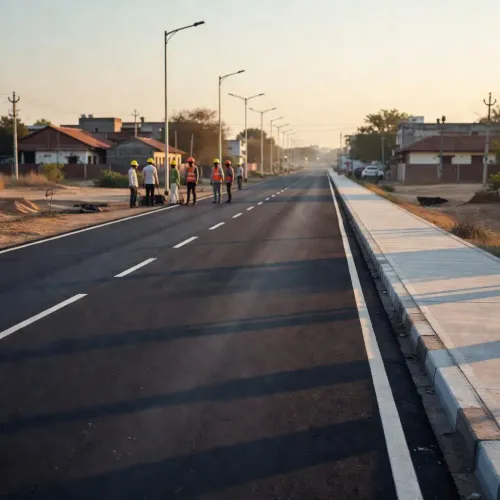
The announcement covers 436 separate projects spread across the city, touching everything from basic civic infrastructure to connectivity upgrades. Udaipur's economy runs heavily on domestic and international tourism — its palaces, lakes, and heritage ghats draw millions of visitors each year — making reliable roads, drainage, water supply, and public spaces not just a civic need but an economic imperative.
The state government tagged the initiative under its Aapno Agraṇī Rājasthān ('Our Leading Rajasthan') campaign, signalling that this package is part of a broader branding effort to position Rajasthan as a model state for development under the BJP government led by CM Bhajanlal Sharma, who took office in December 2023.
Udaipur's place in Rajasthan's urban infrastructure push
Udaipur is no stranger to targeted central and state investment. The city was selected under the national Smart Cities Mission in 2015, which brought a wave of technology-enabled urban upgrades to its core areas. Central schemes like AMRUT have also channelled funds into its water and sanitation networks over the past decade.
The August 2026 package follows a well-established pattern: Rajasthan administrations of both stripes have periodically announced city-specific infrastructure bundles for heritage centres, combining state budgetary allocations with central scheme money. The scale — over four hundred projects in a single announcement — points to an aggregation of ward-level works alongside larger civic contracts, a common format for foundation-stone events in Indian urban governance.
What comes after the stone-laying
Foundation-stone ceremonies mark a beginning, not a delivery. The real test for these 436 projects will be execution timelines, contractor mobilisation, and whether supplementary budget allocations follow in the next state financial year. For Udaipur's residents and the businesses that depend on tourist footfall, the quality and speed of on-ground work will matter far more than the headline number.
Still, the political signal is unmistakable: the Sharma government is investing in making Udaipur a showcase, and it wants that story told loudly ahead of the next electoral cycle.
Point of View
Large-rupee foundation-stone event that signals governing intent and generates local goodwill ahead of electoral cycles. For CM Bhajanlal Sharma, still consolidating his position after the BJP's December 2023 comeback in Rajasthan, city-specific infrastructure bundles in high-visibility heritage towns serve a dual purpose — genuine development optics and partisan geography. The 'Aapno Agraṇī Rājasthān' branding suggests the government is consciously building a development narrative, but the gap between foundation stones and completed projects has historically been wide in Indian urban governance, and that gap will be the real measure of this announcement.
NationPress
18 Sept 2026
Frequently Asked Questions
How many projects were announced for Udaipur in August 2026?
436 projects worth over Rs 373 crore had their foundation stones laid in Udaipur on 3 August 2026 by Chief Minister Bhajanlal Sharma.
Who is the Chief Minister of Rajasthan in 2026?
Bhajanlal Sharma is the Chief Minister of Rajasthan, having taken office in December 2023 following the BJP's victory in the state assembly elections.
What is the 'Aapno Agrani Rajasthan' campaign?
'Aapno Agraṇī Rājasthān' — meaning 'Our Leading Rajasthan' — is the Bhajanlal Sharma government's branding initiative to position Rajasthan as a model state for urban development and infrastructure delivery.
Is Udaipur part of the Smart Cities Mission?
Yes. Udaipur was selected under the national Smart Cities Mission in 2015 , making it eligible for targeted urban infrastructure upgrades funded through central government schemes.
What does a foundation-stone laying mean for a project in India?
A foundation-stone or 'shilanyas' ceremony marks the official commencement of a project, but actual construction, contractor mobilisation, and fund disbursement follow separately — meaning completion timelines depend on subsequent administrative and budgetary steps.