Why is Cotton Replacing Snow in Shimla’s Winter Postcard This Season?

Synopsis
As Shimla once again faces a snowless winter, local authorities have resorted to using cotton to simulate snow for tourists. This article explores the implications of climate change on the region's weather patterns and the impact on holiday tourism, raising critical questions about environmental sustainability.
Key Takeaways
Shimla's winter postcard lacks natural snow, raising climate concerns.
Authorities use cotton to simulate snow for tourism.
Rising temperatures and pollution are key factors in snow absence.
Tourism remains robust despite environmental changes.
Awareness initiatives, like films, focus on climate issues.
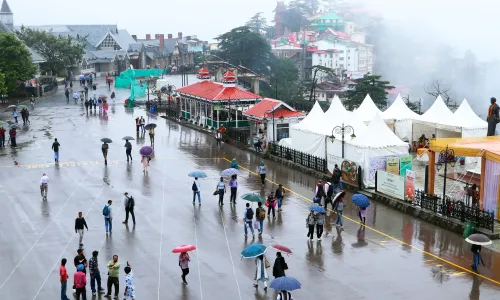
Shimla, Dec 23 (NationPress) This season, snow has once again quietly vanished from Shimla's winter postcard. The characteristic crunch beneath feet is absent, cedar hills stand devoid of white, and the serene silence that typically envelops the hill town in December has not materialized.
Since 2016, a true 'White Christmas' has eluded the region, except for this upcoming festive season. To maintain the enchanting winter spirit with snow-covered streets that offer a 'fairy-tale' ambiance for tourists, local officials have resorted to artificial solutions—carefully spread cotton to create a fleeting illusion of snow, thus inviting visitors to a manufactured fairy tale where nature has temporarily retreated.
This situation raises alarms about climate change while showcasing the effort to sustain tourism and holiday cheer despite ecological transformations.
The India Meteorological Department (IMD) reports that prior to 2016, Shimla, the summer capital of British India, experienced Christmas snows in 1991, with 49 cm of snowfall recorded.
Although some years between 2014 and 2018 saw mild weather in the lead-up to Christmas, experts attribute the lack of snow to rising temperatures, vehicle emissions, and shifting climate patterns.
Dry weather is expected to persist until December 28 across most tourist destinations in Himachal Pradesh, according to weather forecasts. Nevertheless, temperatures have been unusually low in well-known tourist spots including Shimla, Narkanda, Kasauli, Manali, Dharamsala, Dalhousie, and Chamba.
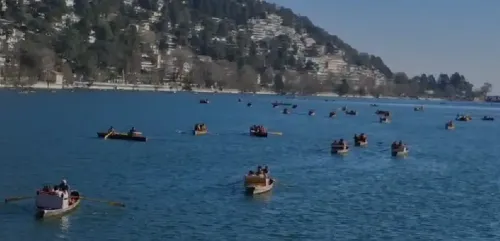
Yet, enthusiastic holidaymakers from northern states have already begun to flock to the region's tourist resorts for Christmas and New Year celebrations.
“From Christmas through the weekend, many of our hotels have been receiving strong bookings and inquiries,” a senior official from the Himachal Pradesh Tourism Development Corporation (HPTDC) shared with IANS.
The influx of tourists in Shimla, Narkanda, Manali, Dalhousie, Dharamsala, and Palampur has been substantial.
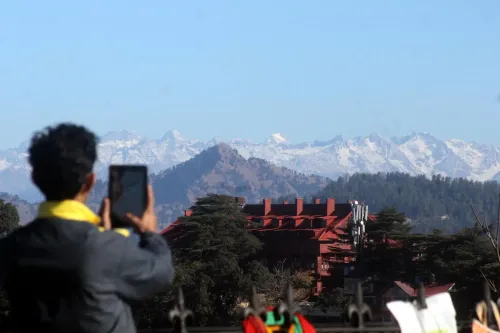
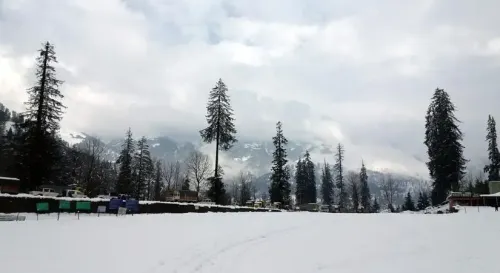
Mountain peaks visible from Shimla’s historic Ridge, as well as from Dharamsala and Palampur, have been lightly covered with snow.
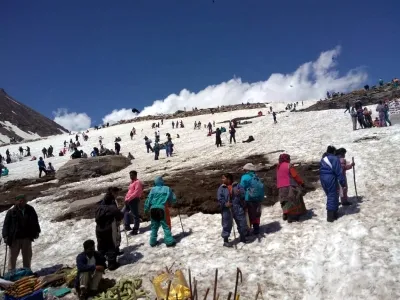
The popular resort of Manali is seeing a healthy share of visitors due to substantial snow in its surrounding hills.
“The snow that blankets the hills and pathways in pristine white adds a magical touch. Typically, we opt for winter vacations around Christmas. This year, however, most popular hill destinations lack a snowy landscape, so we have chosen to visit Manali on New Year’s Eve, hoping to experience the snowy scenery,” expressed Radhika Gupta, a corporate executive from Chandigarh, to IANS.
This month, Governor Shiv Pratap Shukla viewed the children's film “Crossings” at Lok Bhavan and praised it for effectively raising awareness about climate change and environmental conservation among kids.
He commended filmmaker Vivek Mohan, a Shimla native and national film award winner, for delivering a poignant message through the film about how human actions can lead to natural disasters and the importance of preserving nature for future generations.
Mohan informed the Governor that “Crossings” is a short film inspired by real-life events, addressing global warming and climate change issues. He noted that the film continues the message presented in his earlier work “For Whom the Jingle Bells Toll.”
The film's central message is that the Earth is not inherited “from our ancestors, but borrowed for our children.”
However, meteorological officials remain cautious about the likelihood of snow on New Year's Eve. They indicate that it is still too early to determine if Shimla, Manali, or Dalhousie will enjoy snow cover next year.
A study by the IMD attributes the alterations in Shimla’s climate to deforestation and pollution. It notes that Shimla's harsh winters, typically starting in November and concluding in March, have diminished since the mid-1980s.
This research examines the snowfall patterns in Shimla from 1990 to 2007. Some long-time residents ponder whether the recent increases in minimum winter temperatures are a consequence of global warming, despite scientists asserting that the overall warming trend should have minimal impact on local weather over such short timeframes, according to current models.
(Vishal Gulati can be contacted at vishal.g@ians.in)
Point of View
I note that the absence of snowfall in Shimla raises significant concerns regarding climate change. The efforts to maintain tourism through artificial means highlight the urgent need for sustainable practices. This situation challenges us to rethink our environmental policies and prioritize ecological preservation while still celebrating our cherished winter traditions.
NationPress
12 Oct 2026
Frequently Asked Questions
Why is there no snow in Shimla this winter?
The lack of snow in Shimla this winter is attributed to rising temperatures, vehicular pollution, and changing climate patterns.
What measures are being taken to attract tourists despite the lack of snow?
Local authorities are using artificial cotton to simulate snow and create a festive atmosphere for tourists.
Has Shimla experienced significant snowfall in previous years?
Yes, prior to 2016, Shimla recorded significant snowfall, with 49 cm noted in 1991 during Christmas.
What is being done to raise awareness about climate change?
Films like 'Crossings' are being shown to promote awareness about climate change and its effects on the environment.
How is tourism being affected in Shimla?
Tourism remains strong despite the lack of snow, with many visitors still flocking to the area for holiday celebrations.