Will the New Year Bring Snow to Himachal?
Synopsis
As the New Year approaches, Himachal Pradesh holds hope for snow after a dry winter. The anticipated snowfall brings joy to tourists and farmers alike, with the hospitality industry eager for increased visitors. With predictions from IMD and a growing number of inquiries, excitement builds as the region awaits its first snowfall of the season.
Key Takeaways
IMD predicts snow and rain for December 31.
Tourism and agriculture are interlinked in Himachal Pradesh.
Hotel occupancy rates are high due to increased demand.
Travelers should book accommodations in advance.
Black ice poses risks in high mountain areas.
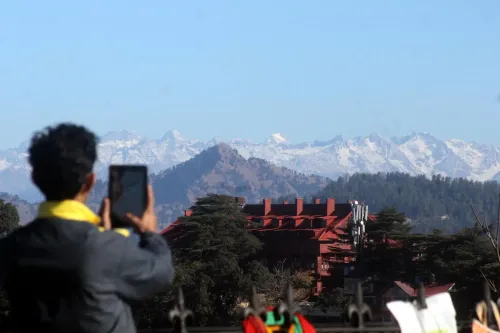
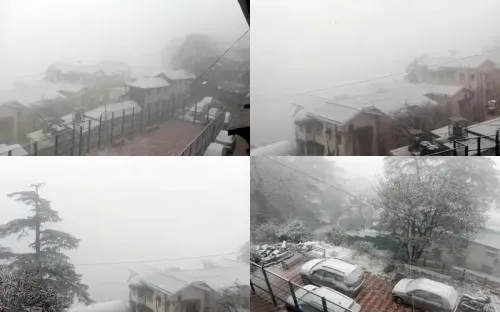
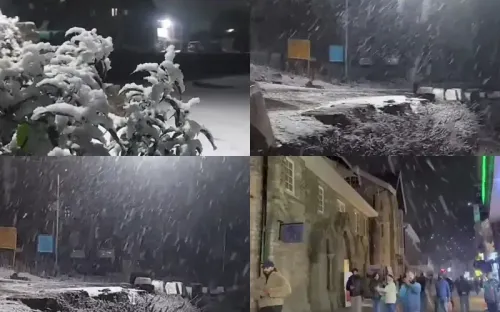
Shimla/Manali, Dec 30 (NationPress) Following an exceptionally wet southwest monsoon in Himachal Pradesh that resulted in numerous casualties and extensive damage to infrastructure, this winter has experienced a lack of precipitation since October 9. The mountains have turned brown without a “blanket of snow” or rain. As the New Year approaches, there is renewed hope for widespread snow and rain, bringing joy to both tourists and local farmers.
According to the India Meteorological Department (IMD), Himachal Pradesh may witness rain and snow on December 31. “Light rain or snow is likely at isolated locations on December 30 and January 2, with light to moderate rain and snow expected at many places on December 31 and a few locations on January 1,” the IMD stated.
They also mentioned that “dry weather is predicted for the remaining days of the week.”
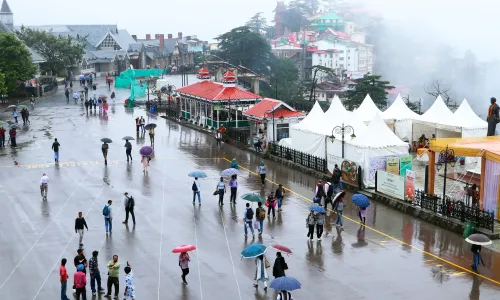
Members of the hospitality sector emphasize that the prolonged absence of snow has hindered tourist plans to visit the hills. “With the IMD predicting snow just before the New Year, we anticipate a surge in holidaymakers,” a hotelier from Shimla told IANS.
He noted an influx of inquiries from tourists regarding the likelihood of snow in Shimla. “We are encouraging them to explore hill destinations for a snowy landscape,” he added.
Areas like Narkanda, the heart of the apple belt located about 65 km from the state capital, along with popular tourist locations such as Manali and Dalhousie, remain devoid of snow cover. However, the hills surrounding Manali are blanketed in snow. “We have been basking in the sun in Shimla for many days. We are eagerly awaiting the first snow of the season here,” expressed Jagdeep Ghuman, a tourist from Delhi, to IANS.
Experts at the Dr Y.S. Parmar, University of Horticulture and Forestry in Nauni, Solan district, indicate that traditionally, October to December are dry months in the region, with long-term observations (1980-2024) showing that November experiences below-normal rainfall in approximately 68.2% of the years. In sub-humid mid-hill areas, soil moisture loss through evaporation can reach 30-50%, a figure likely to rise under current conditions. The recurring drought during these months has become prevalent, and with nearly 70% of the state's area being rainfed, adopting moisture-conservation agronomic practices is crucial.
The lack of adequate soil moisture during this dry spell could negatively impact fruit plant saplings by hindering root development, restricting nutrient uptake, and increasing vulnerability to diseases. Experts recommend postponing new plantations of deciduous fruit crops like apples, peaches, plums, apricots, persimmons, walnuts, and kiwifruit until moisture levels improve.
For Jeet Singh Negi, a small pea grower in the mountainous Lahaul Valley, this has been a virtually snowless November and December. “Our fields lack snow cover. We are concerned because winter precipitation is essential for water security in these remote villages during the summer when we sow our pea and barley crops,” he stated.
In the state capital, situated approximately 7,000 feet above sea level, the minimum temperature on Tuesday was recorded at 10 degrees Celsius, which is six degrees above normal. Tabo, a historical seat of Buddhist culture in the picturesque Spiti Valley, was the coldest area in the state, experiencing a bone-chilling cold wind at 39 km per hour.
The police have cautioned the public against venturing into high mountain areas due to the risk of black ice formation early in the morning, where motorists may be unable to see it, leading to reduced tire grip and ineffective brakes. To capitalize on the influx of tourists, several private hoteliers in key destinations have raised their room rates.
Reports indicate that a room priced at Rs 3,000 from October to mid-December is now being sold for Rs 8,000 per day in many hotels across Shimla, Kufri, Chail, Narkanda, and Kasauli. Government officials have also advised travelers to secure advance bookings for hotels or homestays, as occupancy rates in many establishments in Shimla, Manali, Kasauli, and Dharamsala are between 90% and 98% until January 4.
“Occupancy in most of our properties is nearing 80%. We expect to see good business this week,” a HPTDC official relayed to IANS.
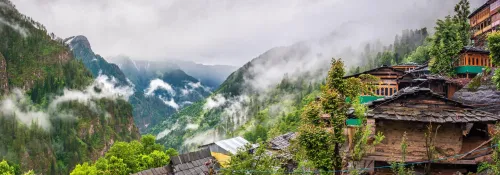
Himachal Pradesh lacks high-end hotels and restaurants in remote regions. The trend of rural homestays, initiated in 2008, has been drawing tourists to the interior areas, providing an excellent option to experience pristine nature and a snowy landscape.
The state's economy heavily relies on tourism, alongside hydroelectric power and horticulture.
(Vishal Gulati can be contacted at vishal.g@ians.com)
Point of View
The snow forecast in Himachal Pradesh is a beacon of hope following a difficult winter. The anticipated snowfall not only uplifts the spirits of tourists but also supports the local agricultural community, highlighting the interconnectedness of tourism and horticulture in the region's economy.
NationPress
30 Sept 2026
Frequently Asked Questions
What is the current weather forecast for Himachal Pradesh?
The IMD predicts light snow and rain for Himachal Pradesh on December 31, with dry weather expected in the following days.
Why is snow important for farmers in Himachal Pradesh?
Winter precipitation is crucial for water security, helping to support crops during the summer months.
How has the hospitality sector been affected by the lack of snow?
The prolonged absence of snow has impacted tourist plans, but the recent forecast has generated optimism for increased bookings.
What are the conditions like in popular tourist areas?
Areas like Narkanda and Dalhousie currently lack snow cover, while hills around Manali are well-covered.
What should travelers keep in mind when visiting mountainous areas?
Travelers are advised to avoid high mountains due to risks of black ice and should make advance bookings due to high occupancy rates.