SIA Unveils Charge Sheet in 'Doctors Terror Module' Case, Identifying 10 Accused
Synopsis
In a significant development, the J&K SIA has filed a charge sheet in the 'Doctors Terror Module' case, naming ten individuals implicated in a terrorist conspiracy that aimed to revive the Ansar Ghazwat-ul-Hind group through radicalization and explosive procurement.
Key Takeaways
Ten individuals have been named in the charge sheet.
The conspiracy aims to revive Ansar Ghazwat-ul-Hind .
The group disseminated extremist propaganda through digital platforms .
Triacetone Triperoxide (TATP) was identified as a preferred explosive material.
The SIA's investigation showcases the seriousness of the threat posed by such networks.
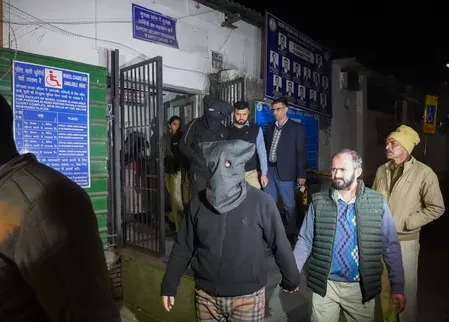
Srinagar, April 16 (NationPress) - On Thursday, the Jammu and Kashmir State Investigation Agency (SIA) submitted a charge sheet in a significant terrorist conspiracy case linked to a secretive network known as the 'Doctors Terror Module', which includes ten individuals named in relation to an FIR filed at the Nowgam Police Station in Srinagar.
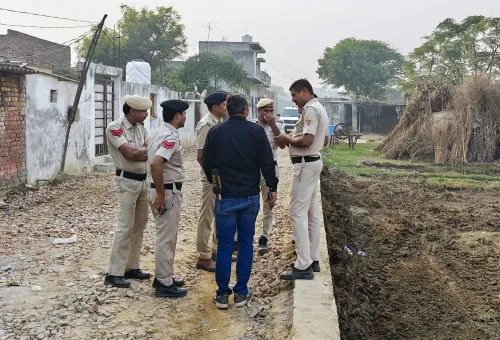
This case pertains to an event on October 19, 2025, when inflammatory and menacing posters appeared in the Nowgam area, allegedly issued by the banned group Jaish-e-Mohammad (JeM).
Investigators believe these posters were designed to instill fear in the local population, disrupt public harmony, and undermine India's sovereignty and territorial integrity.
The SIA's investigation uncovered that the poster campaign was part of a larger, well-organized conspiracy aimed at rejuvenating the banned organization Ansar Ghazwat-ul-Hind (AGuH).
The individuals charged reportedly formed a secretive module tasked with radicalization, recruitment, and preparing for terrorist attacks throughout the nation.
The agency further asserted in its charge sheet that the group strategically invoked JeM’s name to leverage its infamy and create a psychological impact, while covertly working towards reinstating AGuH.
Officials indicated that this was a deliberate effort to mislead security forces and obscure the true objectives of the group. Notably, the module included highly educated individuals, such as medical professionals, who allegedly exploited their knowledge, access, and institutional environments for illicit activities.
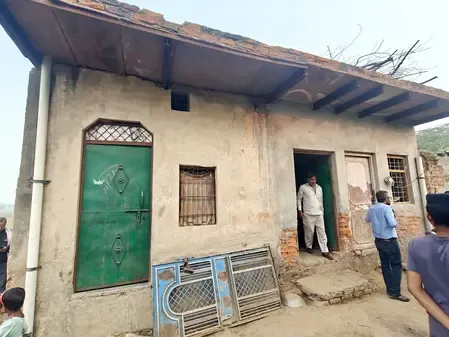
Investigations revealed that the accused propagated extremist messages via digital channels and acquired materials associated with explosive manufacturing, including activities conducted within residential areas and facilities linked to Al-Falah Medical College.
Moreover, the probe unveiled that the group had chosen Triacetone Triperoxide (TATP), a highly unstable explosive commonly used in global terrorist incidents, as a preferred material due to the relative ease of obtaining its precursor ingredients.
Officials noted that the extent of the accumulation of explosive materials underscored the gravity of the conspiracy and the potentially devastating repercussions had it not been intercepted in time.
The SIA stated that it has dismantled the entire network and its support systems through a thorough, evidence-based investigation.
The charge sheet is substantiated by recoveries, digital forensic assessments, scientific evidence, and corroborative witness testimonies, outlining the roles and involvement of each accused.
The individuals named in the charge sheet include Arif Nisar Dar alias Sahil, Yasir-ul-Ashraf Bhat, Maqsood Ahmad Dar alias Shahid, Irfan Ahmad Wagay alias Owais, Zameer Ahmad Ahanger alias Mutlashi, Dr. Muzamil Shakeel Ganaie alias Musaib, Dr. Adeel Ahmad Rather alias Javaid, Dr. Shaheen Saeed, Tufail Ahmad Bhat, and Dr. Umar Un Nabi from Pulwama, who was killed in the Red Fort suicide attack.
The charge sheet has been presented before an appropriate court of law. Reaffirming its dedication to counter-terrorism operations, the SIA emphasized that this case illustrates the evolving and intricate nature of terrorist conspiracies, including the exploitation of professional institutions and digital platforms, and highlights the necessity for ongoing vigilance and cooperative efforts.
Further investigations into the matter are currently underway.
Point of View
It's crucial to recognize the gravity of the situation presented by the SIA's charge sheet. This case not only highlights the complex nature of modern terrorist networks but also the alarming infiltration of educated professionals into such schemes, necessitating a comprehensive response from security agencies and society at large.
NationPress
19 Sept 2026
Frequently Asked Questions
What is the 'Doctors Terror Module' case?
The 'Doctors Terror Module' case involves a covert network engaged in terrorist activities, with ten individuals named in a charge sheet filed by the J&K SIA.
What was the objective of the accused in this case?
The accused aimed to radicalize, recruit, and prepare for terrorist attacks, attempting to revive the banned group Ansar Ghazwat-ul-Hind.
What materials were linked to the conspiracy?
The group was found to have procured materials for explosive fabrication, specifically targeting Triacetone Triperoxide (TATP).
How did the SIA dismantle the network?
The SIA conducted an evidence-driven investigation that led to the dismantling of the entire network and its support structure.
What does this case reveal about the nature of terrorist conspiracies?
This case underscores the evolving sophistication of terrorist conspiracies, including the misuse of professional institutions and digital platforms.