Kerala drug network: Migrant workers, luxury parties fuel heroin and MDMA surge
Synopsis
Kerala's drug crisis has evolved well beyond coastal smuggling — migrant workers from the Northeast are now the primary carriers, luxury hotel parties are narcotics networking events, and both Golden Crescent and Golden Triangle cartels have a foothold. With 103 workers booked in 18 months and MDMA seizures rising, agencies are fighting on every front simultaneously.
Key Takeaways
103 migrant workers from Assam and northeastern states have been booked for drug trafficking in Kerala over the last one-and-a-half years .
DANSAF seized 183.55 grams of MDMA and 93.51 grams of ecstasy pills from arrested accused Kevin B Mathew .
A March 28 raid at a luxury hotel in Kadavanthra , Kochi, led to the arrest of eight people with narcotics.
Demand has shifted from marijuana to heroin , MDMA , and ecstasy , with heroin preferred for its concealability.
Cartels from both the Golden Crescent and Golden Triangle are reportedly active along Kerala's 590-kilometre coastline .
Drugs entering Kochi have been traced to supply lines from Karnataka and Delhi .
Kerala has emerged as one of India's most active narcotics hubs, with law enforcement agencies tracking a sophisticated supply chain that runs from the state's 590-kilometre coastline to high-profile luxury hotel parties in cities like Kochi. The state is no longer just a transit point — consumer demand has risen sharply, and the profile of both carriers and buyers has changed significantly, according to officials.
Migrant Workers Become Primary Drug Carriers
Over the last one-and-a-half years, agencies have booked 103 migrant workers in connection with drug trafficking in Kerala. These workers, primarily from Assam and other northeastern states, are reportedly lured into the trade with financial incentives, while those who refuse are threatened with deportation back to their home states or countries, an official told NationPress.
The same labour touts who facilitate the entry of migrant workers into Kerala are, according to investigators, the ones directing these individuals to carry narcotics. In several cases, workers have been intercepted at railway stations shortly after arriving in the state — a pattern that investigators say points to an organised supply operation rather than isolated incidents.
A particularly concerning modus operandi has emerged: migrants are allegedly abandoning bags containing heroin at pre-designated spots within railway stations, then alerting a contact who arranges pickup. This method keeps the carrier at arm's length from the contraband at the point of delivery.
Shift from Marijuana to Heroin, MDMA and Ecstasy
Police officials note a clear shift in demand patterns. Marijuana consumption has dropped considerably, replaced by heroin, MDMA, and ecstasy. Officials attribute the shift partly to practicality — heroin is far more concealable than ganja, making it harder to detect during routine checks.
The coastal route, spanning over 590 kilometres, remains the most active entry channel. Notably, cartels from both the Golden Crescent (Afghanistan-Pakistan-Iran) and the Golden Triangle (Myanmar-Laos-Thailand) are reportedly active in the state, according to an Intelligence Bureau official. This dual cartel presence underscores Kerala's strategic position in international narcotics trafficking routes.
Luxury Hotel Parties Under Scrutiny
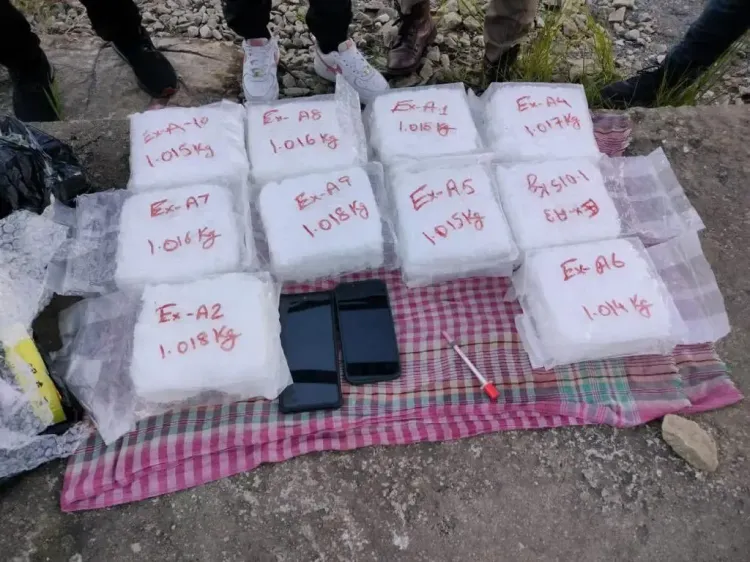
Law enforcement agencies have widened their focus to include high-profile consumers. The District Anti-Narcotics Special Action Force (DANSAF) arrested one Kevin B Mathew, from whom investigators seized 183.55 grams of MDMA and 93.51 grams of ecstasy pills. The arrest opened a broader probe into a network of influential individuals allegedly supplying narcotics at luxury venues.
A March 28 raid at a luxury hotel in Kadavanthra, Kochi, led to the apprehension of eight people with narcotics. Investigators say these parties are booked under the guise of private events but function as narcotics networking gatherings. The role of the venues themselves in facilitating such events is now under examination.
Inter-State and International Supply Lines
Investigations have established that drugs reaching Kochi have been sourced from Karnataka and Delhi, pointing to a well-organised inter-state supply network. An Intelligence Bureau official described the situation as a "problem of plenty" — where rising consumer demand is being matched by equally expanding supply channels.
With agencies now tracking suppliers, distributors, carriers, and consumers simultaneously, Kerala's narcotics challenge has become a multi-front law enforcement operation — and one that officials say is far from contained.
Point of View
The luxury party angle is not just a law-and-order story; it points to demand-side impunity among affluent consumers that Kerala's agencies have historically been reluctant to pursue with equal vigour. The dual presence of Golden Crescent and Golden Triangle cartels on a single state's coastline is a national security signal that deserves more than a state-level response.
NationPress
24 Sept 2026
Frequently Asked Questions
Why are migrant workers being used as drug carriers in Kerala?
According to officials, migrant workers are lured with money and threatened with deportation if they refuse to carry drugs. The same labour touts who bring them to Kerala are reportedly directing them into the trade, making them easy targets for exploitation by drug networks.
What drugs were seized from Kevin B Mathew in Kerala?
DANSAF seized 183.55 grams of MDMA and 93.51 grams of ecstasy pills from Kevin B Mathew. His arrest widened a probe into a network of high-profile individuals allegedly supplying narcotics at luxury parties in Kochi.
What happened at the Kadavanthra hotel raid on March 28?
Police raided a luxury hotel in Kadavanthra, Kochi on March 28 and apprehended eight people found with narcotics. Investigators say the party was booked as a private event but was allegedly a narcotics networking gathering.
Which international cartels are active in Kerala?
According to an Intelligence Bureau official, cartels from both the Golden Crescent (Afghanistan-Pakistan-Iran region) and the Golden Triangle (Myanmar-Laos-Thailand region) are active in Kerala, exploiting its 590-kilometre coastline as an entry point.
Why has drug demand shifted from marijuana to heroin and MDMA in Kerala?
Officials say heroin is far more concealable than ganja, making it harder to detect during routine checks. Simultaneously, demand for MDMA and ecstasy has risen sharply among affluent consumers at high-profile parties, creating a dual market for harder substances.