Mizoram Police register 538 drug cases, arrest 795 in 18 months
Synopsis
Mizoram registered 538 drug cases and arrested 795 suspects in just 18 months — but the harder story is structural. Sitting on a 510-km unfenced border with Myanmar's Golden Triangle, the state is fighting a geography problem with enforcement tools, and the Committee's own data flags a new front: cannabis use is rising even as heroin declines.
Key Takeaways
Mizoram Police registered 538 drug cases and arrested 795 persons between January 2025 and June 2026 .
319 cases were filed in 2025 (483 arrests); 219 cases in the first half of 2026 (312 arrests).
Operation Jericho has sharply reduced drug availability and driven up street prices of illicit narcotics and pharmaceutical drugs.
Approximately 30% of beneficiaries at the Hulhhliap Short Stay Centre have successfully overcome addiction; the government spends ₹15,422 per beneficiary.
The Committee flagged rising cannabis use and growing cough syrup abuse as emerging threats despite progress on heroin.
Mizoram shares a 510-km unfenced border with Myanmar and a 318-km border with Bangladesh , making it a key narcotics corridor in the Northeast.
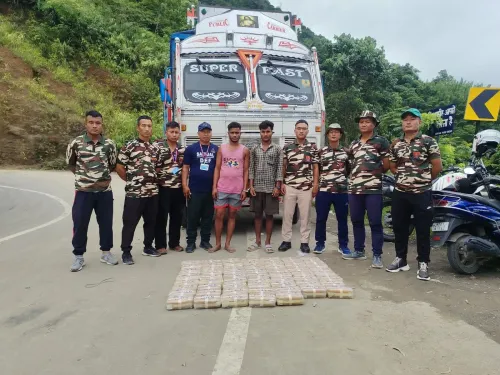
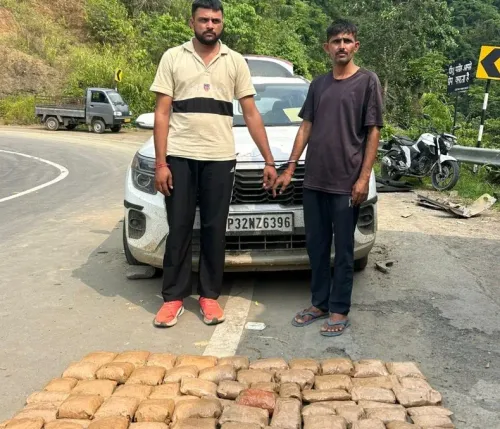
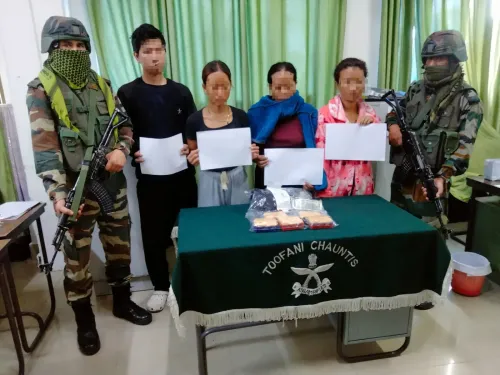
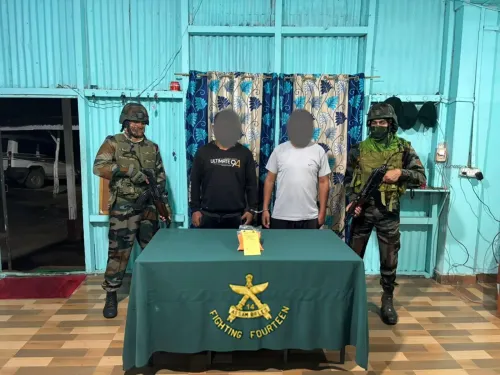
Mizoram Police have registered 538 drug-related cases and arrested 795 alleged drug peddlers and smugglers — including women and Myanmar nationals — over the past 18 months, officials said on Tuesday, 21 July 2026. The figures underscore an intensified narcotics crackdown across a state that sits on one of the world's most active drug-trafficking corridors.
Case-by-Case Breakdown
According to officials, 319 drug-related cases were registered in 2025, resulting in the arrest of 483 accused. In the current year, from January to June 2026, a further 219 cases were registered with 312 persons taken into custody — indicating the enforcement pace has not slackened.
A senior police official attributed the rising case count not to a surge in trafficking volumes alone, but to a shift in method: traffickers have moved away from large consignments toward smaller, more frequent shipments. Enhanced enforcement capabilities and improved detection equipment have allowed police to intercept these dispersed loads more effectively.
High-Level Review by the Core Committee
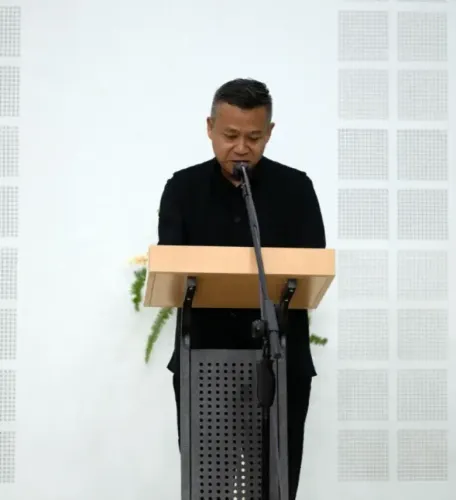
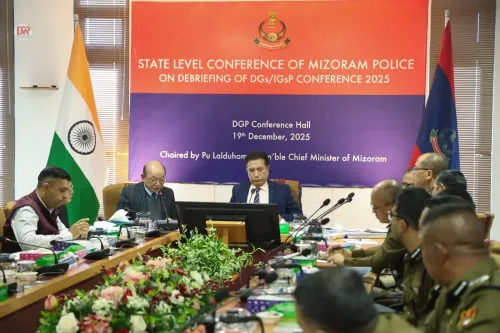
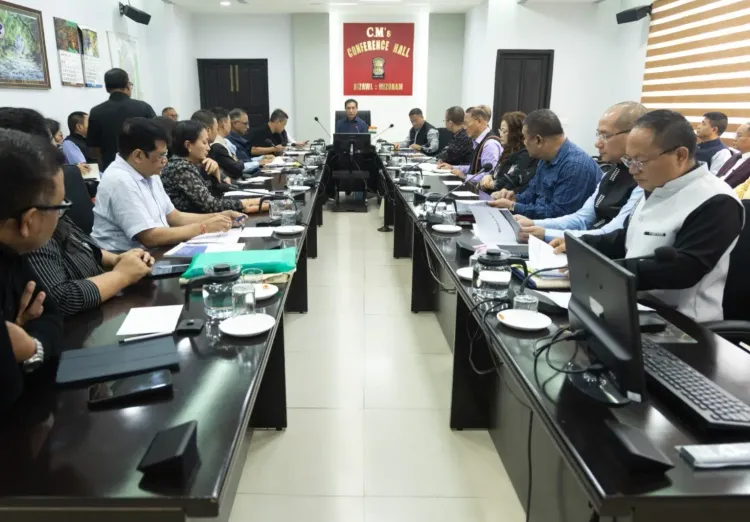
The Mizoram State Core Committee on Fight Against Drugs, chaired by Chief Minister Lalduhoma, convened on Tuesday to review the state's anti-narcotics drive. Home Minister K. Sapdanga and Excise and Narcotics Minister Lalnghinglova Hmar were among those present.
Chief Minister Lalduhoma acknowledged that the drug menace cannot be eliminated overnight but said sustained efforts were yielding 'encouraging results' with 'significant progress becoming evident.' He expressed appreciation to all departments and voluntary organisations involved in the fight.
Operation Jericho and Street-Level Impact
The Excise and Narcotics Department reported that Operation Jericho has contributed to a considerable decline in the availability of illicit drugs, driving up street prices sharply. A similar trend has been observed in the availability of cough syrup and other commonly abused pharmaceutical drugs.
The Young Mizo Association (YMA) — Mizoram's largest non-governmental organisation — presented a report on anti-drug initiatives carried out through its Anti-Drugs Squad and Operation Jericho. The Central YMA is currently expanding rehabilitation facilities for persons with substance use disorders at the TBCC, with government assistance.
Rehabilitation and Social Welfare Outcomes
The Social Welfare Department reported that approximately 30 per cent of beneficiaries admitted to the Hulhhliap Short Stay Centre have successfully overcome drug addiction, based on follow-up assessments. A total of 198 beneficiaries have received training across 13 skill development courses, while 21 beneficiaries have been assisted under the 'Bana Kaih' (Hand Holding) Chief Minister's Special Package. The government spends an estimated ₹15,422 per beneficiary for rehabilitation services at the centre.
Persistent Challenges and the Road Ahead
The Committee noted with concern that while heroin availability has declined and its price has risen, the use of cannabis has become more widespread and cough syrup abuse continues to climb. It emphasised the need for structured awareness campaigns targeting children and youth through the School Education Department and church organisations.
The meeting resolved to establish a committee to draft state-specific legislation or amend existing laws to strengthen Mizoram's legal framework for drug control. It also agreed to simplify the reimbursement process for court witness expenses and discussed establishing active anti-drug committees in every locality and village across the state.
Officials noted that Mizoram's vulnerability stems from its geography: the state shares a 510-km unfenced international border with Myanmar — part of the notorious 'Golden Triangle', one of the world's largest illicit narcotics-producing regions — and a 318-km border with Bangladesh, making it a significant cross-border smuggling corridor for narcotics, wildlife products, and other contraband. How the state converts enforcement momentum into durable structural change will be closely watched in the months ahead.
Point of View
But the Committee's own admission — that cannabis use is spreading even as heroin declines — points to a substitution effect that enforcement alone cannot resolve. Mizoram's 510-km unfenced border with Myanmar is a structural vulnerability; no amount of policing fully compensates for an unsealed frontier with the Golden Triangle. The decision to draft state-specific legislation is overdue, but the real test will be whether rehabilitation outcomes improve beyond the current 30% success rate at Hulhhliap — because without durable recovery, the arrested are replaced and the cycle continues.
NationPress
20 Oct 2026
Frequently Asked Questions
How many drug cases has Mizoram Police registered in the past 18 months?
Mizoram Police registered 538 drug-related cases between January 2025 and June 2026, leading to the arrest of 795 alleged drug peddlers and smugglers, including women and Myanmar nationals. Of these, 319 cases and 483 arrests occurred in 2025, with 219 cases and 312 arrests recorded in the first half of 2026.
What is Operation Jericho in Mizoram?
Operation Jericho is a coordinated anti-narcotics drive in Mizoram involving the Excise and Narcotics Department, Police, and the Young Mizo Association (YMA). According to officials, the operation has considerably reduced the availability of illicit drugs and driven up street prices, with a similar impact observed on pharmaceutical drug abuse.
Why is Mizoram particularly vulnerable to drug trafficking?
Mizoram shares a 510-km unfenced international border with Myanmar, which forms part of the 'Golden Triangle' — one of the world's largest illicit narcotics-producing regions. It also shares a 318-km border with Bangladesh, making the state a significant corridor for cross-border smuggling of narcotics and other contraband.
What is the Hulhhliap Short Stay Centre and how effective is it?
The Hulhhliap Short Stay Centre is a government-run drug rehabilitation facility in Mizoram. Follow-up assessments indicate that approximately 30 per cent of admitted beneficiaries have successfully overcome addiction; 198 beneficiaries have received training in 13 skill development courses, and the government spends an estimated ₹15,422 per beneficiary on rehabilitation services.
What new measures did the Mizoram Core Committee on Fight Against Drugs resolve to take?
The Committee resolved to establish a dedicated panel to draft state-specific legislation or amend existing laws to strengthen Mizoram's drug control framework. It also agreed to set up anti-drug committees in every locality and village, simplify court witness expense reimbursements, and launch structured awareness campaigns targeting children and youth through schools and church organisations.