Mizoram steps up anti-drug push amid Golden Triangle threat
Synopsis
Mizoram's proximity to the Golden Triangle makes it one of India's most exposed states on drug trafficking — and the government knows it. A broad coalition of departments, security forces, churches, and community groups convened in Aizawl to map a coordinated response, signalling a shift from reactive policing to a whole-of-society strategy.
Key Takeaways
Mizoram Excise and Narcotics Minister Lalnghinglova Hmar reaffirmed the state's commitment to fighting drug abuse at a seminar in Aizawl on Tuesday, 23 June .
The state's borders with Myanmar and Bangladesh and proximity to the Golden Triangle make it especially vulnerable to narcotics trafficking, according to Social Welfare Director Sushil Singh .
The seminar was organised ahead of the International Day Against Drug Abuse and Illicit Trafficking on 26 June .
A coalition of more than a dozen agencies — including Assam Rifles , BSF , Mizoram Police , and the Young Mizo Association — participated in the event.
Officials called for strategies spanning prevention, treatment, rehabilitation, awareness, and community participation.
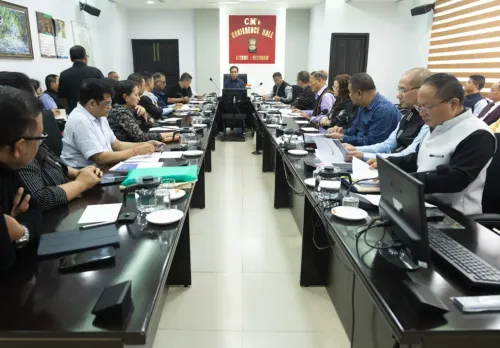
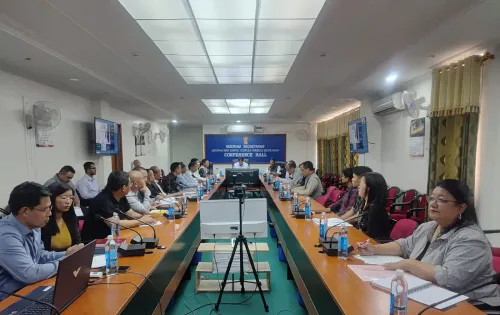
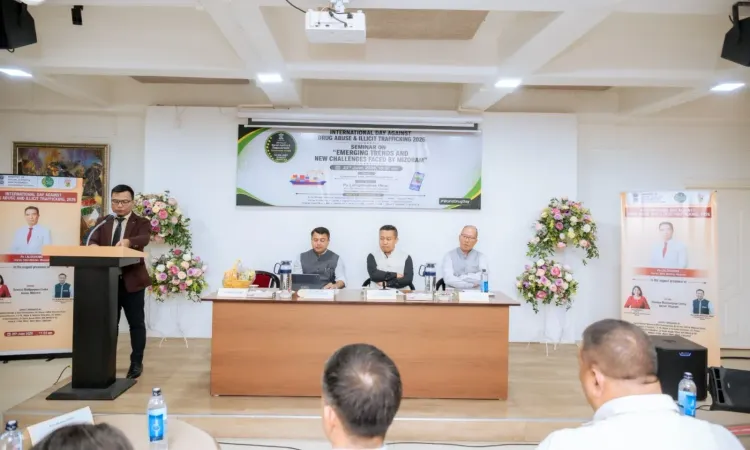
Mizoram Excise and Narcotics Minister Lalnghinglova Hmar on Tuesday reaffirmed the state government's commitment to combating drug abuse and trafficking, saying sustained and coordinated efforts are already under way in collaboration with multiple organisations. The minister was speaking at a seminar in Aizawl themed 'Emerging Trends and New Challenges Faced by Mizoram', held ahead of the International Day Against Drug Abuse and Illicit Trafficking observed on 26 June every year.
Why Mizoram Is Particularly Vulnerable
Social Welfare Department Director Sushil Singh underlined the geographic reality that makes Mizoram a high-risk corridor: the state shares international borders with Myanmar and Bangladesh and sits in close proximity to the 'Golden Triangle' — the Southeast Asian region notorious for large-scale narcotics production. Singh stressed that tackling the crisis requires a comprehensive strategy covering prevention, treatment, rehabilitation, awareness, and active community participation.
Excise and Narcotics Department Secretary C. Lalruaia called for continuous development of new strategies and the adoption of advanced knowledge and innovative approaches to keep pace with evolving drug abuse trends.
The Case for Collective Action
Minister Hmar noted that Mizoram's relatively small size and population are, paradoxically, an advantage — they make coordinated, society-wide action more achievable. He expressed confidence that meaningful progress is possible if all sections of society, from government agencies to civil society and religious institutions, work in concert. Churches, community groups, and citizens were specifically cited as essential partners in this effort.
Key Developments at the Seminar
The seminar featured expert presentations on drug abuse patterns and rehabilitation approaches, followed by an interactive discussion that allowed participants to share experiences and explore collaborative solutions. The event was jointly organised by a broad coalition including the Social Welfare Department, Women and Child Development Department, Health and Family Welfare Department, Mizoram Police, Excise and Narcotics Department, Higher and Technical Education Department, the Inspector General of Prisons, School Education Department, Information and Public Relations Department, Assam Rifles, Border Security Force, the Deputy Commissioner of Aizawl District, and local bodies including the Young Mizo Association.
What Comes Next
Officials indicated the seminar's deliberations are intended to feed into a refreshed, multi-agency action plan ahead of the 26 June global observance. The breadth of institutional participation signals that Mizoram is moving toward a whole-of-government and whole-of-society model — one that goes beyond law enforcement to include education, health, and community-led rehabilitation. Whether that ambition translates into measurable outcomes on the ground will be the critical test in the months ahead.
Point of View
But breadth without binding targets is just optics. What is missing from the public record is any measurable baseline: seizure volumes, treatment capacity, or rehabilitation outcomes. Until the state publishes those numbers and tracks them, the rhetoric of 'coordinated action' will remain difficult to evaluate — and difficult for citizens to hold officials accountable for.
NationPress
22 Sept 2026
Frequently Asked Questions
Why is Mizoram particularly vulnerable to drug trafficking?
Mizoram shares international borders with Myanmar and Bangladesh and lies close to the 'Golden Triangle' — Southeast Asia's primary narcotics-producing zone — making it a natural transit corridor for illicit drugs. Social Welfare Department Director Sushil Singh highlighted this geographic exposure at the Aizawl seminar on 23 June.
What is the International Day Against Drug Abuse and Illicit Trafficking?
It is a United Nations observance held annually on 26 June to raise awareness about the global drug problem and promote international cooperation against illicit trafficking. The Aizawl seminar was organised in connection with this observance.
Who organised the anti-drug seminar in Aizawl?
The seminar was jointly organised by more than a dozen bodies, including the Social Welfare Department, Mizoram Police, Excise and Narcotics Department, Assam Rifles, Border Security Force, and community organisations such as the Young Mizo Association.
What approach did officials recommend to tackle drug abuse in Mizoram?
Officials called for a comprehensive, multi-agency approach covering prevention, treatment, rehabilitation, awareness generation, and community participation. Churches, civil society groups, and individual citizens were identified as essential partners alongside government departments.
What did Minister Lalnghinglova Hmar say about Mizoram's chances of success?
Minister Hmar expressed confidence that Mizoram's relatively small size and population make coordinated, society-wide action more achievable than in larger states. He said significant progress is possible if all sections of society work together to safeguard future generations.