Mizoram Tightens Drug Crackdown Along Myanmar, Bangladesh Borders
Synopsis
Mizoram held its 12th State-Level NCORD meeting on April 23, chaired by Chief Secretary Khilli Ram Meena, to combat surging cross-border drug trafficking via its 510-km unfenced Myanmar border. The meeting reviewed drug-free village guidelines and aligned with 15 national action points — signaling India's most exposed border state is finally fighting back at scale.
Key Takeaways
Mizoram held its 12th State-Level NCORD meeting on April 23, 2025 , chaired by Chief Secretary Khilli Ram Meena , to intensify the state's anti-drug crackdown.
The meeting was attended by DGP Sharad Agarwal , officials from all 11 districts , and agencies including the NCB, BSF, Assam Rifles, and Council of Churches in Mizoram .
A Standard Operating Procedure (SoP) for declaring drug-free villages across Mizoram was presented and discussed as a grassroots intervention strategy.
The state reviewed 15 action points from the 9th Apex-Level NCORD meeting chaired by Union Home Minister Amit Shah in New Delhi.
Mizoram shares a 510-km unfenced border with Myanmar and a 318-km border with Bangladesh , making it one of India's most drug-trafficking-exposed states.
Yaba (methamphetamine + caffeine tablets) is the most commonly trafficked narcotic, primarily smuggled through districts like Champhai, Siaha, and Lawngtlai .
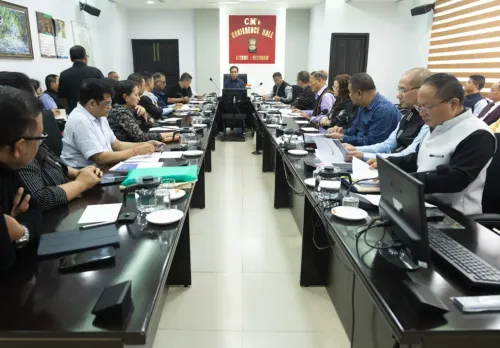
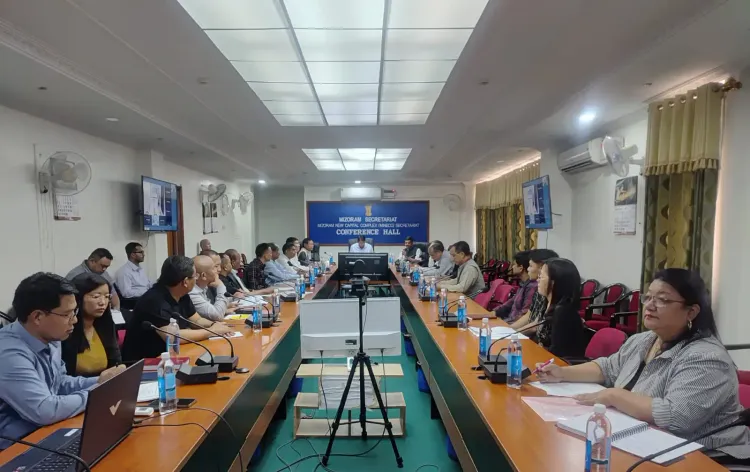
Mizoram has significantly escalated its war against cross-border drug trafficking, with the state government convening the 12th State-Level NCORD (Narco Coordination Centre) meeting on Wednesday, April 23, 2025, at the Secretariat Conference Hall, New Capital Complex, Aizawl. The high-level gathering brought together top law enforcement officials and central agencies to assess enforcement gaps and strengthen anti-narcotics coordination across the state's vulnerable border districts.
High-Level NCORD Meeting Chaired by Chief Secretary
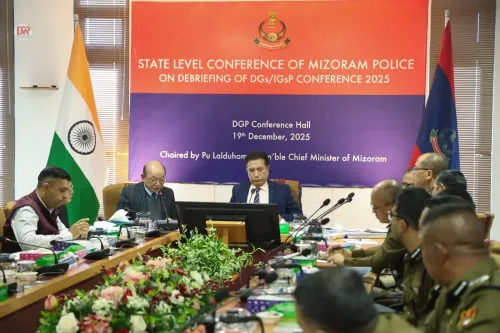
Chief Secretary Khilli Ram Meena chaired the meeting, which was attended by Director General of Police Sharad Agarwal, senior state officials, Deputy Commissioners, and Superintendents of Police from all 11 districts of Mizoram. Representatives from the Narcotics Control Bureau (NCB), Assam Rifles, Border Security Force (BSF), Subsidiary Intelligence Bureau (SIB), and the Council of Churches in Mizoram also participated, reflecting a whole-of-government and civil society approach.
The Chief Secretary reviewed the Action Taken Report of the 11th State-Level NCORD meeting, identifying critical gaps in enforcement and inter-agency coordination. A key highlight was the presentation and detailed discussion of the Standard Operating Procedure (SoP) for identifying and declaring drug-free villages across Mizoram — a grassroots-level intervention strategy aimed at insulating rural communities from the drug menace.
Alignment with National Anti-Narcotics Strategy
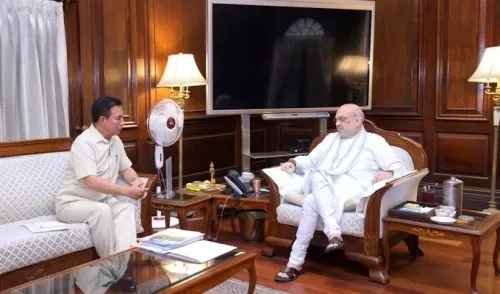
Participants deliberated on the 15 action points issued during the 9th Apex-Level NCORD meeting held in New Delhi, chaired by Union Home Minister Amit Shah. These points focus on aligning state-level drug enforcement strategies with national priorities, ensuring that Mizoram's border-specific challenges are addressed within the broader federal framework.
The national-level meeting had emphasized a whole-of-government approach to dismantling drug cartels, tackling darknet-based trafficking networks, conducting 360-degree investigations, and preventing the misuse of precursor chemicals used in drug manufacturing. Mizoram's participation in implementing these directives signals a stronger federal-state synchronization in narcotics enforcement.
The NCORD framework, established by the Central Government in 2016, operates through a four-tier structure, with the apex-level committee headed by the Union Home Secretary. It functions as the central coordination platform for enforcement and intelligence agencies across India.
Mizoram's Geographic Vulnerability to Drug Smuggling
Mizoram's strategic — and precarious — geography makes it one of India's most exposed states to cross-border narcotics trafficking. The state shares a 510-km-long unfenced international border with Myanmar and a 318-km-long porous, mountainous border with Bangladesh, both of which present formidable challenges for law enforcement agencies.
Myanmar's Chin State, which directly adjoins Mizoram, is widely identified as a major hub for trafficking narcotics, arms and ammunition, exotic wildlife, rare medicinal plants, foreign cigarettes, and Myanmar areca nuts (betel nuts). Contraband regularly flows through six high-risk districts: Champhai, Siaha, Lawngtlai, Hnahthial, Saitual, and Serchhip.
Among the most frequently seized substances are methamphetamine tablets, commonly known as Yaba or "party tablets" — a potent and highly addictive combination of methamphetamine and caffeine, strictly prohibited across India. Yaba, often called the "crazy drug", has seen rising seizures in Northeast India over the past several years.
Why This Crackdown Matters: The Bigger Picture
Mizoram's drug crisis does not exist in isolation. The state sits at the edge of the Golden Triangle — the world's second-largest opium-producing region spanning Myanmar, Laos, and Thailand — making it a natural transit corridor for synthetic drugs heading into India's mainland. The political instability in Myanmar following the 2021 military coup has further destabilized Chin State, weakening border oversight and enabling trafficking networks to operate with greater impunity.
Critically, the unfenced nature of Mizoram's border with Myanmar — unlike the fenced borders in Punjab or Rajasthan — means that traditional surveillance infrastructure is largely absent. The Free Movement Regime (FMR) with Myanmar, which the Central Government has been moving to suspend, has historically allowed cross-border movement that traffickers have exploited. The government's decision to fence the Myanmar border, announced in recent years, remains only partially implemented.
The inclusion of the Council of Churches in Mizoram in the NCORD meeting is a notable and strategically significant move. Given the church's deep social influence in the state — where Christianity is the dominant religion — its participation in anti-drug efforts could amplify community-level awareness and reporting, areas where government agencies have historically struggled.
Ground Impact and What Comes Next
The drug-free village SoP, if effectively implemented, could become a replicable model for other border states in Northeast India. However, enforcement experts caution that declarations without sustained monitoring and economic alternatives for vulnerable communities risk becoming symbolic rather than substantive.
With the 15 Apex-Level action points now under state-level review, Mizoram is expected to submit a compliance report ahead of the next NCORD cycle. Strengthened coordination between the NCB, BSF, and Assam Rifles — combined with community-driven interventions — will be critical to measuring real progress in the months ahead. All eyes will be on whether the drug-free village initiative translates into verifiable, on-ground outcomes before the next state-level NCORD review.
Point of View
Yet India's border fencing program remains woefully incomplete years after being announced. The inclusion of the Council of Churches in a law enforcement meeting is an implicit admission that the state cannot win this battle through policing alone. More tellingly, the political chaos in post-coup Myanmar has supercharged trafficking networks in Chin State, yet India's diplomatic response to that instability has been muted at best. NCORD meetings are necessary — but without accelerated border fencing, economic alternatives for border communities, and real diplomatic pressure on Myanmar's junta, Mizoram risks being perpetually reactive in a war it needs to get ahead of.
NationPress
18 Oct 2026
Frequently Asked Questions
What was decided at the 12th State-Level NCORD meeting in Mizoram?
The 12th State-Level NCORD meeting in Mizoram, held on April 23, 2025, reviewed the Action Taken Report of the previous meeting, discussed a Standard Operating Procedure for declaring drug-free villages, and deliberated on 15 action points from the national Apex-Level NCORD meeting. It was chaired by Chief Secretary Khilli Ram Meena and attended by senior police, central agencies, and civil society representatives.
Why is Mizoram particularly vulnerable to drug trafficking?
Mizoram shares a 510-km unfenced border with Myanmar and a 318-km porous border with Bangladesh, making it highly susceptible to cross-border smuggling. Myanmar's Chin State, which borders Mizoram, is a known hub for narcotics, arms, and contraband trafficking into India.
What is Yaba and why is it a major concern in Mizoram?
Yaba, also called 'party tablets' or the 'crazy drug', is a highly addictive combination of methamphetamine and caffeine that is strictly prohibited in India. It is among the most commonly trafficked substances through Mizoram's border districts, smuggled primarily from Myanmar's Chin State.
What is NCORD and how does it function in India?
NCORD, or the Narco Coordination Centre, was established by the Central Government in 2016 to coordinate anti-drug efforts across agencies. It operates through a four-tier structure, with the apex committee headed by the Union Home Secretary, and holds regular meetings at both national and state levels.
What is the drug-free village initiative in Mizoram?
Mizoram's drug-free village initiative involves a Standard Operating Procedure (SoP) for identifying and officially declaring villages across the state as drug-free zones. The initiative focuses on grassroots-level intervention and community participation to prevent drug abuse and trafficking at the local level.