Kerala's drug crisis: Myanmar heroin route targets Malabar coast
Synopsis
India's drug war has a new frontline: Kerala. With the Pakistan-Afghanistan heroin route largely shut by tighter border security, cartels have pivoted to a Myanmar-Bangladesh corridor that feeds directly into the Malabar coast. The tactics — micro-consignments in soap boxes, women carriers, social media influencers — are outpacing enforcement. The ₹12,000-per-gram street price of heroin tells you exactly why.
Key Takeaways
Almost every major drug cartel targeting India is now focused on Kerala , according to officials.
Heroin is increasingly entering India via Myanmar and the Bangladesh border, replacing the older Afghanistan-Pakistan route disrupted by heightened border security.
A kilogram of heroin is valued at ₹25–30 lakh ; street price reaches ₹12,000 per gram against a dealer purchase price of ₹3,000 .
The Malabar corridor and Kozhikode are under close watch; MDMA demand in the region has overtaken marijuana.
Recent arrests include a 20-year-old social media influencer ( Fathima Nasreen ) and a YouTuber ( Rincy Mumtaz ), reflecting a shift toward high-profile and women carriers.
Home Minister Amit Shah has reiterated the government's Drug-Free India by 2047 target at the R N Kao Memorial Lecture .
Kerala has emerged as the most heavily targeted state for narcotics trafficking in India, with enforcement agencies warning that almost every major drug cartel operating in the Indian market has shifted significant focus to the state. The shift, officials say, follows heightened border security along the India-Pakistan frontier in Jammu and Kashmir, Punjab, and Rajasthan, which has forced smuggling networks to seek alternative entry points — most notably through Myanmar and the Bangladesh border.
The Myanmar-Bangladesh Shift
For years, narcotics — primarily heroin — entered India from Afghanistan and Pakistan, travelling overland before reaching Kerala by road. That pipeline has now been substantially rerouted, according to officials. Pakistani cartels are reportedly coordinating with counterparts in Myanmar, pushing heroin across the Bangladesh border into India before the contraband is transported by road to Kerala. Officials describe this as a major structural shift in the trafficking network, one driven directly by enforcement pressure on the western frontier.
The economics underpin the shift. According to officials, a kilogram of heroin is valued at between ₹25 lakh and ₹30 lakh. Dealers acquire each gram at approximately ₹3,000 and sell it on the street at ₹12,000 per gram — a margin that makes the trade highly lucrative and difficult to deter through seizures alone.
Malabar Corridor Under Scrutiny
An official from the Intelligence Bureau said agencies are closely monitoring the Malabar corridor amid a sharp rise in drug-related activity. Kozhikode has emerged as a particular area of concern, with large quantities of MDMA seized in the region. According to the official, demand for MDMA in this part of Kerala has now overtaken that for marijuana — a significant change in the local narcotics landscape.
The region's geography compounds the enforcement challenge. Kozhikode is connected to the Bengaluru-Mysuru corridor, which functions as a major transit hub, and is linked to interstate road networks connecting Tamil Nadu, Karnataka, and Andhra Pradesh, making the movement of contraband considerably easier for trafficking networks.
Concealment Tactics and Carrier Profiles
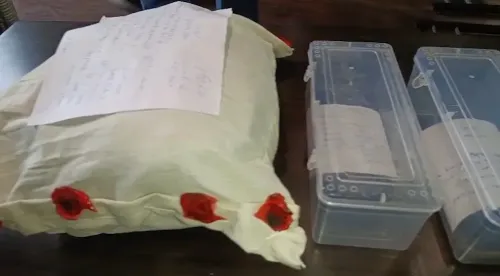
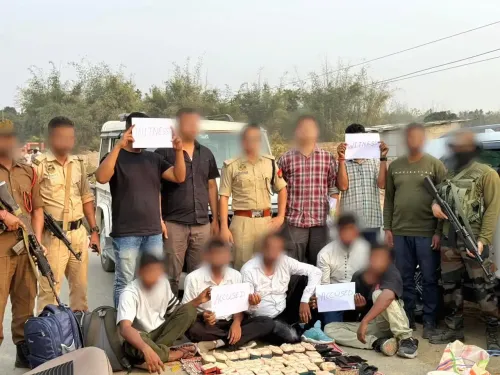
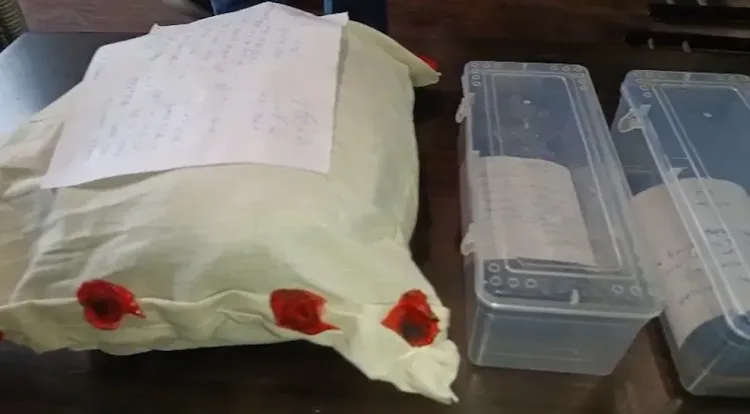
Officials say the smuggling methods in Kerala differ markedly from those seen in other states, with traffickers constantly rotating their techniques. Heroin has been found concealed in soap boxes and tiny bottles — a deliberate strategy to move larger aggregate volumes in small, hard-to-detect quantities across multiple trips. The approach was exposed following the arrest of three individuals from Assam in Angamaly, near Kochi, who were found carrying 600 grams of heroin hidden across more than 40 soap boxes.
Investigators have also identified a shift in carrier profiles. Smuggling networks are increasingly using high-profile individuals and, notably, women — on the calculation that female carriers attract less scrutiny during checks. Last month, excise officials at Kerala's Pantheerankavu toll plaza intercepted a vehicle and seized 3.5 kilograms of MDMA valued at ₹3 crore. Those arrested included Fathima Nasreen, a 20-year-old social media influencer, and a repeat offender, P.K. Shafeeq. The drugs were reportedly sourced from Rajasthan.
In a separate case, agencies recovered 11.83 kg of MDMA and 5.44 grams of cannabis from an apartment in Ulliyeri, near the Malabar Medical College in Kozhikode, arresting Sheetal Shivdas (21) and Firoz Musa. Earlier, Yasar Arfath and YouTuber Rincy Mumtaz were apprehended in Kochi with 22 grams of MDMA.
Government's Drug-Free India Target
The escalating situation in Kerala sits against the backdrop of the Narendra Modi government's stated goal of making India free from narcotics by 2047. Union Home Minister Amit Shah reiterated this commitment at the annual R N Kao Memorial Lecture organised by the Research and Analysis Wing (RAW). In Jammu and Kashmir, Punjab, and Maharashtra, enforcement agencies have intensified operations, and officials say the conventional trafficking routes through those states have largely been disrupted — which is precisely why cartels are targeting newer entry points.
What Enforcement Agencies Are Watching
Officials acknowledge that while seizures are being made, the volume of narcotics slipping through remains significant. 'There are hits no doubt, but the misses are quite large owing to this modus operandi,' an official said. One official drew a pointed comparison: the smugglers' evolving tactics — using women, influencers, and decentralised micro-consignments — resemble methods once employed by hostile intelligence networks to expand covert operations inside India. Agencies say the battle against narcotics in Kerala will require sustained inter-state coordination and intelligence sharing to keep pace with the cartels' adaptability. The road ahead, officials warn, is going to be tough.
Point of View
Which means the cartels are adapting faster than policy. The Myanmar-Bangladesh corridor is harder to police than the Pakistan border because it runs through porous, multi-state terrain and relies on decentralised micro-couriers rather than bulk consignments. The use of social media influencers and women carriers is a deliberate exploitation of bias in surveillance protocols — and it is working. The Drug-Free India 2047 target is an aspiration, but without a Kerala-specific inter-agency task force and real-time intelligence sharing with Bangladesh and Myanmar-border states, the cartels will simply keep rotating their entry points.
NationPress
19 Sept 2026
Frequently Asked Questions
Why has Kerala become a major drug trafficking hub in India?
Kerala has become a primary target for narcotics cartels because tightened security along the India-Pakistan border in Jammu and Kashmir, Punjab, and Rajasthan has blocked traditional trafficking routes, pushing networks toward new entry points via Myanmar and Bangladesh. The state's connectivity to interstate road networks linking Karnataka, Tamil Nadu, and Andhra Pradesh also makes it an attractive transit and destination point.
How is heroin being smuggled into Kerala?
Heroin is primarily entering India through Myanmar, coordinated between Pakistani cartels and their Myanmar counterparts, before crossing into India via the Bangladesh border and travelling by road to Kerala. Traffickers conceal the drug in soap boxes and tiny bottles, moving it in small quantities across multiple trips to evade detection — a method exposed after three individuals from Assam were arrested in Angamaly with 600 grams hidden in over 40 soap boxes.
What is the street value of heroin in Kerala?
According to officials, a kilogram of heroin is valued at between ₹25 lakh and ₹30 lakh in Kerala. Dealers buy each gram at approximately ₹3,000 and sell it on the street at ₹12,000 — a fourfold margin that makes the trade extremely lucrative.
What is the government's target for tackling India's drug problem?
The Narendra Modi government has set a target of making India free from narcotics by 2047. Home Minister Amit Shah reiterated this goal at the R N Kao Memorial Lecture organised by the Research and Analysis Wing (RAW), calling it a firm commitment of the government.
Who are some of the individuals arrested in Kerala drug cases recently?
Recent arrests include Fathima Nasreen, a 20-year-old social media influencer, and repeat offender P.K. Shafeeq, caught with 3.5 kg of MDMA worth ₹3 crore at the Pantheerankavu toll plaza. Sheetal Shivdas and Firoz Musa were arrested in Kozhikode with 11.83 kg of MDMA, while YouTuber Rincy Mumtaz and Yasar Arfath were nabbed in Kochi with 22 grams of MDMA.