Sikh Persecution in Lyallpur: Partition's Dark Legacy Exposed

Synopsis
A Khalsa Vox report reveals how Sikhs who transformed Lyallpur's barren land into Punjab's granary were systematically massacred, looted, and expelled within weeks of Pakistan's creation in 1947 — with state authorities complicit in the violence. The scars of that betrayal endure across generations.
Key Takeaways
Lyallpur (modern-day Faisalabad) was considered the most prosperous Sikh region in Pakistan, built over generations from barren wasteland into a thriving agricultural hub.
Within days of Pakistan's creation on August 14, 1947 , two non-Muslims were stabbed to death near the Clock Tower in Lyallpur during an official peace meeting addressed by the Deputy Commissioner.
By late August 1947 , widespread killings and arson forced Hindus and Sikhs into refugee camps at Khalsa College and Arya School in Lyallpur.
A Sikh man who had his hand severed in an attack was arrested instead of the perpetrators , illustrating deep administrative complicity in the violence.
Evacuation convoys were repeatedly attacked; survivors were looted at multiple points including Chak 272, Salooni Jhal, and Balloki Head — the India border crossing.
The Khalsa Vox report forms part of a growing international effort to document Partition-era atrocities against Sikh and Hindu communities in Pakistan.
Islamabad/New Delhi, April 25 (NationPress) — A deeply disturbing account of Sikh persecution in Lyallpur, Pakistan, during the 1947 Partition has resurfaced through a detailed report by Khalsa Vox, documenting systematic harassment, targeted killings, and forced expulsion of the Sikh community from a region they had transformed into one of Punjab's most fertile and prosperous territories. The report underscores how religious violence and state-sanctioned discrimination erased generations of Sikh toil and legacy within weeks of Pakistan's creation on August 14, 1947.
Lyallpur: A Sikh Heartland Built on Generations of Toil
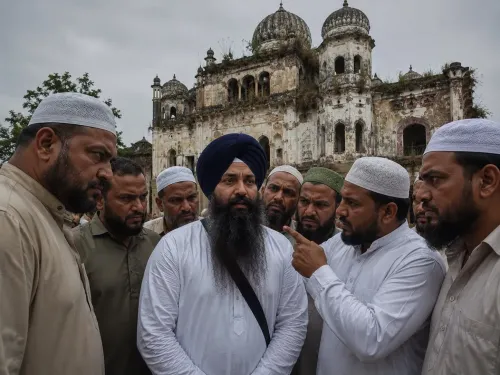
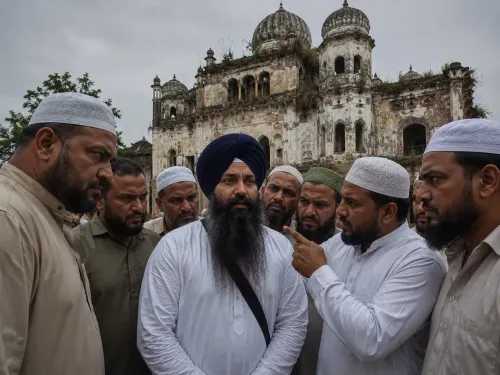
Lyallpur — today known as Faisalabad — was not merely a city for the Sikh community; it was a living monument to their labour and resilience. According to the Khalsa Vox report, Sikhs had spent generations converting a barren, sandy wasteland into what became the granary of Pakistani Punjab, one of the most agriculturally productive regions on the subcontinent.
The Sikh population of Lyallpur was distinguished not only by its economic prosperity but also by its strong social values — a deep sense of discipline, a fierce love for independence, and a highly developed community conscience. These were not marginalised people; they were the backbone of the region's agrarian economy.
This context makes the violence that followed all the more devastating. Within days of Pakistan's formal establishment, a deliberate policy targeting non-Muslims — particularly Sikhs — was set in motion, stripping them of safety, property, and ultimately their homeland.
Immediate Violence: Stabbings Near the Clock Tower
The first signs of organised violence emerged almost immediately. According to the report, just days after Pakistan's independence in August 1947, two non-Muslims were stabbed to death near the Clock Tower in Lyallpur — a central public location where a peace meeting was actively being addressed by the Deputy Commissioner at the time.
The brazenness of the attack — carried out in plain sight during an official gathering meant to ensure communal peace — sent a chilling signal to the Hindu and Sikh communities. It was not an isolated act of mob frenzy but, as the report characterises it, an ominous indicator of what lay ahead: a coordinated campaign instigated by local Muslim leaders to drive out non-Muslims.
This pattern of violence at symbolic public spaces reflects a broader documented phenomenon during Partition, where state authority either collapsed or was deliberately withheld to allow communal cleansing to proceed.
Escalating Atrocities: Arson, Killings, and Refugee Camps
By late August 1947, violence in Lyallpur had escalated dramatically. The report documents widespread killings and arson attacks by Muslim mobs, forcing thousands of Hindus and Sikhs to abandon their homes and seek refuge in makeshift camps at institutions like Khalsa College and the Arya School.
The role — or rather, the failure — of the Pakistan administration during this period is particularly damning. The report highlights a shocking incident in which a Sikh man had his hand severed in an act of extreme violence. Rather than the perpetrators facing justice, it was the victim who was arrested. Such grotesque inversions of law enforcement signalled to survivors that the state itself was complicit in their persecution.
During curfew hours, when civilians were legally barred from moving, Muslim attackers reportedly moved freely, assaulting Hindu and Sikh households while police either stood aside or actively enabled the violence. Even organised evacuation convoys — meant to provide safe passage — were repeatedly ambushed, resulting in further loss of life and property.
The Evacuation Trail: Looting, Massacre, and Betrayal
The evacuation of Sikhs and Hindus from Lyallpur and surrounding villages was marked by relentless brutality. The report documents attacks at multiple points along the evacuation routes, with survivors describing repeated raids, looting, and killings as they attempted to flee toward India.
Those who sought temporary shelter in places like Chak 272 found no safety — they were attacked again and their remaining possessions looted. Near Salooni Jhal, a large number of Hindus and Sikhs were massacred and their belongings stolen. Even at Balloki Head — the crossing point into Indian territory — survivors were robbed of whatever little they had managed to carry.
These accounts are consistent with broader historical records of Partition violence, which, according to historians, resulted in the displacement of an estimated 10–20 million people and the deaths of between 200,000 and 2 million individuals across the subcontinent — making it one of the largest and bloodiest forced migrations in human history.
Historical Significance and Enduring Legacy
The events in Lyallpur are not merely a historical footnote — they represent a foundational trauma for the global Sikh community and continue to shape the geopolitical and cultural relationship between India and Pakistan. The systematic erasure of Sikh presence from Pakistani Punjab — a region where they had lived, farmed, and built institutions for centuries — remains a source of unresolved grief and identity for millions of Sikh families in India, Canada, the United Kingdom, and beyond.
Notably, this report emerges at a time of renewed global interest in Partition history, with archives being digitised, survivor testimonies being recorded, and advocacy groups pushing for formal acknowledgment of the violence endured by Sikh and Hindu communities in Pakistan. The Khalsa Vox documentation contributes to a growing body of evidence that historians and policymakers are increasingly engaging with.
As conversations around historical justice, diaspora rights, and minority persecution continue to gain traction internationally, accounts like those from Lyallpur serve as a critical reminder of the human cost of unchecked religious nationalism — and the importance of preserving memory so that such atrocities are never repeated.
Point of View
In many documented instances, an administered ethnic cleansing enabled by a nascent state unwilling or uninterested in protecting its non-Muslim citizens. What makes this report particularly significant is the detail of institutional complicity: police inaction, the arrest of victims rather than perpetrators, and unobstructed attacks during official curfews. Decades later, as Pakistan positions itself on global human rights platforms, the unacknowledged legacy of 1947 remains a profound moral debt. India must continue to ensure these histories are documented, taught, and elevated in international discourse — not as political ammunition, but as a civilisational obligation to truth.
NationPress
22 Sept 2026
Frequently Asked Questions
What happened to Sikhs in Lyallpur during the 1947 Partition?
Sikhs in Lyallpur faced systematic violence, killings, arson, and forced displacement shortly after Pakistan's creation in August 1947. Despite having built the region into a prosperous agricultural heartland, they were targeted by Muslim mobs reportedly instigated by local leaders, with Pakistan's administration largely failing to protect them.
What is the significance of Lyallpur for the Sikh community?
Lyallpur, now known as Faisalabad, was considered the richest and most productive region for Sikhs in Pakistan, often called the granary of Punjab. Generations of Sikh labour had transformed it from barren land into a thriving agricultural zone, making its loss during Partition particularly devastating for the community.
What role did the Pakistan administration play during the Sikh persecution in Lyallpur?
According to the Khalsa Vox report, the Pakistan administration was largely complicit through inaction and even active harm — arresting Sikh victims of violence rather than perpetrators, allowing Muslims to attack during curfew hours, and failing to protect evacuation convoys. This institutional failure deepened the suffering of non-Muslim communities.
Where did Sikh and Hindu refugees from Lyallpur seek shelter during Partition?
Displaced Hindus and Sikhs from Lyallpur sought refuge in makeshift camps at institutions like Khalsa College and the Arya School by late August 1947. However, even during evacuation, they faced continued attacks at locations including Chak 272, Salooni Jhal, and Balloki Head — the crossing point into India.
Why is the Khalsa Vox report on Lyallpur significant today?
The Khalsa Vox report contributes to a growing global effort to document and preserve Partition testimonies before living memories are lost. It highlights patterns of state-enabled communal violence that remain relevant to ongoing discussions about minority rights, historical justice, and the experiences of the Sikh diaspora worldwide.