Pakistan's Sikh minority faces persecution behind tolerance facade: Report
Synopsis
Pakistan's Sikh population has collapsed to just 15,998 — barely 0.01% of the country — since 1947, yet the state is reportedly using a single high-profile conversion case to project a tolerance narrative. A Khalsa Vox report calls it a calculated propaganda manoeuvre masking systemic forced conversions, gurdwara destruction, and demographic near-extinction.
Key Takeaways
A Khalsa Vox report released on 7 May 2025 accuses Pakistan of using the case of Sarabjit Kaur — a Sikh pilgrim who appeared as a convert to Islam — as a propaganda tool.
The 2023 census recorded only 15,998 Sikhs in Pakistan, just 0.01% of the population, down from a much larger community at Partition in 1947 .
The report attributes the decline to forced conversions, a climate of fear, and state-sponsored neglect — not voluntary migration alone.
The majority of Pakistan's gurdwaras and Sikh heritage sites are reportedly in ruins due to decades of neglect, encroachment, and vandalism.
Pakistan's selective restoration of shrines for foreign dignitaries — including World Bank President Ajay Banga's visit — is described as performative diplomacy masking systemic erasure.
Human rights activists have labelled Pakistan's Sikh community "endangered" , with calls growing for independent international scrutiny.
Pakistan's much-publicised narrative of religious tolerance is a carefully constructed facade, masking the persistent persecution, violence, and demographic near-extinction of the country's Sikh community, according to a report published by Khalsa Vox on Thursday, 7 May 2025. The report argues that recent high-profile cases are being weaponised as public relations tools to deflect international scrutiny from systemic minority oppression.
The Sarabjit Kaur Case and Pakistan's Narrative
The report centres on the case of Sarabjit Kaur, a Sikh woman who went missing during a pilgrimage to Pakistan and subsequently appeared as a convert to Islam. Pakistani media, according to the report, portrayed her conversion as a "heartwarming tale of personal discovery" — a framing the report roundly rejects.
"It serves not as a genuine reflection of religious harmony, but as a transparent public relations exercise, likely orchestrated to sanitise the image of a state consistently implicated in the systematic marginalisation of its non-Muslim citizens," the report stated. Critics argue the narrative is designed to divert international attention from documented patterns of coercion targeting Sikh women and their families.
Demographic Collapse Since 1947
The numbers tell a stark story. Since 1947, Pakistan's once-vibrant Sikh population has declined to a few thousand — a collapse that human rights activists describe as the making of an "endangered" minority. The 2023 census recorded just 15,998 Sikhs, representing barely 0.01 per cent of Pakistan's total population.
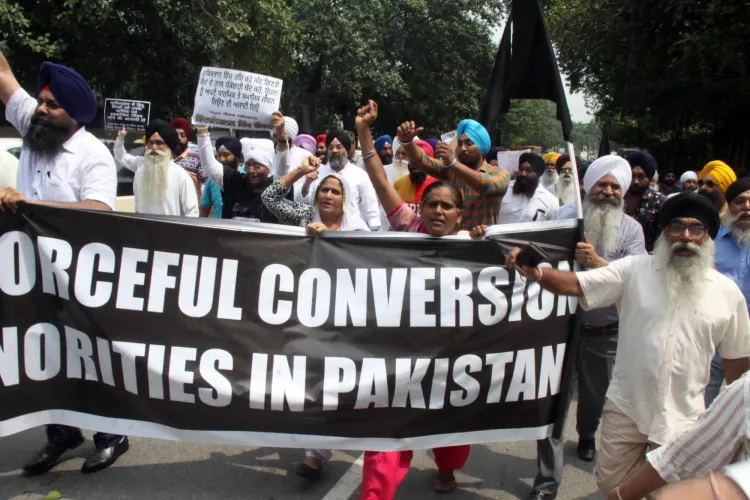
The report stresses that this decline is not simply the result of voluntary migration. "This decline is not merely a byproduct of migration but is deeply rooted in a climate of fear, where the forced conversion of young Sikh women is a persistent and harrowing threat," it noted. Families, the report says, live in "perpetual insecurity" — a reality that state-sanctioned celebrations of individual conversions deliberately obscure.
Gurdwaras in Ruins, Heritage Under Threat
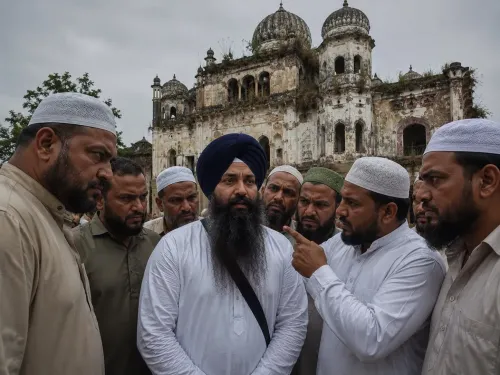
Beyond personal safety, the report highlights the deteriorating condition of gurdwaras and Sikh heritage sites across Pakistan, including the very pilgrimage sites that Sarabjit Kaur visited. While Pakistan has occasionally showcased select shrines for diplomatic optics — most recently during World Bank President Ajay Banga's visit — the report contends that the vast majority of these historical sites are in ruins.
"The vast majority of these historical sites are in ruins, suffering from decades of state-sponsored neglect, encroachment, or outright vandalism. The performative restoration of a few select shrines for international visitors is a thin veneer, masking the reality that the sacred physical footprint of Sikhism in the region is being systematically erased," the report stated. This selective restoration, critics argue, is calculated to impress foreign dignitaries while doing nothing for the communities these sites serve.
A Calculated Propaganda Manoeuvre, Report Argues
The report characterises the broader Pakistani establishment's handling of the Sarabjit Kaur episode as a "calculated manoeuvre" designed to redirect international focus away from ground realities. "By presenting her as a willing convert turned advocate, the Pakistani establishment attempts to convert a tragedy of personal and religious displacement into a propaganda victory," it said.
The report concludes that Pakistan has "failed to provide basic protection, dignity, or religious freedom" to its Sikh inhabitants, and that the state's appropriation of individual circumstances to construct a tolerance narrative amounts to a "cynical" exercise in image management. Human rights observers note that the Sikh community's plight in Pakistan sits within a wider pattern of minority persecution that also affects Christians, Hindus, and Ahmadis.
With international scrutiny of Pakistan's minority rights record intensifying, the report's findings add to growing calls for independent verification of the country's religious freedom claims.
Point of View
Then recedes when scrutiny fades. What the Khalsa Vox report surfaces, and what mainstream coverage tends to underplay, is the census data: 15,998 Sikhs in a nation of over 230 million is not a minority — it is a demographic remnant. The real question is whether international interlocutors, including the World Bank and visiting dignitaries, will demand structural protections rather than accept curated shrine tours as evidence of religious freedom.
NationPress
22 Sept 2026
Frequently Asked Questions
Who is Sarabjit Kaur and why is her case significant?
Sarabjit Kaur is a Sikh woman who went missing during a pilgrimage to Pakistan and later appeared as a convert to Islam. Her case is significant because Pakistani media portrayed her conversion as a positive personal choice, while critics and human rights groups argue it fits a broader pattern of forced conversions of Sikh women in Pakistan.
How many Sikhs are left in Pakistan as of 2023?
According to the 2023 Pakistani census, just 15,998 Sikhs remain in the country, representing barely 0.01% of the total population. This marks a dramatic decline from the sizeable Sikh community that existed in the region before the 1947 Partition.
What does the Khalsa Vox report say about Pakistan's gurdwaras?
The report states that the vast majority of Pakistan's gurdwaras and Sikh heritage sites are in ruins due to decades of state-sponsored neglect, encroachment, or vandalism. It argues that the selective restoration of a few shrines for foreign visitors — such as during World Bank President Ajay Banga's visit — is performative and does not reflect the broader reality.
Why do human rights groups call Pakistan's Sikhs an 'endangered' minority?
Human rights activists use the term 'endangered' because the Sikh population in Pakistan has declined precipitously since 1947, driven not just by migration but by forced conversions, violence, and a pervasive climate of fear. The 2023 census figure of 15,998 Sikhs underscores the severity of this demographic collapse.
What is Pakistan accused of doing to manage its international image on minority rights?
The Khalsa Vox report accuses Pakistan of orchestrating a public relations exercise — selectively showcasing conversions and restored shrines to international audiences — while failing to address systemic persecution of Sikhs and other minorities, including Christians, Hindus, and Ahmadis.