Does the Killing of Hindus in Pakistan Reflect a Culture of Intolerance?
Synopsis
A recent report sheds light on the recurring violence against Hindus in Pakistan, particularly in Sindh province. It unveils a disturbing pattern of communal unrest, forced displacements, and systemic oppression that threatens the survival of religious minorities. This article delves into the grim realities faced by Hindus, raising crucial questions about tolerance and justice in Pakistan.
Key Takeaways
The Hindu minority in Sindh faces recurring violence driven by blasphemy accusations.
Recent killings reveal a pattern of systemic oppression and marginalization.
Legal protections for minorities remain inadequate, contributing to a culture of fear.
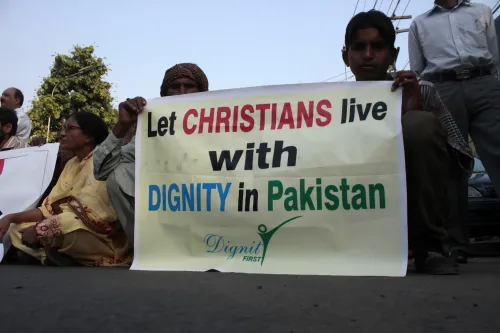
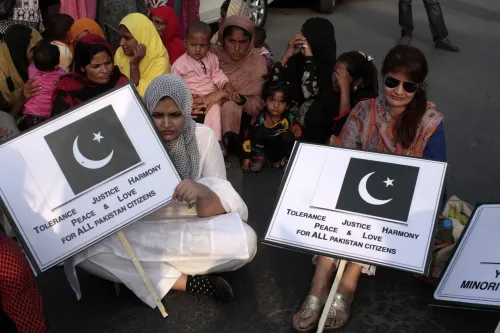
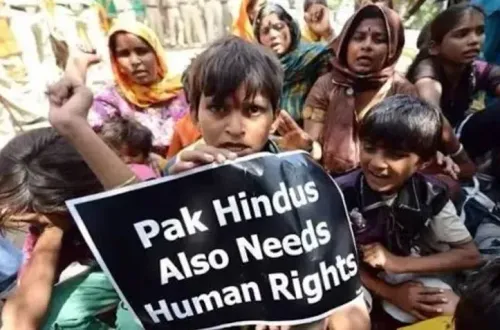
Protests by the Hindu community highlight the urgent need for justice.
Violence against Hindus is part of a broader national trend of intolerance.
Kathmandu, Jan 24 (NationPress) The Sindh province of Pakistan, which accommodates a significant portion of the nation's Hindu minority, has experienced persistent episodes of communal violence instigated by allegations of blasphemy. These violent incidents typically follow a predictable sequence: an accusation is made, crowds are rallied by religious leaders, communal tensions flare, and the Hindu community is forcibly displaced, as highlighted in a recent report on Saturday.
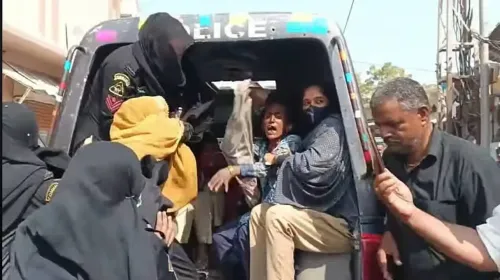
“The recent murder of a Hindu farmer in Sindh has once again revealed the profound vulnerability faced by religious minorities in Pakistan. The deceased, a young tenant farmer from the Kolhi community, was gunned down in broad daylight after a dispute with a powerful local landlord regarding land usage. This incident ignited protests throughout Sindh, with Hindu communities blocking roads and calling for justice,” detailed a report from the Nepalese media outlet Khabarhub.
“This situation isn't merely about a single homicide; it epitomizes a broader pattern of impunity, feudal dominance, and religious marginalization that has characterized the experiences of Hindus in Pakistan for decades. For many minority groups, especially Hindus, Pakistan has increasingly morphed into a perilous environment plagued by false charges, coerced conversions, abductions, economic pressure, and targeted violence,” the report continued.
According to the report, similar acts of violence have also been reported in Pakistan's Punjab province, which has a considerably smaller Hindu demographic. Citing research from the Lahore-based Centre for Social Justice, it documented that at least 421 minority women and girls were victims of forced conversions between 2021 and 2024, with 71% being underage and primarily from Hindu and Christian backgrounds.
The report underscored that violence against Hindus is not confined to specific regions but is embedded in a broader national culture of intolerance that facilitates mob justice.
“Beyond physical assaults, systemic oppression has played a destructive role in diminishing Hindu civic space. Year after year, reports reveal underage Hindu girls being abducted, coerced into converting to Islam, and forced into marriage with Muslim men. Families seeking legal redress face death threats, prolonged hearings, and judicial outcomes that overwhelmingly favor the alleged converters,” the report emphasized.
“Despite ongoing public discussions and legislative efforts, no effective national law has been established to criminalize forced conversions, nor does any significant judicial precedent exist to support Hindu families. This legal void has empowered offenders and fostered a climate of fear among Hindu parents,” it noted.
The report further stated, “With minimal state backing and increasing tolerance towards radical Islamist groups, the question for Pakistan’s Hindu minority has shifted from one of equality to one of survival in a system that has repeatedly failed to safeguard them.”
Point of View
We stand firmly with the notion that every individual's right to safety and equality must be upheld. The experiences of the Hindu minority in Pakistan underscore a troubling reality that cannot be ignored. It is imperative that the government and society as a whole address these systemic issues to foster a culture of tolerance and justice for all citizens.
NationPress
1 Oct 2026
Frequently Asked Questions
What incidents of violence have occurred against Hindus in Pakistan?
Recent reports indicate recurring violence against Hindus in Pakistan, particularly in Sindh province, where allegations of blasphemy have led to communal unrest and forced displacements.
How has the situation for Hindus in Pakistan changed?
The situation for Hindus in Pakistan has markedly deteriorated, with increased incidents of violence, forced conversions, and systemic persecution over the past few decades.
What legal protections exist for minorities in Pakistan?
Currently, there are no effective national laws in Pakistan criminalizing forced conversions, leaving many minorities vulnerable and without legal recourse.
What is the response from the Hindu community in Pakistan?
The Hindu community in Pakistan has organized protests demanding justice and greater protections, highlighting their plight and calling for accountability.
Are similar incidents reported in other regions of Pakistan?
Yes, similar incidents of violence against Hindus have also been reported in Punjab province, despite its smaller Hindu population.