Singapore haze advisory: PSI hits 'unhealthy' range, travellers urged to take precautions
Synopsis
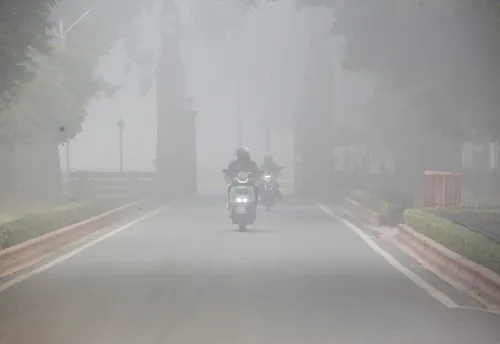
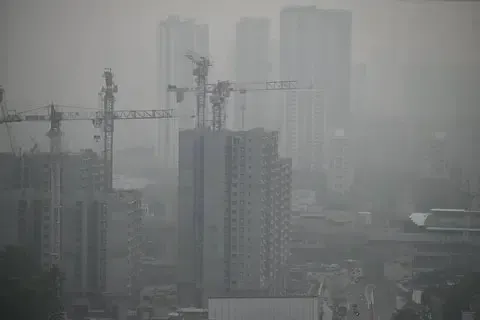
Singapore's High Commissioner to India has issued a rare public travel advisory as PSI levels cross into the 'unhealthy' range from transboundary haze — and neighbouring Malaysia has already begun shutting schools across multiple states. For Indian travellers heading to Singapore, the message is clear: check the NEA dashboard before you step outside.
Key Takeaways
Simon Wong , Singapore's High Commissioner to India, posted a travel advisory on X on 9 October 2026 warning of 'unhealthy' PSI levels in Singapore.
The haze is caused by transboundary pollution ; the NEA has advised healthy people to reduce strenuous outdoor activities.
Vulnerable groups — elderly, children, pregnant women, and those with chronic lung or heart conditions — are advised to avoid outdoor exertion altogether.
In Malaysia , schools in areas with API above 180 were shut from Friday; those with APIs above 150 for three consecutive days will close from 12 October .
The worst-affected Malaysian states are Selangor , Johor , and Negeri Sembilan , with most of Peninsular Malaysia recording unhealthy readings.
Singapore's High Commissioner to India, Simon Wong, on Friday, 9 October 2026, issued a formal travel advisory warning that Singapore had been recording Pollutant Standards Index (PSI) readings in the 'unhealthy' range for several consecutive days due to transboundary haze. Indian travellers and residents headed to the city-state were urged to consult official advisories from Singapore's National Environment Agency (NEA) before stepping out.
What the Advisory Says
Posting directly on X, High Commissioner Simon Wong said: 'Attention travellers to Singapore, Singapore has been experiencing Pollutant Standards Index (PSI) readings crossing into the unhealthy range for a few days now due to transboundary haze. Encourage travellers to refer to official NEA advisories to plan for the day ahead.'
The advisory also relayed NEA guidance tailored to different risk groups. Healthy individuals were advised to reduce prolonged or strenuous outdoor activities during periods of poor air quality. Vulnerable groups — including the elderly, children, pregnant women, and those with chronic lung or heart disease — were advised to minimise or avoid outdoor exertion altogether.
Regional Spread: Malaysia Also Affected
Neighbouring Malaysia has been hit hard by the same transboundary haze event. School closures due to worsening air quality were expanded on Friday to several states, as well as the capital Kuala Lumpur and the administrative capital Putrajaya.
According to Malaysia's education ministry, schools in areas recording Air Pollutant Index (API) readings above 180 were ordered to close starting Friday. Schools in areas recording APIs above 150 for three consecutive days are set to close from 12 October.
Under Malaysia's air quality rating scale, an API of zero to 50 is classified as 'good,' 51–100 as 'moderate,' 101–200 as 'unhealthy,' 201–300 as 'very unhealthy,' and 301 and above as 'hazardous.'
Most Affected Areas in Malaysia
Data from Malaysia's Air Pollutant Index Management System showed most areas across Peninsular Malaysia recording unhealthy readings as of 1 pm on Friday. The western coastal states of Selangor, Johor, and Negeri Sembilan were particularly affected.
Context and What Travellers Should Do
Transboundary haze in Southeast Asia is a recurring seasonal phenomenon, typically linked to land and forest fires in the region, and has previously prompted health alerts across Singapore, Malaysia, and parts of Indonesia. This latest episode appears to be one of the more intense outbreaks in recent years, given the scale of school closures and the activation of an official diplomatic advisory.
Travellers to Singapore are advised to monitor real-time PSI readings on the NEA website and app, carry N95 masks, and limit time outdoors when the PSI crosses into the unhealthy range. The situation in both countries is expected to be closely watched in the coming days as air quality forecasts are updated.
Point of View
One that regional diplomacy has repeatedly failed to resolve at source. Until upstream fire-prevention frameworks carry binding penalties, seasonal advisories of this kind will keep returning — and the cost, measured in school days lost and hospital admissions, will keep falling on the region's most vulnerable populations.
NationPress
9 Oct 2026
Frequently Asked Questions
Why has Singapore issued a haze travel advisory in October 2026?
Singapore's High Commissioner to India, Simon Wong, issued the advisory because the city-state had been recording PSI readings in the 'unhealthy' range for several consecutive days due to transboundary haze. Travellers are urged to consult NEA advisories before planning outdoor activities.
What precautions has Singapore's NEA recommended during the haze?
The NEA has advised healthy individuals to reduce prolonged or strenuous outdoor activity during 'unhealthy' PSI periods. Vulnerable groups — including the elderly, children, pregnant women, and those with chronic lung or heart disease — are advised to minimise or avoid outdoor activities altogether.
How does the PSI scale work in Singapore?
Singapore's Pollutant Standards Index (PSI) measures overall air quality. Readings in the 'unhealthy' range indicate elevated health risk, particularly for vulnerable groups. Travellers can check real-time PSI readings on the official NEA website and mobile app.
How is the haze affecting Malaysia?
Malaysia has expanded school closures across several states, Kuala Lumpur, and Putrajaya. Schools in areas with API above 180 shut from 9 October, while those with readings above 150 for three consecutive days will close from 12 October. Selangor, Johor, and Negeri Sembilan are among the worst-hit states.
What is transboundary haze and why does it affect Southeast Asia?
Transboundary haze is smoke pollution that crosses national borders, typically caused by land and forest fires in the region. It is a recurring seasonal phenomenon in Southeast Asia and has previously prompted health alerts across Singapore, Malaysia, and parts of Indonesia.