India-Singapore navies exchange maritime surveillance know-how at Paya Lebar
Synopsis
India's P-8I Poseidon touched down at Singapore's Paya Lebar Airbase not just for a visit — it anchored a structured expert exchange on maritime surveillance and patrol procedures between the two navies. Set against back-to-back high-level meetings, including the 16th Defence Policy Dialogue and the CDS's introductory call with Singapore's envoy, the interaction signals a deliberate push to deepen Indo-Pacific maritime interoperability.
Key Takeaways
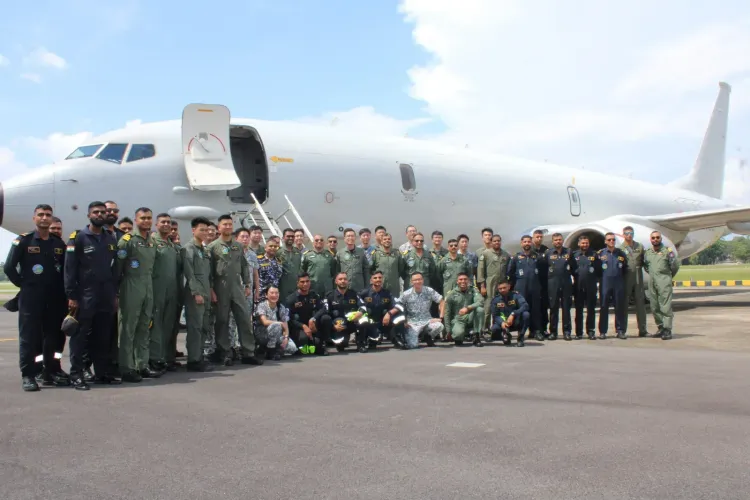
Indian Navy and Republic of Singapore Navy conducted a SMEE on Maritime Patrol Aircraft Operations at Paya Lebar Airbase on 30 June .
The exchange covered maritime surveillance capabilities , operational procedures, training, and best practices centred on the P-8I (Poseidon-8 India) aircraft.
Singapore High Commissioner Simon Wong met CDS General NS Raja Subramani last week to discuss bilateral defence cooperation.
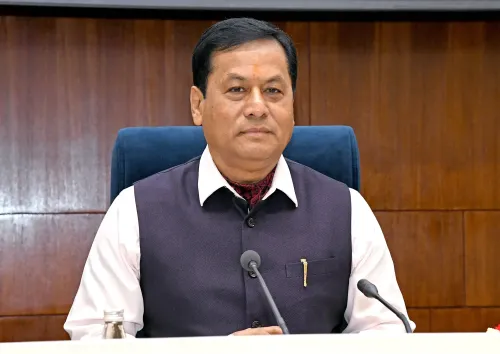
The 16th India-Singapore Defence Policy Dialogue was co-chaired last month by Defence Secretary Rajesh Kumar Singh and Permanent Secretary Joseph Leong .
Both sides are exploring expanded cooperation in defence industry collaboration , capacity building , and regional security .
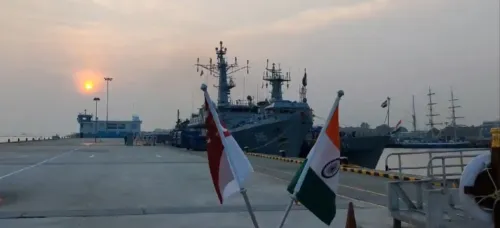
The Indian Navy and the Republic of Singapore Navy (RSN) on Tuesday, 30 June conducted a Subject Matter Expert Exchange (SMEE) on Maritime Patrol Aircraft Operations at Paya Lebar Airbase in Singapore, centred on the Indian Navy's P-8I (Poseidon-8 India) long-range maritime patrol aircraft. The session marked the latest in a series of deepening bilateral defence engagements between the two nations.
What the SMEE Covered
The exchange featured in-depth discussions on maritime surveillance capabilities, operational procedures, training protocols, and best practices, according to the High Commission of India in Singapore. Both sides described the interaction as reflecting a 'strong and enduring defence partnership.' The P-8I, a sophisticated multi-mission maritime aircraft, is a cornerstone of India's naval surveillance architecture, capable of anti-submarine warfare, anti-surface warfare, and intelligence gathering.
High-Level Diplomatic Groundwork
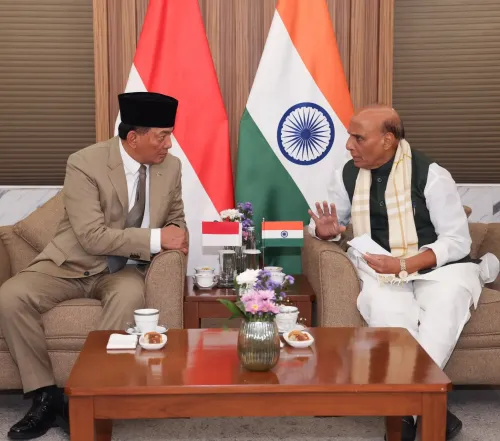
The SMEE came on the heels of a series of high-level bilateral meetings. Last week, Singapore's High Commissioner to India, Simon Wong, held an introductory meeting with Chief of Defence Staff (CDS) General NS Raja Subramani, congratulating him on his recent appointment and reviewing the breadth of defence cooperation between the two countries. In a post on X, High Commissioner Wong noted discussions on 'major exercises, exchanges, and established dialogues' and expressed intent to further strengthen the partnership under General Subramani's leadership.
16th Defence Policy Dialogue Sets the Stage
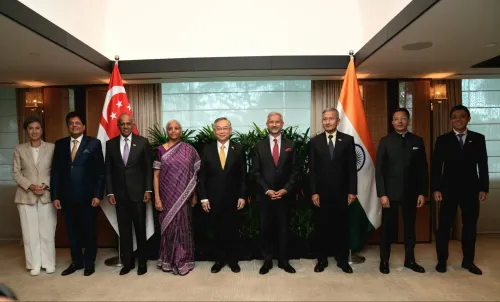
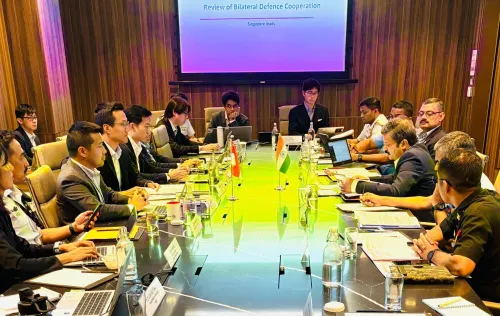
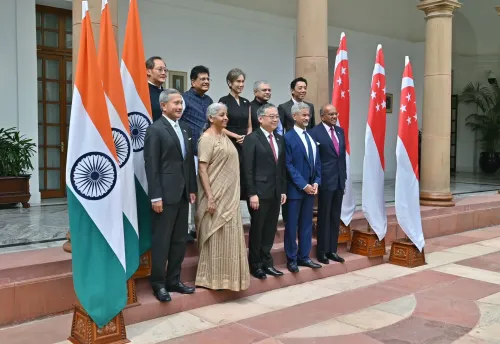
The bilateral momentum had been building before that as well. Last month, Defence Secretary Rajesh Kumar Singh and Permanent Secretary (Defence) Joseph Leong co-chaired the 16th India-Singapore Defence Policy Dialogue in Singapore. The two sides reviewed ongoing defence engagements and held wide-ranging discussions spanning military engagements, defence industry collaboration, capacity building, and regional security issues. They also explored new avenues for expanding cooperation in areas of mutual interest, including industry-to-industry collaboration.
Strategic Significance
India and Singapore share a robust defence relationship underpinned by regular bilateral exercises and institutional dialogues. The focus on maritime patrol aircraft operations carries particular strategic weight given the growing importance of the Strait of Malacca and broader Indo-Pacific sea lanes to both nations' security calculus. This is the second major India-Singapore defence interaction within a fortnight, signalling that the partnership is being actively elevated rather than maintained at a steady state. All eyes will now be on whether the SMEE outcomes translate into formalised interoperability frameworks or joint patrol protocols in the months ahead.
Point of View
Multi-track effort to operationalise the India-Singapore defence partnership at the procedural level. The focus on the P-8I is telling: by sharing surveillance methodologies, India is extending its maritime domain awareness network into Southeast Asia at a moment when Indo-Pacific sea lane security is under renewed pressure. What mainstream coverage tends to miss is the cumulative architecture being built — policy dialogue, diplomatic outreach to the new CDS, and now a technical aircraft operations exchange, all within weeks of each other. The question is whether this cadence produces binding interoperability agreements or remains a series of well-documented conversations.
NationPress
29 Sept 2026
Frequently Asked Questions
What is the India-Singapore SMEE on Maritime Patrol Aircraft Operations?
It is a Subject Matter Expert Exchange held on 30 June at Paya Lebar Airbase in Singapore, where Indian Navy and Republic of Singapore Navy personnel shared knowledge on maritime surveillance capabilities, operational procedures, training, and best practices. The session was anchored by the visit of India's P-8I (Poseidon-8 India) aircraft.
What is the P-8I aircraft and why does it matter?
The P-8I (Poseidon-8 India) is a long-range maritime patrol and reconnaissance aircraft operated by the Indian Navy, capable of anti-submarine warfare, anti-surface warfare, and intelligence gathering. Its deployment to Paya Lebar Airbase served as the focal point for the bilateral technical exchange with Singapore.
What other India-Singapore defence meetings preceded this SMEE?
Singapore's High Commissioner Simon Wong met CDS General NS Raja Subramani last week to discuss bilateral defence cooperation. The month before, Defence Secretary Rajesh Kumar Singh and Permanent Secretary Joseph Leong co-chaired the 16th India-Singapore Defence Policy Dialogue in Singapore.
What was discussed at the 16th India-Singapore Defence Policy Dialogue?
The dialogue reviewed ongoing defence engagements and covered military exchanges, defence industry collaboration, capacity building, and regional security issues. Both sides also explored new avenues for expanding cooperation, including industry-to-industry collaboration.
Why is India-Singapore maritime cooperation strategically significant?
Both nations have strong interests in the security of the Strait of Malacca and broader Indo-Pacific sea lanes. Deepening maritime patrol cooperation enhances India's domain awareness reach into Southeast Asia and reinforces the bilateral strategic partnership at a time of heightened Indo-Pacific security focus.