LTCG tax changes open for review, FM Sitharaman hints ahead of Budget 2027-28

Synopsis
Finance Minister Nirmala Sitharaman has left the door ajar on LTCG tax changes, refusing to rule out a revision at the Bloomberg New Economy Forum. With Budget 2027-28 groundwork begun and FPIs net sellers for months, the market is reading her silence as a signal — and Sensex and Nifty both closed over 1% higher on Tuesday.
Key Takeaways
FM Nirmala Sitharaman declined to rule out LTCG tax changes on 13 October 2026 at the Bloomberg New Economy Forum , New Delhi.
She said preparations for Union Budget 2027-28 have begun and this is 'not the right moment' to reveal what the government will consider.
Current LTCG rate on listed equities and equity mutual funds is 12.5% , with an annual exemption of ₹1.25 lakh — introduced in the July 2024 Budget .
Budget 2026 retained the LTCG structure but raised the securities transaction tax on futures and options.
Foreign portfolio investors have been net sellers of Indian equities for extended periods in 2026, intensifying calls for a review.
Sensex and Nifty both closed more than 1% higher following the minister's remarks.
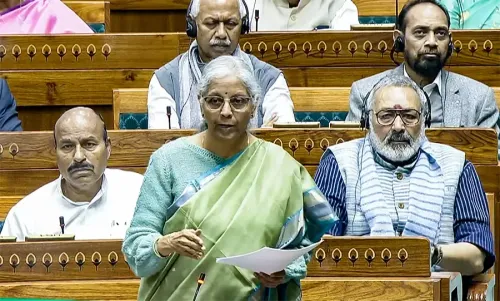
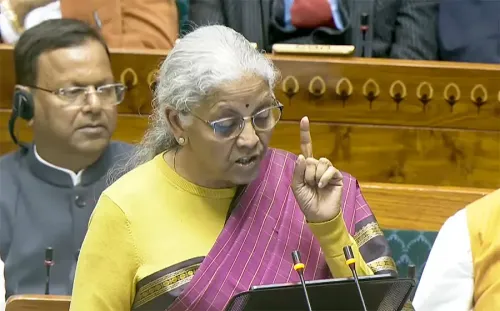
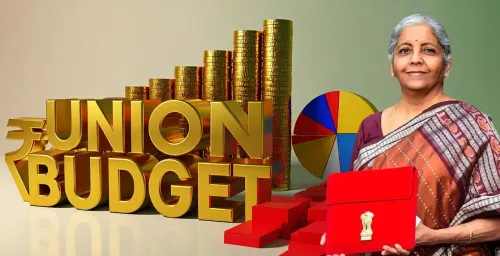
Finance Minister Nirmala Sitharaman on Tuesday, 13 October 2026, declined to rule out a revision to the long-term capital gains (LTCG) tax framework, signalling that all options remain on the table as the government begins early groundwork for the Union Budget 2027-28, scheduled for presentation on 1 February 2027. Speaking at the Bloomberg New Economy Forum in New Delhi, Sitharaman said this was 'not the right moment' to disclose what the government would consider, but stopped well short of dismissing any change.
What Sitharaman Said
The Finance Minister acknowledged that both domestic and overseas investors have been vocal about the current LTCG structure. She also pointed to the securities transaction tax (STT) as a related question that the government is aware of. Market participants have raised the issue of whether all asset classes should be treated on a similar footing, she noted, adding that the government would 'keenly hear views' on these matters.
Current LTCG Rules and Recent History
Under the existing framework, long-term capital gains on listed equities and equity mutual funds held for more than one year are taxed at 12.5%, with gains up to ₹1.25 lakh annually exempt. These parameters were introduced in the July 2024 Budget, which raised the LTCG rate from 10% and lifted the exemption threshold from ₹1 lakh. The Budget 2026, however, retained the capital gains structure unchanged despite widespread market expectations of either a lower rate or a higher exemption limit — though it did raise the STT on futures and options trades.
Industry and Investor Concerns
Industry groups and foreign portfolio investors (FPIs) have repeatedly argued that India's capital gains tax regime dents the competitiveness of domestic equity markets and weighs on inbound investment flows. Notably, foreign investors have remained net sellers of Indian equities for extended periods in 2026, a trend that has amplified calls for a structural review. Critics argue that the current framework disproportionately burdens long-term equity holders and creates a comparative disadvantage against peer emerging markets.
Market Reaction
Equity markets responded positively to the minister's measured remarks. Both benchmark indices — the Sensex and the Nifty — closed more than 1% higher each on Tuesday, suggesting that investors interpreted Sitharaman's non-committal stance as leaving the door open for relief in the next budget.
What Happens Next
With Union Budget preparations formally under way, the finance ministry is expected to engage with industry bodies, FPIs, and market regulators over the coming months. Any revision to the LTCG structure — whether on the tax rate, exemption limit, or the treatment of multiple asset classes — would be announced on 1 February 2027. The absence of a firm denial from the minister is itself a signal that the lobbying window is open.
Point of View
In itself, a policy signal — and markets knew it immediately, bidding both benchmarks up by over 1%. The LTCG hike of July 2024 was always a politically awkward move: it handed opponents a narrative about a government taxing the middle-class investor while rationalising it as equity with other asset classes. Two budgets on, the government has not reversed it, but the minister's repeated acknowledgement of investor complaints suggests the political calculus is shifting. The real test is whether a potential rollback or threshold revision would be accompanied by a credible replacement revenue measure — or whether it becomes another instance of market-friendly optics without fiscal discipline.
NationPress
13 Oct 2026
Frequently Asked Questions
What did FM Sitharaman say about LTCG tax changes at the Bloomberg New Economy Forum?
Finance Minister Nirmala Sitharaman on 13 October 2026 declined to rule out changes to the LTCG tax regime, saying preparations for Budget 2027-28 have begun and this was 'not the right moment' to say what the government would consider. She acknowledged that both domestic and foreign investors have raised concerns about the current structure.
What is the current LTCG tax rate on equities in India?
Long-term capital gains on listed equities and equity mutual funds held for more than one year are currently taxed at 12.5%, with gains up to ₹1.25 lakh annually exempt. These rates were introduced in the July 2024 Budget, raising the earlier 10% rate and lifting the exemption from ₹1 lakh.
Why are investors pushing for a review of India's capital gains tax?
Industry groups and foreign portfolio investors argue that the current LTCG framework reduces the competitiveness of Indian equity markets and weighs on investment inflows. FPIs have remained net sellers of Indian equities for extended periods in 2026, amplifying calls for either a lower tax rate or a higher exemption limit.
When is the Union Budget 2027-28 expected to be presented?
The Union Budget 2027-28 is scheduled for presentation on 1 February 2027. Finance Ministry consultations with industry and market participants are expected to continue in the months leading up to the budget.
How did markets react to Sitharaman's remarks on LTCG?
Both the Sensex and the Nifty closed more than 1% higher each on Tuesday following the minister's remarks, suggesting investors interpreted her non-committal stance as leaving open the possibility of LTCG relief in the next budget.