How is Solar Power Transforming Schools in Maoist-affected Mohla-Manpur?

Synopsis
Discover how solar power is revolutionizing education in the insurgency-affected areas of Mohla-Manpur, Chhattisgarh. This initiative not only brings light to dark classrooms but also brightens the futures of countless students. Read on to learn about the impact of this transformative project.
Key Takeaways
Solar power is transforming education in remote regions.
Four schools in Mohla-Manpur now boast electricity.
Students are able to study comfortably in well-lit classrooms.
The initiative is a collaboration between the Education Department and CREDA .
This project symbolizes hope for a brighter future in conflict-affected areas.
In the Mohla-Manpur region of Chhattisgarh, schools that were once engulfed in darkness due to Naxal threats are now brightly illuminated, thanks to the recent installation of solar power plants. This significant advancement is transforming the educational landscape in areas that have long suffered from insurgency and infrastructural challenges.
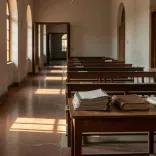
The tangible effects of development are evident in the remote, wooded parts of the district. Four government schools—Gattepali, Sambalpur Koracha, Bodra, and Gattegahan—previously lacked electricity. Students had no choice but to study in poorly lit classrooms with scant resources, a situation that deteriorated during rainy and winter months.
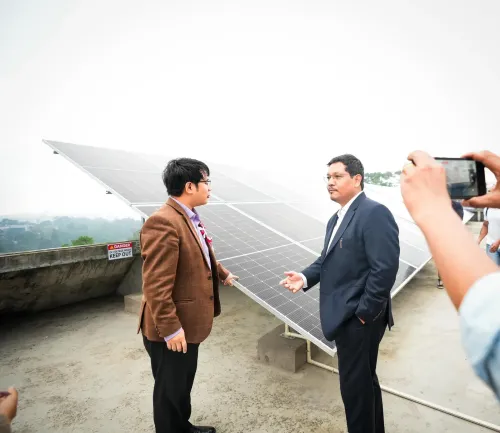
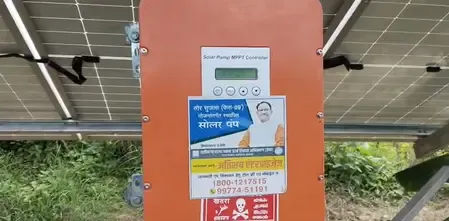
Through a collaborative initiative involving the Education Department and the Chhattisgarh State Renewable Energy Development Agency (CREDA), 1.2-kilowatt off-grid solar power systems have been installed at all four schools. With these solar installations now functioning, classrooms that were previously dimly lit have transformed into bright and inviting learning spaces.
Tulika Prajapati, the Collector of Mohla-Manpur, remarked to IANS, “This project is a pivotal step towards empowering students in the most isolated areas. Solar power has not only illuminated classrooms but also brightened the future of children in these regions.” She elaborated on how the solar energy is now powering the four schools, enabling students to study comfortably.
Students shared their enthusiasm for the new amenities. Surekha Tekam, a student, expressed, “Before, our school had no electricity, and we studied in the dark. Now, with lights and fans, it feels wonderful.” Another student, Rudra Pratap Singh, added, “Studying is now much easier and more enjoyable with proper lighting in our classrooms.” Teachers and staff have also welcomed this positive change.
Teacher Bramha Thakur noted, “When I arrived, electricity was nonexistent. Thanks to the district administration, we now have lights and fans. It feels fantastic, and the children are studying with greater enthusiasm.”
Thanks to this solar energy initiative, schools in Mohla-Manpur are now poised to offer students a safer, more engaging, and well-lit educational environment, marking a significant advancement in the district's development.
Point of View
I emphasize the importance of progressive initiatives like solar power installations in conflict-affected areas. This project reflects a commitment to enhancing education and supporting the next generation, offering a beacon of hope in regions that have long faced adversity. It's vital for the nation to recognize and support such transformative efforts.
NationPress
30 Sept 2026
Frequently Asked Questions
What areas were affected by the solar power initiative?
The initiative has impacted four government schools in the Mohla-Manpur region of Chhattisgarh, specifically Gattepali, Sambalpur Koracha, Bodra, and Gattegahan.
Who collaborated on this solar power project?
The project was a collaborative effort between the Education Department and the Chhattisgarh State Renewable Energy Development Agency (CREDA).
What benefits have students experienced from the new solar power installations?
Students now enjoy well-lit classrooms, which greatly enhances their learning experience and makes studying more enjoyable.
Who is the Collector of Mohla-Manpur?
The Collector of Mohla-Manpur is Tulika Prajapati, who has emphasized the positive impact of the solar power initiative on students.
How has the local community responded to the solar power initiative?
The local community, including students and teachers, has expressed excitement and gratitude for the new facilities, which have significantly improved their learning environment.