Sonia Gandhi memoir recalls Maneka Gandhi's entry, fallout with Gandhi family
Synopsis
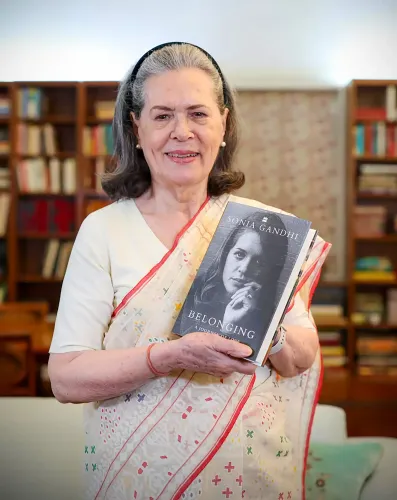
In her memoir 'Belonging: A Journey Of Love,' Sonia Gandhi pulls back the curtain on decades of Gandhi family tension — recounting how Maneka Gandhi went from a lively, 18-year-old bride to a figure Indira Gandhi warned was 'growing wings,' and how Sanjay Gandhi's death in 1980 turned private grievances into a very public rupture that still shapes Indian politics.
Key Takeaways
Sonia Gandhi 's memoir 'Belonging: A Journey Of Love' was released on 10 November 2026 .
Maneka Gandhi married Sanjay Gandhi in 1974 at age 18 , after being introduced to him in late 1973 .
Tensions over household hierarchy, political ambitions, and behaviour gradually soured the relationship, with Indira Gandhi privately noting Maneka was 'growing wings.' After Sanjay Gandhi 's death on 23 June 1980 , disputes over Maneka's political role intensified, culminating in her departure in 1982 .
Sonia Gandhi alleges Maneka engineered her public exit — including briefing a journalist friend in advance — placing blame on the Gandhi family.
A legal dispute over visiting rights for Feroze Varun Gandhi followed, which Maneka reportedly won.
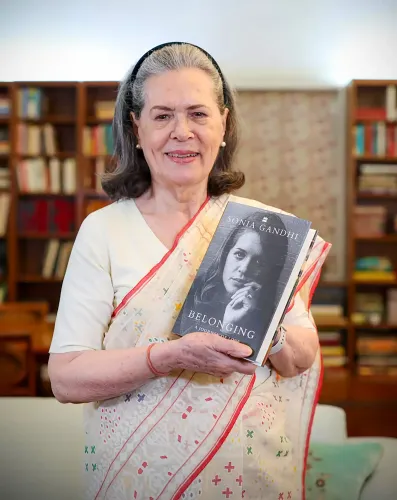
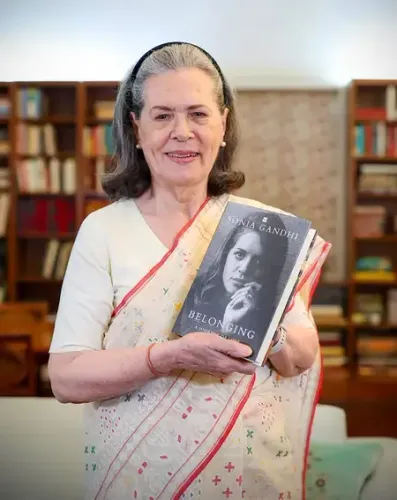
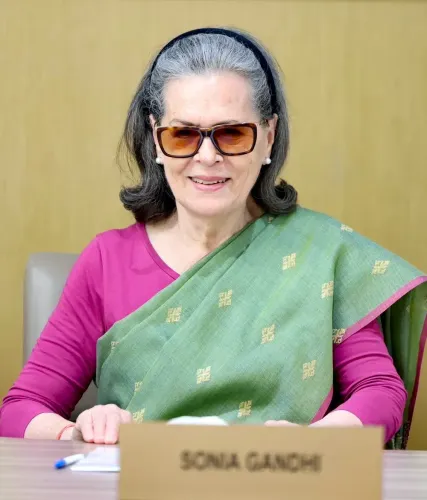
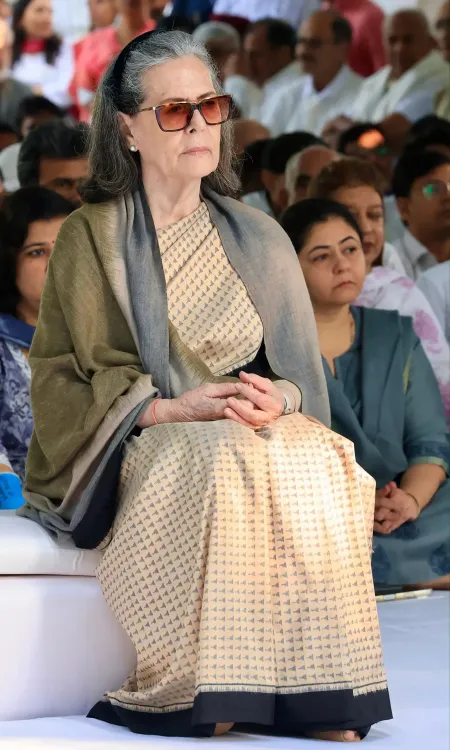
Congress Parliamentary Party (CPP) Chairperson Sonia Gandhi has offered a candid account of her relationship with sister-in-law Maneka Gandhi — now a senior Bharatiya Janata Party (BJP) leader — in her memoir 'Belonging: A Journey Of Love', released on Tuesday, 10 November 2026. The book traces Maneka's arrival into the Gandhi household in the mid-1970s through her eventual dramatic departure, documenting a relationship that began with warmth and ended in what Sonia Gandhi describes as calculated manipulation.
The Early Years: A Lively Addition to the Household
Sonia Gandhi writes that Maneka Gandhi was introduced to Sanjay Gandhi towards the end of 1973, describing her as 'a pretty and vivacious girl, ten years younger than him and still a minor.' Within a year, the two were married, and Maneka, then 18, became part of the Gandhi family.
'It was refreshing at first to have a younger sister-in-law in the house. I could hear her laughter at times coming from Amie Aunty's room, and would walk in to enquire about the subject of such merriment, then end up sitting down to listen to her lively chatter about her friends or a book she was reading,' Sonia Gandhi writes. She adds that her daughter, Priyanka Gandhi Vadra, was often found in her 'chachi's' room, 'spellbound by a story she was being told.'
Tensions Surface: Hierarchy, Temper and Political Ambition
According to the memoir, the first friction arose over how the two daughters-in-law were addressed. Sonia was called 'Bahurani' by household staff, while Maneka — as the younger brother's wife — was referred to as 'Choti Bahu.' Sonia Gandhi claims Maneka 'probably saw it as a putdown,' even though former Prime Minister Indira Gandhi regarded both as 'equal daughters of the house.'
The memoir recounts that Maneka's behaviour grew increasingly confrontational: 'When she spoke rudely, by and large I'd remain silent to keep the peace, but when I felt it had gone too far, I wouldn't hold back and would respond curtly.' Sonia Gandhi also notes that Maneka 'would use expletives, even in the presence of my mother-in-law, that were taboo in the home.'
Notably, Sonia Gandhi says Maneka's influence began affecting Sanjay's relationship with his brother Rajiv Gandhi, turning a once-inseparable bond 'bitter.' She further claims that Indira Gandhi, in a conversation with Cabinet Secretary P N Dhar, remarked about her younger daughter-in-law: 'Uske abhi se par nikalne lage hain' — 'She has started growing wings already.'
After Sanjay Gandhi's Death: A Household Fractures
The situation became significantly more fraught following Sanjay Gandhi's death on 23 June 1980, in an aircraft crash. Sonia Gandhi writes that Maneka's mother was believed to be encouraging Sanjay's political loyalists to demand a formal role for his widow. However, Indira Gandhi reportedly felt Maneka — then 23 and a mother to a three-month-old — was 'still too young and immature to be given a leadership role.'
A turning point came in March 1981 when Maneka hosted son Feroze Varun Gandhi's first birthday at the residence of Vasundhara Raje, described in the memoir as 'a staunch supporter of the RSS and a political opponent of Indira Gandhi.' Around the same time, Maneka began moving her belongings out of the family home while Indira Gandhi was in London.
The Public Departure and Its Fallout
On Indira Gandhi's return, she asked Maneka to choose between refraining from her activities or leaving the house. Sonia Gandhi writes that Maneka 'returned a missive full of accusations, obviously meant to damage her mother-in-law' and had reportedly 'confided her plan weeks in advance to a journalist friend.' She claims the entire episode was deliberately engineered: 'The manner in which the whole incident was manipulated, the propaganda circus that followed, turned that sordid event into what would be termed today a "reality show."'
Rajiv and Sonia Gandhi were reportedly not present during the altercation, yet publicly bore a share of the blame. Among the claims that particularly stung, Sonia Gandhi cites 'the outright lie that Rajiv and I had intended to flee the country when the elections were lost.'
In the years that followed, the Gandhi family legally contested Maneka over visiting rights for Feroze Varun Gandhi, which his mother eventually denied. The memoir, running across decades of personal and political history, marks one of the most detailed first-person accounts of the Gandhi family's internal dynamics ever published by a serving political leader.
Point of View
Quotes, and characterises a serving Cabinet minister from a rival party is not a routine literary event — it is a political act. Sonia Gandhi's account of Maneka Gandhi arrives at a moment when both women remain active in public life, which means every allegation in 'Belonging' will be scrutinised, contested, and weaponised. What the mainstream coverage underplays is the constitutional asymmetry here: Sonia Gandhi controls the narrative through a book; Maneka Gandhi has yet to respond in any equivalent forum. The memoir also surfaces a recurring tension in the Gandhi family story — the collision between political dynasty and individual ambition — that has never been fully reconciled, and whose echoes can be heard in the continuing Varun Gandhi subplot.
NationPress
10 Nov 2026
Frequently Asked Questions
What does Sonia Gandhi's memoir say about Maneka Gandhi?
In 'Belonging: A Journey Of Love,' Sonia Gandhi describes how her initial warmth toward Maneka Gandhi gradually gave way to friction over household hierarchy, temperament, and political ambition. She claims Maneka engineered her dramatic departure from the Gandhi home in a way that deliberately shifted public blame onto Rajiv and Sonia Gandhi.
When did Maneka Gandhi marry Sanjay Gandhi and join the Gandhi family?
Maneka was introduced to Sanjay Gandhi towards the end of 1973 and married him within a year, joining the Gandhi household at age 18. Sonia Gandhi describes her as 'a pretty and vivacious girl, ten years younger than him and still a minor' at the time of their introduction.
What triggered the final fallout between Maneka Gandhi and the Gandhi family?
The break became irreversible after Sanjay Gandhi's death on 23 June 1980 and Maneka's decision in March 1981 to host Feroze Varun Gandhi's first birthday at the home of Vasundhara Raje, a political opponent of Indira Gandhi. Indira Gandhi subsequently asked Maneka to choose between changing her behaviour or leaving the house; Maneka left.
What did Indira Gandhi privately say about Maneka Gandhi?
According to the memoir, Indira Gandhi told Cabinet Secretary P N Dhar: 'Uske abhi se par nikalne lage hain' — meaning 'She has started growing wings already.' Sonia Gandhi also writes that Indira Gandhi felt Maneka was 'egging Sanjay on in his activities, rather than being a sobering influence on him.'
Who is Feroze Varun Gandhi, and how does he figure in the memoir?
Feroze Varun Gandhi is the son of Sanjay Gandhi and Maneka Gandhi, born shortly before Sanjay's death in 1980. The memoir notes that after the family split, the Gandhi family legally contested Maneka over his visiting rights — a dispute that Maneka eventually won, with Feroze Varun Gandhi raised outside the Gandhi household.