South Korea population mobility hits 52-year low in May amid housing crunch
Synopsis
South Korea's residential mobility just hit its lowest point since 1974 — not because people want to stay put, but because there are almost no new homes to move into. Housing completions crashed 41.5% in March–April. Yet the same data release buried a seven-year birth rate high, with April births up 18%. Two demographic signals, pulling in opposite directions, define Seoul's policy moment in mid-2025.
Key Takeaways
466,000 South Koreans changed residences in May 2025 , the lowest May figure since 1974 — a 1.5 per cent year-on-year decline.
Completed housing units in March–April fell 41.5 per cent year-on-year, driving the mobility slump.
Seoul saw a net outflow of 4,221 residents ; Gyeonggi Province recorded a net inflow of 2,433 .
Births in April 2025 rose 18 per cent year-on-year to 24,521 — the highest April count since 2019 .
Cumulative births for January–April 2025 reached 99,534 , up 15.5 per cent — a seven-year high.
The total fertility rate rose to 0.93 in April, still far below the replacement level of 2.1 .
South Korea's population mobility fell to its lowest level in 52 years in May 2025, with approximately 466,000 people changing residences — a 1.5 per cent drop from the same month a year earlier, according to data released by South Korea's Ministry of Data and Statistics on Wednesday. The figure is the weakest for any May since 415,000 relocations were recorded in 1974, and officials have attributed the decline directly to a sharp contraction in new housing supply.
Housing Supply Collapse Drives the Decline
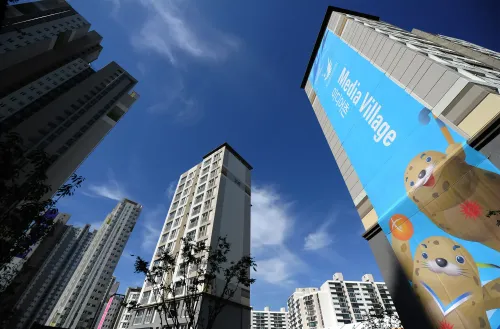
The ministry pointed to a dramatic fall in completed housing units as the primary driver. The number of newly finished homes in March and April plunged 41.5 per cent year-on-year — an acute supply shock that left fewer destinations for households looking to move. Despite this, the number of homes traded during the same period actually rose 6.8 per cent, suggesting demand remains intact even as inventory shrinks.
The population mobility rate — defined as the number of people relocating per 100 residents — slipped 0.2 percentage points year-on-year to 10.8 per cent in May, according to official data. The contraction underscores how tightly residential movement in South Korea is tied to new construction pipelines.
Regional Flows: Seoul Loses, Gyeonggi Gains
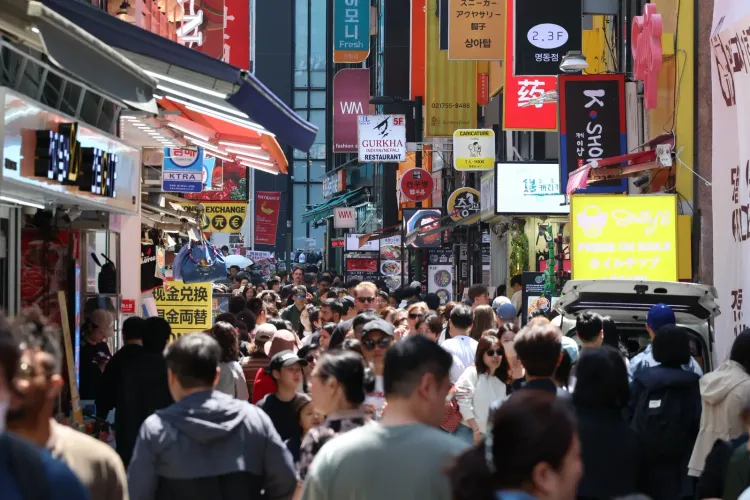
At the regional level, Seoul recorded a net outflow of 4,221 residents in May, continuing a broader trend of capital-city decongestion. Gyeonggi Province, which encircles the capital, absorbed a net inflow of 2,433 residents. South Chungcheong Province and Incheon, located west of Seoul, added 1,284 and 1,237 net residents respectively, reflecting a gradual redistribution of population toward satellite cities and provincial hubs.
A Surprising Bright Spot: Birth Rate Surges to 7-Year High
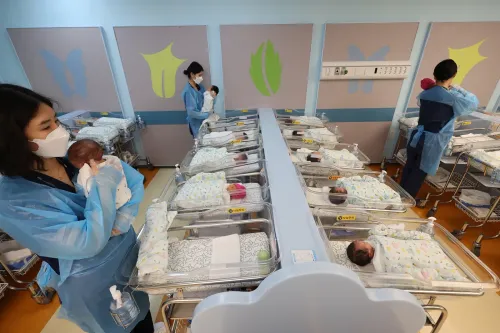
The same dataset carried a strikingly positive counterpoint. The number of babies born in South Korea jumped 18 per cent in April 2025 from a year earlier, reaching 24,521 births — the highest April tally since 26,104 were recorded in 2019. Over the January–April 2025 period, total births reached 99,534, also a seven-year high and up a sharp 15.5 per cent year-on-year.
Both the April figure and the January–April cumulative figure grew at record rates, according to ministry data. The country's total fertility rate — the average number of children a woman is expected to have in her lifetime — rose by 0.13 from a year earlier to 0.93 in April. Notably, newborn numbers have been on a consistent upward trend since July 2024, offering a rare glimmer of optimism for a nation that has long grappled with one of the world's lowest birth rates.
What the Numbers Signal
The twin data points paint a nuanced picture of South Korea's demographic moment. The mobility slump reflects structural constraints in the housing market rather than a loss of economic dynamism — a distinction that matters for policymakers weighing construction stimulus. Meanwhile, the birth rate uptick, if sustained, could begin to ease long-term demographic pressure, though a fertility rate of 0.93 remains well below the replacement threshold of 2.1. Analysts will be watching whether the housing supply shortfall corrects in the second half of 2025 and whether the birth rate momentum holds beyond the current quarter.
Point of View
Meaning demand is present but inventory is not. Policymakers who read this as apathy will misdiagnose the problem. The birth rate surge is genuinely encouraging, but a fertility rate of 0.93 is still less than half the replacement threshold, and a few strong quarters do not reverse a structural decade-long decline. South Korea needs both a construction pipeline fix and sustained pro-natalist outcomes — and right now it is getting neither at scale.
NationPress
22 Sept 2026
Frequently Asked Questions
Why did South Korea's population mobility fall to a 52-year low in May 2025?
South Korea's population mobility dropped to its lowest May level since 1974 primarily because of a sharp decline in new housing supply. Completed housing units in March and April fell 41.5 per cent year-on-year, leaving fewer homes available for people to move into, even as home transactions rose 6.8 per cent over the same period.
How many people relocated in South Korea in May 2025?
Approximately 466,000 people changed residences in May 2025, down 7,000 from a year earlier. The population mobility rate stood at 10.8 per cent — meaning roughly 10.8 people relocated per every 100 residents.
Which regions gained and lost population in May 2025?
Seoul recorded a net outflow of 4,221 residents, while Gyeonggi Province gained a net 2,433 residents. South Chungcheong Province and Incheon added 1,284 and 1,237 net residents respectively.
What happened to South Korea's birth rate in April 2025?
Births in South Korea rose 18 per cent in April 2025 to 24,521 — the highest April figure in seven years, since 26,104 were recorded in 2019. The total fertility rate climbed to 0.93, up 0.13 from a year earlier, though it remains well below the replacement level of 2.1.
Has South Korea's birth rate been consistently improving?
Newborn numbers have been on an upward trend since July 2024. Over January–April 2025, total births reached 99,534, up 15.5 per cent year-on-year and the highest cumulative figure in seven years. Both the April and January–April growth rates were described as record rates by the Ministry of Data and Statistics.