South Korea Sees Largest Baby Boom in 15 Years
Synopsis
In an encouraging trend for South Korea, the birth rate has experienced its fastest growth in 15 years. With a total fertility rate of 0.8, the increase reflects a change in societal attitudes and a rise in marriages following the pandemic.
Key Takeaways
Birth rates in South Korea increased by **6.8 percent** in **2025**.
The total fertility rate rose to **0.8**, the first increase in four years.
Factors for growth include rising marriages and a larger population of women in their early **30s**.
Significant societal changes are encouraging childbearing post-marriage.
Projected growth in fertility rate aims to reach **1** by **2031**.
Seoul, Feb 25 (NationPress) The birth rate in South Korea witnessed its most significant increase in the past 15 years in 2025, with the country's total fertility rate reaching 0.8 for the first time in four years, according to government data released on Wednesday.
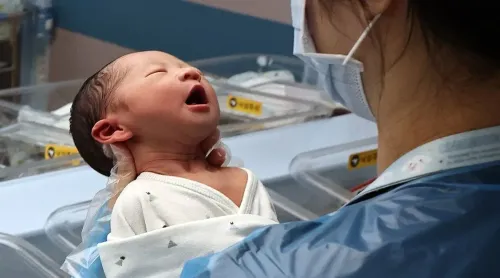
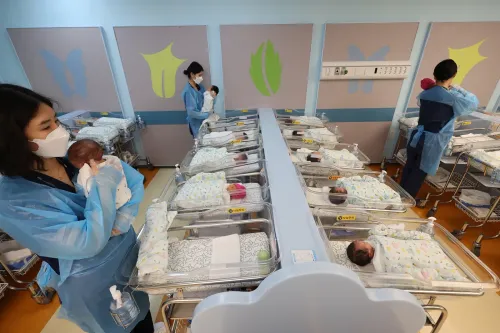
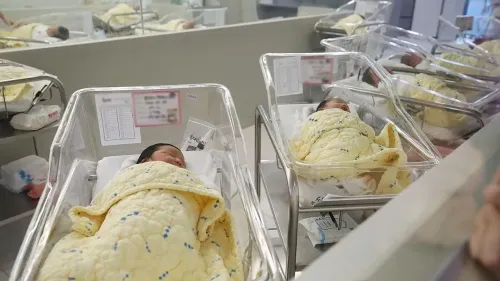
Last year, 254,500 babies were born, marking a 6.8 percent rise, or an increase of 16,100 from 2024, based on provisional data from the Ministry of Data and Statistics. The official statistics will be published in August, as reported by Yonhap news agency.
This figure represents the largest year-on-year growth since 2010, and it reflects the second consecutive year of rising births.
The total fertility rate, which indicates the average number of children a woman is likely to have during her lifetime, stood at 0.8, an increase of 0.05 from the previous year, surpassing the threshold for the first time in four years.
The ministry credits this rise in newborns to a surge in marriages and the ongoing increase in the population of women in their early 30s, who are at the peak of their childbearing years, since 2021.
“Marriages have steadily increased for 21 consecutive months from April 2024 to December last year, as couples who postponed their weddings due to the COVID-19 pandemic finally tied the knot,” explained Park Hyun-jeong, an official from the ministry.
Park also noted a significant shift in societal attitudes towards childbirth, with the ministry's latest biennial survey conducted in 2024 indicating a rise in the number of individuals intending to have children after marriage compared to two years prior.
The proportion of individuals willing to consider childbirth outside of marriage has also increased, she added.
Regarding the total fertility rate, Park anticipates it will remain above 0.8 this year and aims for an increase to 1 by 2031.
Further data revealed that the number of deaths rose by 1.3 percent year-on-year to 363,400 in 2025, leading to a natural population decline of 110,000.
Point of View
The rise in South Korea's birth rate is a positive development that reflects changing social norms and increased family planning after the pandemic. The government's data indicates a growing optimism toward childbirth and family formation in the country.
NationPress
3 Oct 2026
Frequently Asked Questions
What was South Korea's birth rate in 2025?
In 2025, South Korea's birth rate reached **0.8**, marking the first increase in four years.
How many babies were born in South Korea in 2025?
A total of **254,500 babies** were born in South Korea in 2025, representing a **6.8 percent** increase from the previous year.
What factors contributed to the increase in births?
The increase in births is attributed to a rise in marriages and a growing population of women in their early **30s**, who are in their prime childbearing years.
What are the projections for the total fertility rate?
The Ministry projects that the total fertility rate will remain above **0.8** this year and may reach **1** by **2031**.
What impact did COVID-19 have on marriages?
Many couples delayed their marriages due to the COVID-19 pandemic, but there has been a steady increase in marriages since April **2024**.