How is Sri Lanka Strengthening Forest and Wildlife Protection?

Synopsis
Colombo's new task force, 'Wana Surakuma', aims to combat environmental crimes while adhering to EU regulations. Explore how this initiative could impact Sri Lanka's economy and rural communities.
Key Takeaways
'Wana Surakuma' task force launched to protect forests.
24-hour hotline available for public reporting.
Compliance with EUDR is mandatory for exporters.
Smallholder farmers face challenges in compliance.
Potential economic impact includes job losses and reduced exports.
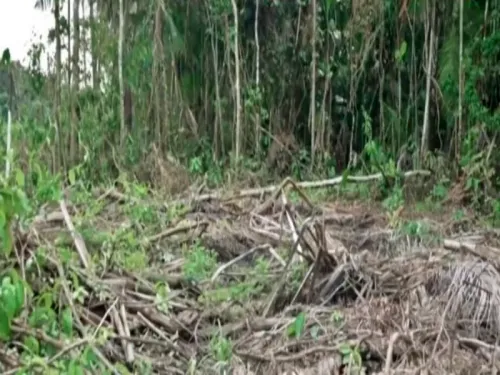
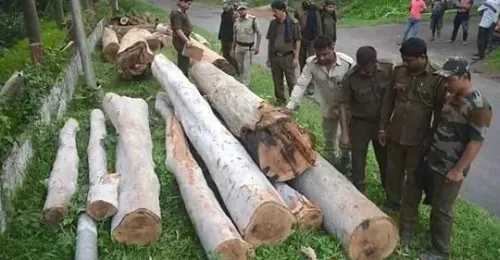
Colombo, Nov 3 (NationPress) On Monday, Sri Lanka unveiled a comprehensive operational task force called 'Wana Surakuma' under the Ministry of Environment, aimed at safeguarding the nation's natural forests and wildlife resources.
The ministry emphasized that the primary goal of 'Wana Surakuma' is to enhance the efficiency of forest and wildlife protection operations while actively preventing and addressing environmental crimes.
This newly formed unit incorporates officers from the Department of Wildlife Conservation, the Department of Forest Conservation, the Police Special Task Force, and members of Sri Lanka's tri-forces. It is designed to bolster coordination and facilitate a rapid response to forest-related offenses throughout the country, as reported by Xinhua News Agency.
The task force will also provide a 24-hour hotline service through the short code 1995, allowing the public to report cases of forest destruction and environmental damage.
Recently, Xinhua reported that Sri Lanka is preparing for the upcoming enforcement of the European Union's Deforestation Regulation (EUDR), which will come into effect on December 30. This regulation mandates that all commodities entering the EU market must be deforestation-free and sourced legally, according to a new study conducted by the Institute of Policy Studies (IPS), a research institution based in Sri Lanka.
The regulation specifically targets seven key commodities, which include natural rubber, palm oil, soy, cattle, cocoa, coffee, and wood, as well as derived products such as tires and wooden furniture. Significant to this trade, Sri Lanka's rubber exports to the EU are projected to be around 338 million US dollars in 2024, according to IPS researchers.
In order to comply with the EUDR, exporters will need to provide comprehensive geolocation data and prove legal ownership of the land from which commodities were sourced. While larger plantations may navigate these requirements with relative ease, the study points out the obstacles faced by smallholder farmers, who cultivate over 68 percent of Sri Lanka's nearly 98,400 hectares of rubber.
Challenges such as inadequate digital infrastructure, inconsistent internet access in rural regions, and the complexities associated with digitizing land titles hinder smallholders' ability to meet the rigorous traceability and documentation standards set forth. The potential exclusion of small farmers from lucrative EU markets raises valid concerns regarding the socio-economic repercussions for rural communities.
IPS modeling suggests that compliance could escalate export costs by 5 percent, leading to a 7.6 percent decrease in rubber exports to the EU, which translates into an annual loss of 24.4 million dollars. Non-compliance could result in a total loss of access to the EU market for these products, potentially reducing the country's gross domestic product by 0.07 percent.
Moreover, the rubber manufacturing sector, which currently supports over 34,000 workers, may also experience adverse effects. The study estimates that in a scenario of non-compliance, labor demand could fall by 15.6 percent, leading to thousands of job losses.
Point of View
It's imperative to recognize Sri Lanka's proactive approach in launching 'Wana Surakuma'. This task force not only aims to safeguard our natural resources but also addresses pressing concerns regarding compliance with international regulations. The balance between environmental sustainability and economic viability must be maintained to support our rural communities while protecting our rich biodiversity.
NationPress
29 Sept 2026
Frequently Asked Questions
What is 'Wana Surakuma'?
Wana Surakuma is an operational task force launched in Sri Lanka aimed at enhancing forest and wildlife protection efforts.
What are the main objectives of this task force?
The primary objectives include improving the efficiency of protection operations and preventing environmental crimes.
How can the public report environmental crimes?
The task force operates a 24-hour hotline service via the short code 1995 for public reporting.
What impact could the EUDR have on Sri Lanka's economy?
Compliance may increase export costs and could lead to a decline in rubber exports, impacting the economy and employment.