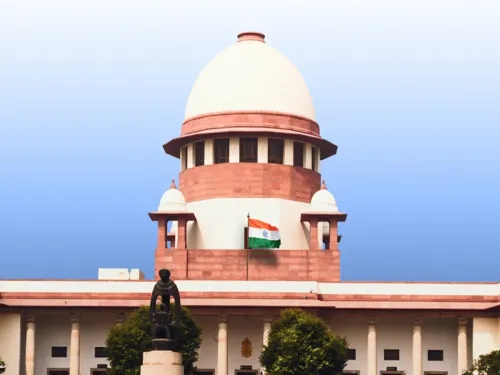
Why Did the Supreme Court Reject Abu Salem's Request for Early Release?
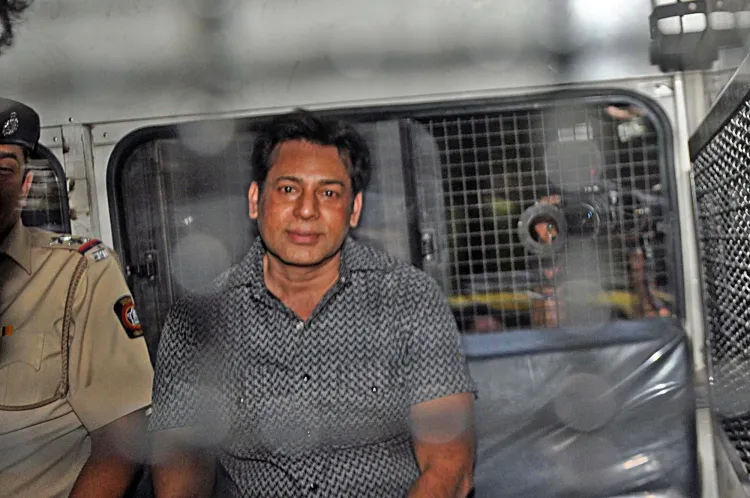
Synopsis
The Supreme Court has dismissed Abu Salem's plea for early release, stating he must approach the Bombay High Court instead. Salem, serving a life sentence for the 1993 Mumbai blasts, claims he is eligible for release after 25 years. This decision raises questions about the complexities of extradition treaties and judicial interpretations.
Key Takeaways
The Supreme Court dismissed Abu Salem's plea, redirecting him to the Bombay High Court.
Salem claims eligibility for early release under the India-Portugal extradition treaty.
He has served nearly 20 years of his sentence but disputes the authorities' calculations.
The case highlights complexities surrounding extradition laws and judicial interpretations.
Salem's conviction relates to a significant terrorist incident in Indian history.
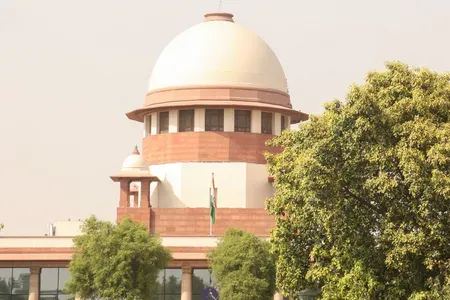
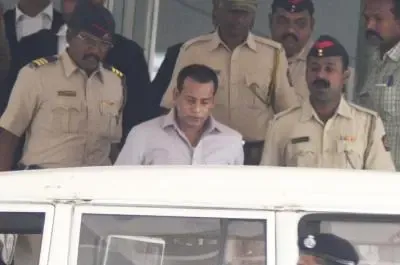
New Delhi, Feb 16 (NationPress) The Supreme Court dismissed a plea filed by Abu Salem, a convict of the 1993 Mumbai serial blasts, who sought premature release based on the extradition treaty between India and Portugal.
A bench comprising Justices Vikram Nath and Sandeep Mehta allowed Abu Salem to withdraw his special leave petition (SLP) after his senior counsel, Rishi Malhotra, requested to approach the Bombay High Court for an expedited hearing on the pending case.
"Mr. Rishi Malhotra, learned senior counsel, after arguing for some time, stated that this petition may be dismissed as withdrawn, allowing the petitioner the opportunity to approach the High Court for a prompt hearing and resolution of the pending issue. The petition is dismissed with liberty," the court ordered.
Abu Salem, convicted under the Terrorist and Disruptive Activities (Prevention) Act (TADA) related to the 1993 Mumbai blasts, asserted that he should be eligible for release after serving 25 years of imprisonment as per the extradition agreement between India and Portugal.
He also sought to include 3 years and 16 days of jail-earned remission for good behavior in calculating his 25-year sentence.
Previously, Abu Salem had approached the Bombay High Court for a directive to the authorities to determine a release date upon serving 25 years. However, in an order dated July 7, 2025, the High Court observed prima facie that the 25-year period was "yet to be completed, including the alleged duration of pre-trial detention or incarceration" and denied interim relief.
Before the Supreme Court, Malhotra argued that his client was pursuing standard and annual good conduct remission and claimed that the authorities' calculations indicating that Abu Salem had not completed 25 years were an "arithmetical error".
Referencing the Supreme Court’s judgment from July 2022, which considered October 12, 2005, as the start date of his detention, the senior counsel contended that Abu Salem had already "exceeded 10 months" beyond the 25-year threshold, labeling the case as one of "habeas corpus, illegal custody".
Nevertheless, the Justice Vikram Nath led bench expressed its reluctance to entertain the plea at this time, emphasizing that the matter was fundamentally tied to findings from the Bombay High Court and that Abu Salem should file an appropriate application there.
The Maharashtra government maintained that Abu Salem has yet to fulfill the 25-year imprisonment requirement. The Inspector General of Prisons & Correctional Services informed the Bombay High Court that as of March 31, 2025, he had served 19 years, 5 months and 18 days of his sentence.
Abu Salem had petitioned the Bombay High Court for a directive to the authorities to set a release date after completing 25 years, arguing that his ongoing imprisonment infringed upon his right to life and liberty as per Article 21 of the Constitution. He was convicted and sentenced to life imprisonment in the 1993 Mumbai serial blasts case, which resulted in the deaths of 257 individuals and injuries to over 1,400 others. Following his extradition under the Indo-Portugal treaty, his sentence was reduced to 25 years in alignment with the commitments made to the Portuguese officials.
Point of View
It is imperative to approach the ongoing legal discourse surrounding Abu Salem's case with neutrality. The Supreme Court's decision underscores the importance of adhering to judicial protocols while ensuring the rights of convicted individuals are respected. The evolving narrative surrounding extradition treaties and their implications for legal proceedings in India warrants careful analysis and public discourse.
NationPress
19 Sept 2026
Frequently Asked Questions
What was the Supreme Court's decision regarding Abu Salem's plea?
The Supreme Court dismissed Abu Salem's plea for premature release as withdrawn, allowing him to approach the Bombay High Court for an expedited hearing.
Why is Abu Salem seeking early release?
Abu Salem is claiming entitlement to early release under the extradition treaty between India and Portugal, asserting he has served the requisite 25 years of imprisonment.
What was the outcome of his previous appeal to the Bombay High Court?
The Bombay High Court previously ruled that the 25-year period had not yet been completed, including pre-trial detention, and denied interim relief.
How long has Abu Salem actually served in prison?
As of March 31, 2025, Abu Salem has served 19 years, 5 months, and 18 days of his sentence.
What was the significance of the 1993 Mumbai blasts case?
The 1993 Mumbai blasts resulted in the deaths of 257 people and injuries to over 1,400, marking one of the most tragic events in India's recent history.