Supreme Court Refuses to Halt Adani's Resolution Plan for Jaiprakash Associates

Synopsis
In a significant legal development, the Supreme Court has upheld Adani Enterprises' resolution plan for Jaiprakash Associates, dismissing Vedanta Group's request for a stay. This ruling comes as insolvency proceedings are set to continue, highlighting the complexities of corporate debt resolution in India.
Key Takeaways
The Supreme Court upheld Adani's resolution plan.
Vedanta's plea was rejected due to ongoing insolvency proceedings.
The financial distress of Jaiprakash Associates is significant.
Adani's proposal included a substantial upfront payment.
The case highlights complexities in corporate debt resolution.
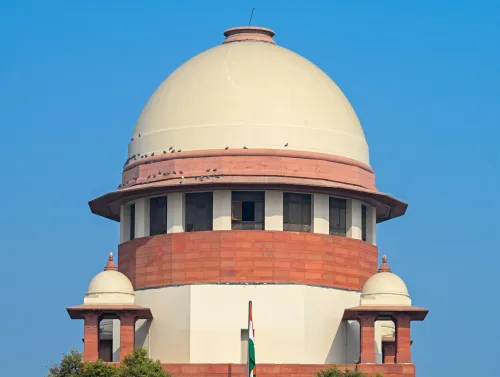
New Delhi, April 6 (NationPress) In a significant blow to the Vedanta Group, the Supreme Court has ruled against suspending the execution of Adani Enterprises' resolution strategy for the financially troubled Jaiprakash Associates Ltd.
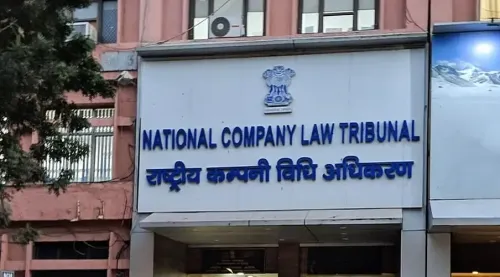
A bench led by Chief Justice (CJI) Surya Kant pointed out that insolvency proceedings are scheduled for final deliberation before the National Company Law Appellate Tribunal (NCLAT) on April 10, thus indicating no grounds for interference at this juncture.
"Given that the company appeals are set for final hearing before NCLAT on April 10, we find no cause for intervention," the bench, which also included Justice Joymalya Bagchi, remarked, instructing the appellate tribunal to prioritize the case and continue hearings if necessary on the subsequent working day.
The apex court further mandated that any substantial policy decisions made by the monitoring committee in the interim must be preceded by permission from the NCLAT, acknowledging the case's intricate nature and consequences.
Vedanta sought intervention from the highest court to pause Adani Enterprises’ ₹14,500-crore resolution plan, arguing that the insolvency process was lacking in transparency and did not optimize value for creditors.
The company contended that it had presented a superior offer of ₹16,726 crore and was initially recognized as the highest bidder before the conclusion was purportedly overturned without sufficient rationale.
It also raised concerns about the decision-making process of the Committee of Creditors, labeling the approval of Adani Enterprises’ plan as "unjust, unclear, and inequitable."
In response, the lenders defended their choice, asserting that resolution proposals under the Insolvency and Bankruptcy Code (IBC) are not solely based on the highest financial bid. Aspects such as the immediate cash component, feasibility of execution, and repayment schedules are also considered.
They further claimed that Adani Enterprises’ proposal was favored due to a larger upfront payment of approximately ₹6,000 crore and a reduced repayment timeframe of around two years.
Moreover, they argued that Vedanta’s revised bid was submitted after the bidding window had closed and could not be taken into account without restarting the bidding process.
Previously, the NCLAT had refused to grant interim relief against the approval of Adani Enterprises’ resolution strategy by the National Company Law Tribunal, allowing the insolvency process to proceed while seeking responses from involved stakeholders.
Jaiprakash Associates Limited is currently undergoing insolvency proceedings under the IBC, 2016, due to defaults on loans exceeding ₹57,000 crore. The company has diversified operations in real estate, cement, power, and infrastructure, with notable assets including major township projects in Noida and Greater Noida, alongside investments in expressway and power projects.
The proposed acquisition by Adani Group entities had earlier received the necessary approval from the Competition Commission of India (CCI), as mandated by the Competition Act, 2002, for such mergers.
Senior advocates Kapil Sibal and V.V. Giri represented Vedanta Ltd., while Solicitor General Tushar Mehta acted on behalf of the Committee of Creditors (CoC). Adani Enterprises was represented by senior advocates Mukul Rohatgi and Ritin Rai, supported by a team from Karanjawala & Co.
Point of View
This ruling underscores the judiciary's role in navigating corporate insolvency challenges. The Supreme Court's decision to allow the Adani resolution plan to proceed reflects a commitment to uphold legal processes while addressing complex financial matters, ensuring creditors' interests are considered.
NationPress
13 Oct 2026
Frequently Asked Questions
What did the Supreme Court decide regarding Vedanta's plea?
The Supreme Court declined to stay the implementation of Adani Enterprises' resolution plan for Jaiprakash Associates, allowing the insolvency process to continue.
What was Vedanta's argument against Adani's plan?
Vedanta argued that the insolvency process lacked transparency and did not maximize value for creditors, claiming to have submitted a higher bid initially.
What are the implications of this ruling?
This ruling allows the insolvency proceedings to proceed, with a final hearing scheduled, impacting the resolution strategies of corporate debtors in similar situations.
How much was Adani's resolution plan worth?
Adani's resolution plan for Jaiprakash Associates was valued at ₹14,500 crore.
What is the current financial situation of Jaiprakash Associates?
Jaiprakash Associates is undergoing insolvency proceedings due to loan defaults exceeding ₹57,000 crore.