Did SC Overturn Punjab and Haryana HC Ruling on Gurugram's Ambience Island Project?
Synopsis
In a landmark ruling, the Supreme Court has reversed a decision by the Punjab and Haryana High Court regarding the Ambience Island project in Gurugram. This pivotal judgment not only reinstates approvals for the project but also addresses ongoing legal disputes involving homebuyers, offering a glimmer of hope for all stakeholders involved.
Key Takeaways
Supreme Court overturned Punjab and Haryana High Court ruling.
Decision reinstates approvals for Ambience Island project.
Connected NGT proceedings paused until further review.
Allegations of misuse of land were central to the case.
Legal representation included prominent advocates.
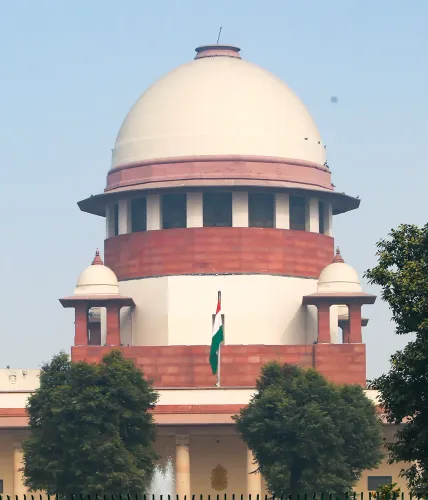
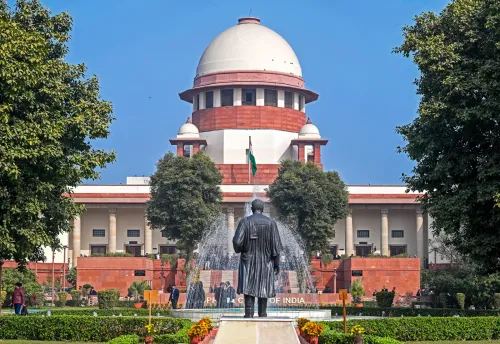
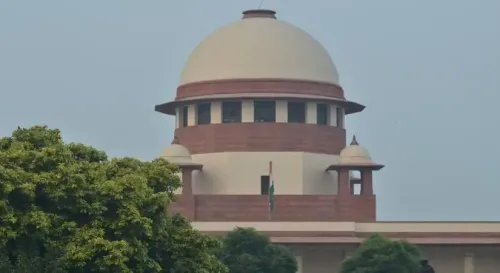
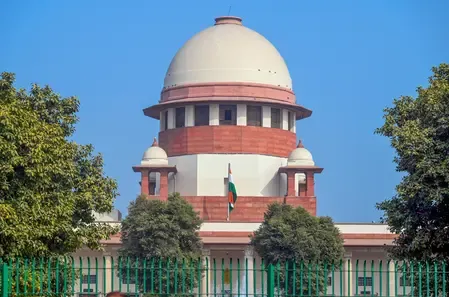
New Delhi, Jan 20 (NationPress) In a major relief for residents, tenants, and various stakeholders of the Ambience Island project located in Gurugram, the Supreme Court on Tuesday annulled a ruling from the Punjab and Haryana High Court that had invalidated approvals associated with the project and mandated a CBI investigation.
In a decision favoring the appeals lodged by the Ambience Group and connected parties, a bench consisting of Justices J.B. Pardiwala and Sandeep Mehta determined that the Punjab and Haryana High Court had overstepped by interfering in the delicensing and relicensing processes concerning the land parcels that are part of the integrated township.
The apex court, while dismissing the contentious judgment from July 10, 2020, also instructed that the ongoing proceedings at the National Green Tribunal (NGT) should be paused until the Punjab and Haryana High Court reviews an additional writ petition filed by several homebuyers, without being influenced by any remarks made by the Supreme Court.
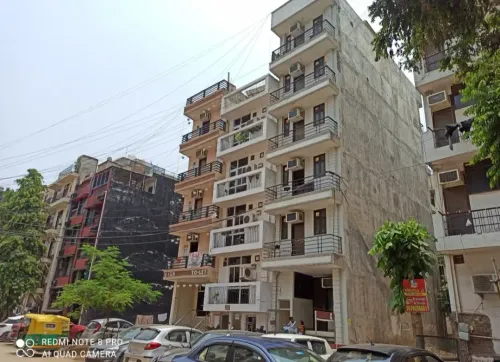
The conflict originated from complaints by certain homebuyers alleging that land designated for residential development in Ambience Island was repurposed for the erection of commercial towers.
In 2020, the Punjab and Haryana High Court accepted these claims, subsequently invalidating the approvals provided by Haryana's Department of Town and Country Planning (DTCP) for Ambience Commercial Tower II, and ordered a CBI investigation into the matter.
The bench, led by Justice Pardiwala, remarked that the term "delicensing" was not outside the statutory framework, emphasizing that the sweeping conclusions of illegality and collusion by the Punjab and Haryana High Court were not sustainable based on the evidence available.
The apex court indicated that labeling the entire process as fraudulent and calling for a criminal investigation, without adhering to established parameters for such actions, was unjustified.
The Supreme Court clarified that the challenges posed by certain homebuyers in a new writ petition against the findings of the DTCP would be evaluated independently by the Punjab and Haryana High Court on its own merits.
Before the Supreme Court, the Ambience Group was represented by prominent advocates Mukul Rohatgi, Abhishek Manu Singhvi, Pinaki Misra, and Sanjeev Ralli, along with legal representatives from the esteemed litigation firm Karanjawala & Co.
Point of View
The recent Supreme Court judgment represents a crucial decision reinforcing the legal framework surrounding urban development in India. It emphasizes the necessity for courts to maintain a balanced approach, ensuring that stakeholders' interests are safeguarded while upholding the integrity of legal processes. This case is emblematic of the ongoing challenges within real estate development and the need for clear regulatory practices.
NationPress
21 Sept 2026
Frequently Asked Questions
What was the Supreme Court's ruling on the Ambience Island project?
The Supreme Court annulled a previous decision by the Punjab and Haryana High Court that had quashed approvals for the Ambience Island project and ordered a CBI investigation.
What implications does the Supreme Court's decision have for residents?
The ruling provides significant relief to residents and stakeholders, reinstating necessary approvals and pausing investigations that could have hindered the project's progress.
What were the allegations that led to the original High Court ruling?
The allegations involved claims that land designated for residential use was improperly utilized for commercial tower construction.
What will happen to the ongoing proceedings at the NGT?
The Supreme Court directed that connected proceedings at the National Green Tribunal will remain on hold until the Punjab and Haryana High Court reviews a new writ petition from certain homebuyers.
Who represented the Ambience Group before the Supreme Court?
The Ambience Group was represented by senior advocates Mukul Rohatgi, Abhishek Manu Singhvi, Pinaki Misra, and Sanjeev Ralli, along with lawyers from Karanjawala & Co.