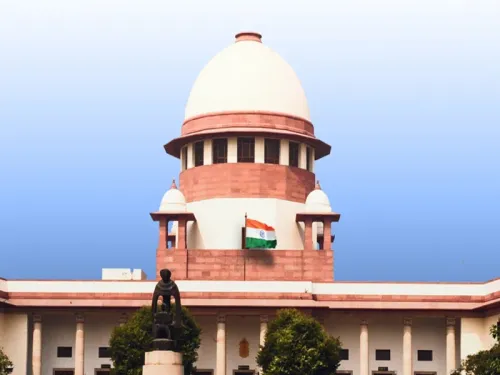
Supreme Court Responds to PIL Addressing False Allegations in Justice System
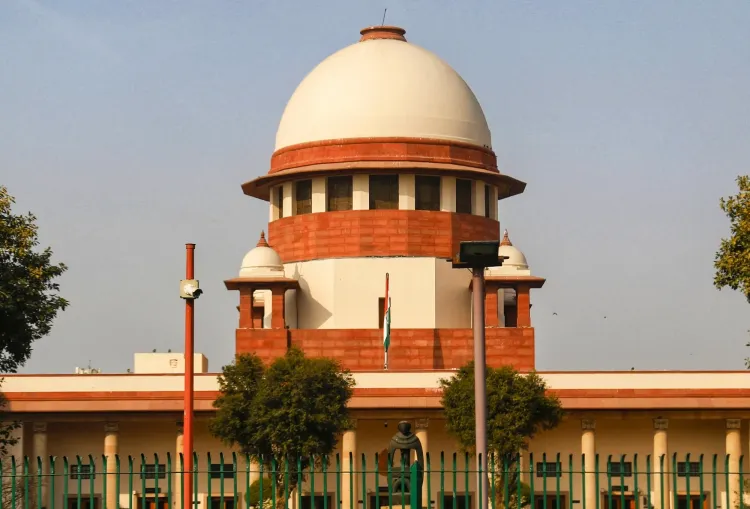
Synopsis
The Supreme Court has taken a significant step by issuing a notice to the Centre and states regarding a PIL aimed at tackling the alarming rise of false allegations and fabricated charges, highlighting the urgent need for reform in the criminal justice system.
Key Takeaways
The Supreme Court has issued a notice regarding a PIL addressing false allegations.
The matter highlights systemic issues within the criminal justice system.
The petition calls for legal reforms to empower victims.
Current laws create barriers to justice for those wrongfully accused.
The hearing is set for May 11, emphasizing the urgency of the issue.
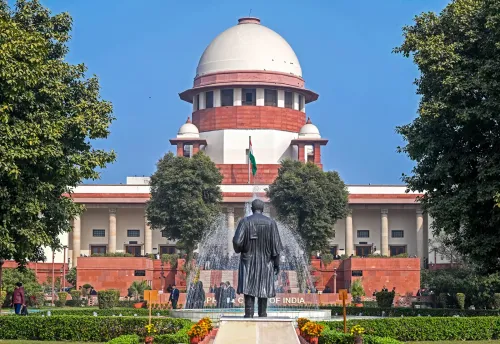
In a significant development, the Supreme Court of India issued a notice on Tuesday, March 24, to the Centre along with all states and Union Territories regarding a Public Interest Litigation (PIL). This litigation aims to confront the escalating issue of false allegations, fabricated charges, and misleading evidence within the criminal justice system.
A bench led by Chief Justice Surya Kant and Justice Joymalya Bagchi delivered this directive while considering a petition brought forth by advocate Ashwini Kumar Upadhyay.
The computerized case status indicates that the matter is expected to be revisited for further hearing on May 11.
The petition argues that the current legal structure hinders an aggrieved individual or victim from pursuing actions against false allegations and fabricated evidence without prior court approval, effectively creating a barrier to accountability.
It further asserts that a "literal interpretation" of Sections 215 and 379 of the Bharatiya Nagarik Suraksha Sanhita (BNSS), 2023 has incapacitated multiple penal provisions, enabling "criminals to inundate police stations with false FIRs" and overloading courts with fraudulent cases, misleading charges, fabricated information, false certificates, and incorrect statements.
To emphasize the severity of this matter, the petition references a tragic incident in Fatehpur district, Uttar Pradesh, where a family reportedly took their lives after facing threats of wrongful accusations.
"The public injury is extensive as innocent individuals are resorting to suicide due to these false allegations," the petition expressed.
The PIL highlights that the lack of specific statistics on the prosecution of false complaints and perjury within the records of the National Crime Records Bureau (NCRB) underscores a systemic void in tackling this issue.
The petitioner claims that police stations are being "overwhelmed with false FIRs," while courts are burdened, leading to extended litigation periods, reputational damage, and financial and mental stress for those wrongfully accused.
"Consequently, the aggrieved individuals suffer reputational damage, lengthy legal battles, and financial and psychological distress from these spurious allegations, while being denied the chance to file complaints themselves," the petition elaborated.
The petition seeks a "purposive and harmonious interpretation" of Sections 215 and 379 of the BNSS to empower victims to lodge complaints regarding offenses related to false information, false evidence, and perjury with the court's consent.
Moreover, it stresses that the goals of the Bharatiya Nyaya Sanhita (BNS) and BNSS—ensuring the rule of law and facilitating swift justice—are being compromised under the current legal framework.
By asserting that unchecked abuse of criminal law jeopardizes fundamental rights, the petition calls upon the apex court to step in and prevent the misuse of legal processes to safeguard innocent individuals from malicious prosecution.
Point of View
Where the integrity of legal processes is under scrutiny. The Supreme Court's intervention signifies the importance of safeguarding innocent citizens from the ramifications of false allegations, emphasizing a need for legal reform to enhance accountability and protect fundamental rights.
NationPress
22 Sept 2026
Frequently Asked Questions
What is the PIL about?
The PIL addresses the increasing problem of false complaints, fabricated charges, and misleading evidence in the criminal justice system.
When is the next hearing scheduled?
The next hearing is tentatively scheduled for May 11.
What issues does the PIL highlight?
It highlights how current legal frameworks create barriers for victims seeking justice against false allegations and the overwhelming burden on courts.
What does the petition seek?
The petition seeks a reinterpretation of certain legal sections to enable victims to initiate complaints regarding false information and evidence.