Will the Supreme Court Rule on the Summoning of Advocates by Investigative Agencies?
Synopsis
The Supreme Court is on the verge of a critical ruling concerning the summoning of advocates by investigative agencies. This decision could redefine the boundaries of legal counsel and the sanctity of attorney-client communication, emphasizing the importance of safeguarding legal professionals' rights. Stay tuned for the verdict that may impact the future of legal practice in India.
Key Takeaways
Supreme Court's upcoming ruling may redefine legal boundaries.
Concerns over attorney-client privilege have been raised.
Investigative agencies' actions could threaten legal autonomy.
Guidelines may be established to protect advocates.
CJI Gavai stresses the importance of privileged communication.
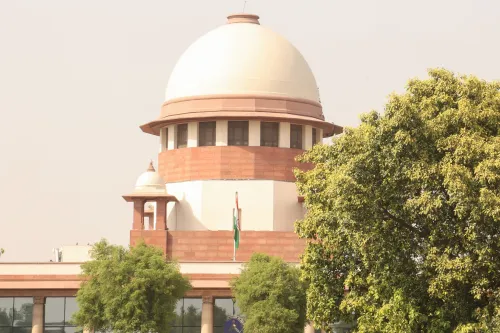
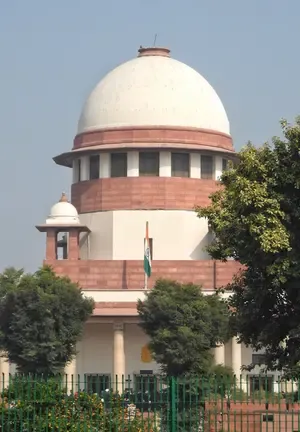
New Delhi, Oct 30 (NationPress) The Supreme Court is poised to announce its verdict on Friday regarding the suo motu case that addresses the contentious issue of investigative agencies summoning advocates for offering legal counsel or representing clients in judicial settings.
According to the causelist available on the apex court's website, a bench featuring Chief Justice of India (CJI) B.R. Gavai along with Justices K. Vinod Chandran and N.V. Anjaria is expected to establish guidelines in the matter titled "In Re: Summoning Advocates Who Give Legal Opinion or Represent Parties During Investigation of Cases and Related Issues".
This suo motu action was initiated earlier this year following multiple reports where investigative agencies summoned lawyers regarding the legal advice they provided to clients.
The apex court had previously noted that such actions could potentially undermine the independence of the legal profession and infringe upon the Constitutionally safeguarded attorney-client privilege.
During earlier sessions, the CJI Gavai-led bench expressed apprehension regarding the summoning of advocates by agencies such as the Enforcement Directorate (ED) and various state police departments.
"How can lawyers be summoned in this manner? This constitutes privileged communication," the bench had remarked, emphasizing the protection of communications between lawyers and their clients from disclosure.
The Attorney General of India R. Venkataramani and Solicitor General Tushar Mehta, both representing the Centre, concurred that lawyers should not be summoned solely for providing legal advice.
However, Solicitor General Mehta indicated that exceptional circumstances—such as when a lawyer is suspected of participating in unlawful actions—might warrant a different approach, under judicial scrutiny.
Earlier, a two-judge panel consisting of Justices K.V. Viswanathan and N.K. Singh emphasized the necessity for comprehensive guidelines, stating that summoning advocates in such instances not only infringes upon their professional rights but also significantly threatens the autonomy of the Bar.
The Supreme Court Advocates-on-Record Association (SCAORA) has also urged the apex court to protect the integrity of the lawyer-client relationship and to formulate explicit directions to prevent potential abuses of investigative authority against legal practitioners.
Point of View
We stand firmly in support of the legal profession's independence. The upcoming ruling by the Supreme Court is pivotal for maintaining the sanctity of the attorney-client relationship, which is essential for upholding justice and the rule of law in our democracy.
NationPress
19 Sept 2026
Frequently Asked Questions
What is the suo motu case about?
The suo motu case addresses the practice of investigative agencies summoning advocates for providing legal advice or representation, raising concerns over attorney-client privilege and legal autonomy.
Who are the judges involved in this case?
The case is being presided over by Chief Justice of India B.R. Gavai and Justices K. Vinod Chandran and N.V. Anjaria.
What could be the implications of this ruling?
The ruling could set important guidelines for the legal profession, safeguarding the attorney-client relationship and ensuring the independence of advocates.
What concerns have been raised regarding the summoning of advocates?
Concerns include the potential infringement on the independence of the legal profession and the violation of the Constitutionally protected attorney-client privilege.
What is the role of the Supreme Court Advocates-on-Record Association (SCAORA)?
SCAORA has urged the Supreme Court to protect the lawyer-client relationship and to establish clear guidelines to prevent the misuse of investigative powers against legal professionals.