Admiral Krishna Swaminathan takes charge as 27th Indian Navy Chief
Synopsis
Admiral Krishna Swaminathan stepped into the top naval command on 31 May as India's 27th Chief of the Naval Staff, pledging to sharpen combat readiness and accelerate indigenisation. His appointment comes as the Indian Ocean Region grows increasingly contested, making his three-pillar focus — Jointness, Atmanirbharta, and Indigenisation — more than ceremonial intent.
Key Takeaways
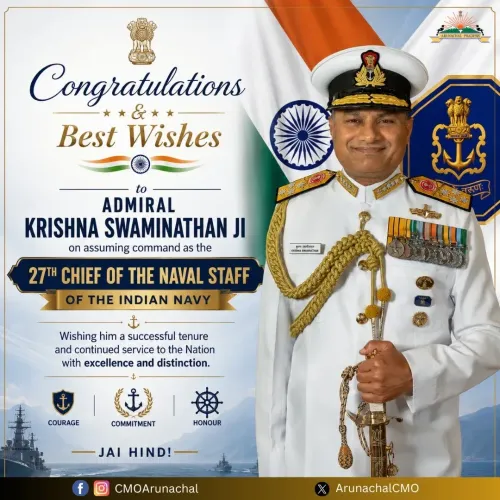
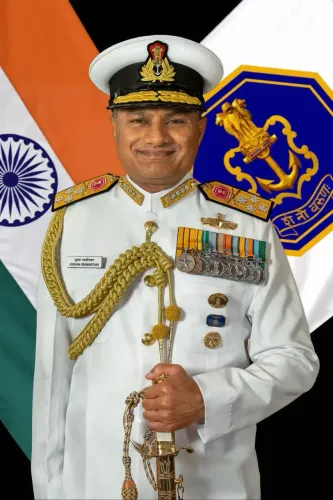
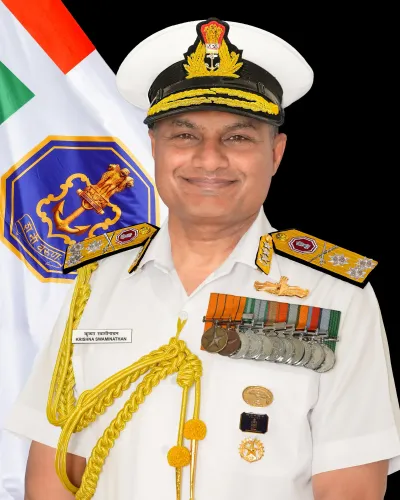
Admiral Krishna Swaminathan assumed charge as the 27th Chief of the Naval Staff on 31 May 2025 .
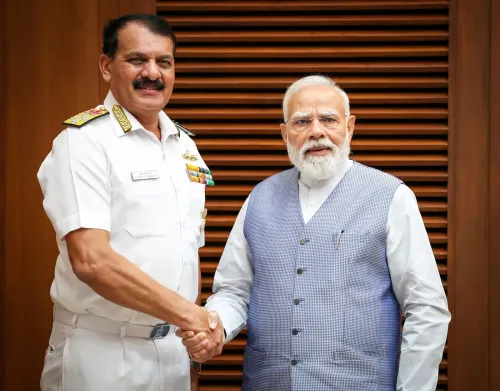
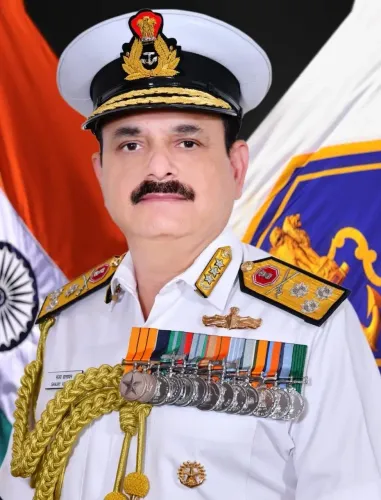
He succeeded Admiral Dinesh K.
Tripathi , who retired from service on the same day.
Swaminathan identified operational readiness, combat effectiveness , and indigenisation as his top priorities.
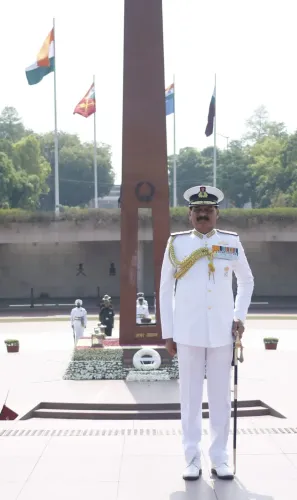
He laid wreaths at the National War Memorial following the handover ceremony in New Delhi .
The new CNS stressed the 'JAI' framework — Jointness, Atmanirbharta, and Indigenisation — as key result areas for his tenure.
Personnel welfare and professional growth were also highlighted as areas of personal commitment.
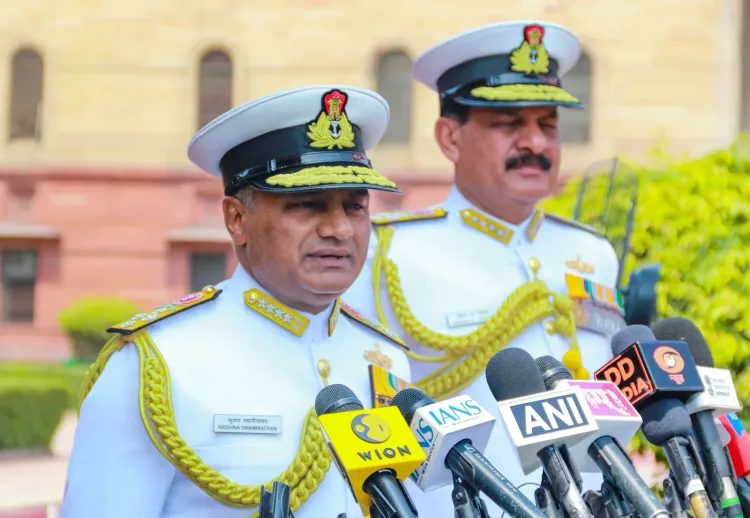
Admiral Krishna Swaminathan on Sunday, 31 May assumed charge as the 27th Chief of the Naval Staff (CNS), succeeding Admiral Dinesh K. Tripathi who retired from service earlier in the day. Swaminathan pledged to sharpen the Indian Navy's operational capabilities and maintain peak combat readiness to safeguard the country's security and economic interests amid a regional environment he described as 'challenging, complex, unpredictable, and uncertain.'
The Handover Ceremony
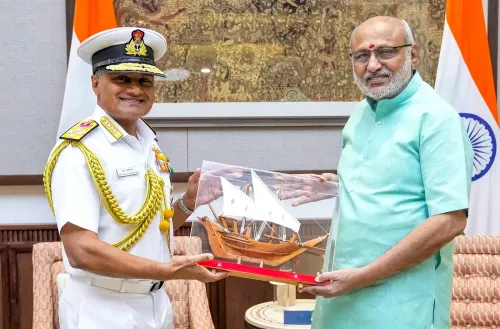
Admiral Swaminathan formally took over from Admiral Tripathi in a handover ceremony in New Delhi. Following the transition, he laid wreaths at the National War Memorial, paying homage to service personnel who made the supreme sacrifice in the line of duty.
Addressing the media after assuming command, Swaminathan said, 'I assume command today as the 27th Chief of the Naval Staff with a deep sense of humility, responsibility, pride, and gratitude. Being selected by the top leadership of the country for this job has been the highest honour and privilege of my life.'
Operational Readiness and Modernisation
The new Navy chief underlined that ensuring the highest level of operational readiness and combat effectiveness would be his foremost priority. 'It shall be my highest priority to ensure that the Indian Navy maintains the highest level of operational readiness and combat effectiveness so that it can protect the nation's security and economic interests wherever they can be,' he stated.
Swaminathan also committed to sustaining the Navy's ongoing capability enhancement and modernisation trajectory. 'It shall be my endeavour to consolidate all ongoing programs, scale up where required, and sharpen our operational capabilities through the induction of niche and emerging technologies,' he added.
Focus on JAI — Jointness, Atmanirbharta, and Indigenisation
Admiral Swaminathan placed particular emphasis on the principle of 'JAI' — Jointness, Atmanirbharta (self-reliance), and Indigenisation — describing these as key result areas for his tenure. The push aligns with the broader national defence policy of reducing import dependence and building domestic defence manufacturing capacity.
'The Indian Navy is deeply committed to Jointness, Atmanirbharta, and Indigenisation, and that will also be one of my key result areas,' he said. He also emphasised the welfare and professional growth of naval personnel as a priority he would pursue 'very sincerely in the days to come.'
Tribute to Outgoing Chief Admiral Tripathi
Swaminathan paid tribute to his predecessor, crediting Admiral Dinesh K. Tripathi for his 'highly meritorious and illustrious service.' 'He has been an extremely effective CNS, led us very successfully, and given us the benefit of his guidance and vision at every turn,' he said. 'On behalf of a grateful Navy, I wish him the very best as he transits to a new phase of his life.'
With the regional maritime security environment remaining fluid, Swaminathan's tenure will be closely watched for how the Navy accelerates indigenisation targets, advances multi-domain jointness with the Army and Air Force, and responds to evolving threats in the Indian Ocean Region.
Point of View
But the Indian Navy's indigenisation record is mixed: the INS Vikrant milestone was real, but submarine and advanced sensor pipelines remain heavily import-dependent. The JAI framework is not new rhetoric; the question is whether his tenure will attach hard timelines and accountability metrics to it, or whether it will remain aspirational language. How Swaminathan manages jointness with an Army and Air Force that have historically guarded their turf will be the structural test that defines his command.
NationPress
16 Oct 2026
Frequently Asked Questions
Who is the new Chief of the Indian Navy?
Admiral Krishna Swaminathan is the new Chief of the Naval Staff (CNS), having assumed charge on 31 May 2025 as the 27th person to hold the position. He succeeded Admiral Dinesh K. Tripathi, who retired from service on the same day.
What are Admiral Swaminathan's stated priorities as Navy Chief?
Swaminathan has outlined three key priorities: maintaining the highest level of operational readiness and combat effectiveness, sustaining the Navy's modernisation momentum through emerging technologies, and advancing the 'JAI' framework of Jointness, Atmanirbharta (self-reliance), and Indigenisation.
What is the significance of the 'JAI' framework in the Indian Navy?
'JAI' stands for Jointness, Atmanirbharta, and Indigenisation — a three-pillar approach aligned with India's broader defence self-reliance policy. It emphasises inter-service coordination, reducing import dependence, and building domestic naval manufacturing capability.
Who did Admiral Swaminathan replace as Navy Chief?
He replaced Admiral Dinesh K. Tripathi, who bid farewell to military service on 31 May 2025. Swaminathan praised Tripathi for his 'highly meritorious and illustrious service' and described him as an 'extremely effective CNS.'
What security environment does the Indian Navy currently face?
Admiral Swaminathan described the regional security environment as 'challenging, complex, unpredictable, and uncertain,' signalling that the Navy remains on active operational deployment to protect India's maritime and economic interests.