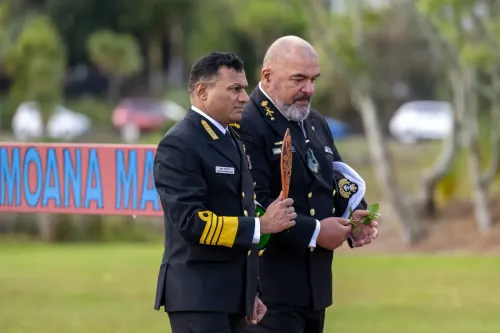
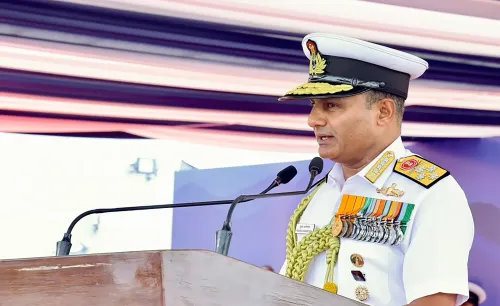
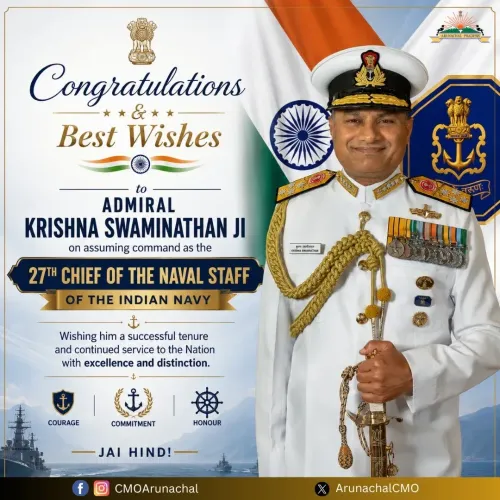
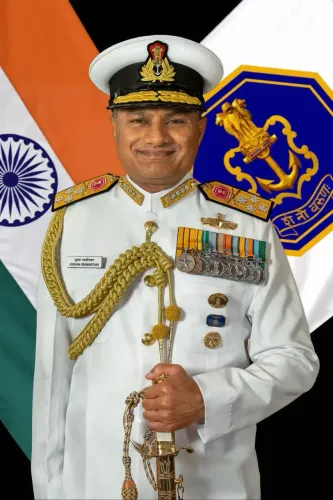
Navy Chief Admiral Swaminathan meets VP Radhakrishnan at Uprashtrapati Bhavan
Synopsis
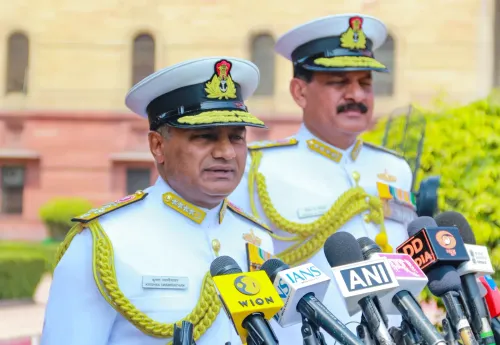
Days after calling on President Murmu, new Navy Chief Admiral Krishna Swaminathan met Vice President C. P. Radhakrishnan at Uprashtrapati Bhavan, presenting ceremonial mementoes and discussing defence and diplomacy. The back-to-back constitutional courtesy calls mark the 27th Navy Chief's formal civil-military introduction — and a signal of his priorities around jointness and indigenisation.
Key Takeaways
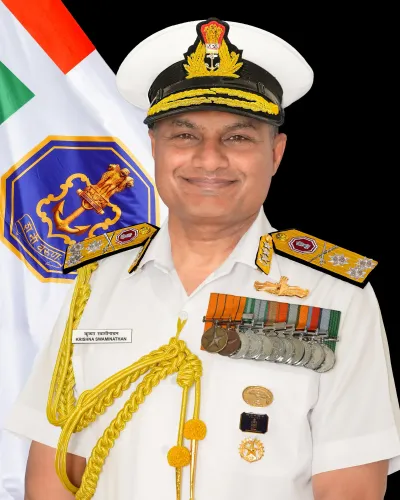
Admiral Krishna Swaminathan , the 27th Chief of the Naval Staff , met Vice President C.
Radhakrishnan at Uprashtrapati Bhavan on 15 June .
Topics discussed included governance, defence, and diplomacy , according to a Ministry of Defence official.
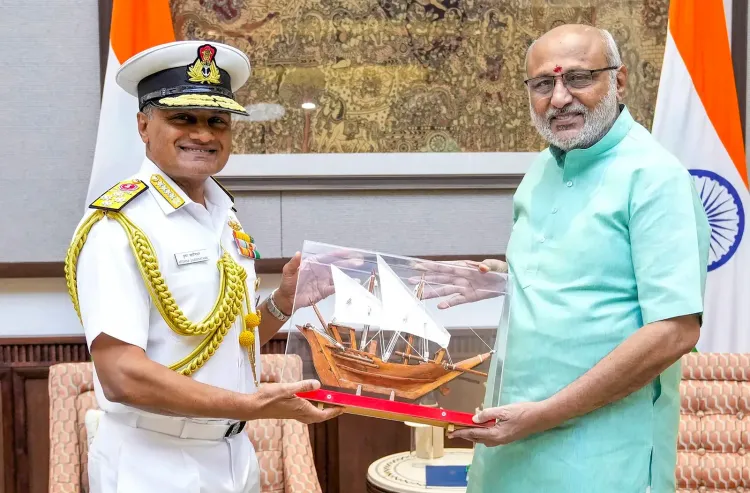
Admiral Swaminathan presented a ship model and a Navy ceremonial memento bearing the crest of the Chief of the Naval Staff.
He had earlier called on President Droupadi Murmu at Rashtrapati Bhavan on 10 June .
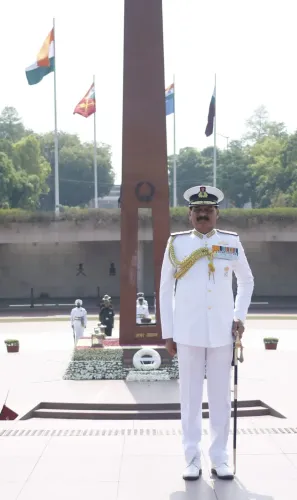
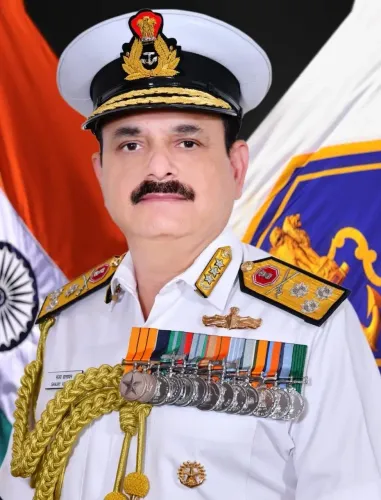
Admiral Swaminathan assumed charge on 31 May , succeeding Admiral Dinesh Kumar Tripathi who retired after 41 years of service.
His stated priorities include 'JAI' — Jointness, Atmanirbharata, and Indigenisation.
Admiral Krishna Swaminathan, Chief of the Naval Staff, called on Vice President C. P. Radhakrishnan at Uprashtrapati Bhavan in New Delhi on Monday, 15 June, in one of his early high-level engagements since assuming office as the 27th Chief of the Naval Staff. The meeting covered a range of subjects including governance, defence, and diplomacy, according to a Ministry of Defence official.
What Was Discussed
The two leaders informally touched upon issues spanning governance, defence strategy, and diplomacy, said the official. No formal joint statement was issued following the meeting, consistent with the protocol for such courtesy calls.
Ceremonial Mementoes Presented
Admiral Swaminathan presented Vice President Radhakrishnan with a ship model along with a Navy ceremonial memento bearing the crest of the Chief of the Naval Staff — a distinction typically conferred by the Indian Navy's highest-ranking officer. The exchange of such mementoes is a longstanding tradition in senior civil-military interactions.
Earlier Meeting With President Murmu
The visit follows a similar courtesy call Admiral Swaminathan made on President Droupadi Murmu at Rashtrapati Bhavan on 10 June, five days after assuming charge. Together, the two meetings mark the new Navy Chief's formal introduction to the country's constitutional leadership.
Admiral Swaminathan's Priorities
Since taking charge on 31 May, Admiral Swaminathan has consistently emphasised three pillars: Jointness, Atmanirbharata (self-reliance), and Indigenisation — collectively referred to as 'JAI'. He succeeds Admiral Dinesh Kumar Tripathi, who superannuated after 41 years of service.
Addressing the media after assuming command, Admiral Swaminathan said, 'I assume command with a deep sense of humility, responsibility, pride, and gratitude. Being selected by the top leadership of the country for this job has been the highest honour and privilege of my life.' He added that the Indian Navy 'stands vigilant' in a regional security environment that 'continues to remain challenging, complex, unpredictable, and uncertain,' and pledged to maintain the 'highest level of operational readiness and combat effectiveness' to protect the nation's security and economic interests.
With India's maritime domain growing in strategic importance — particularly in the Indian Ocean Region — the new Navy Chief's early outreach to constitutional authorities signals a focus on civil-military alignment as a foundation for his tenure.
Point of View
Now to Vice President Radhakrishnan — are protocol, but they are also political signalling. A new service chief who leads with constitutional outreach is establishing civil-military trust early, which matters in an environment where jointness and theatre commands remain contested within the armed forces. Admiral Swaminathan's emphasis on 'JAI' is pointed: indigenisation has been a stated goal for years, but the Navy's dependence on foreign platforms for submarines and carrier aviation remains substantial. The real measure of his tenure will be whether 'Atmanirbharata' moves from slogan to procurement order.
NationPress
15 Sept 2026
Frequently Asked Questions
Why did Navy Chief Admiral Swaminathan meet Vice President Radhakrishnan?
Admiral Krishna Swaminathan called on Vice President C. P. Radhakrishnan at Uprashtrapati Bhavan on 15 June as part of his early courtesy calls after assuming charge as the 27th Chief of the Naval Staff on 31 May. The meeting covered governance, defence, and diplomacy, according to a Ministry of Defence official.
What mementoes did Admiral Swaminathan present to the Vice President?
Admiral Swaminathan presented Vice President Radhakrishnan with a ship model and a Navy ceremonial memento bearing the crest of the Chief of the Naval Staff — a distinction typically extended by the Indian Navy's highest-ranking officer.
When did Admiral Swaminathan become Navy Chief?
Admiral Krishna Swaminathan assumed charge as the 27th Chief of the Naval Staff on 31 May 2025, succeeding Admiral Dinesh Kumar Tripathi, who superannuated after 41 years of service.
What are Admiral Swaminathan's key priorities as Navy Chief?
Admiral Swaminathan has highlighted 'JAI' — Jointness, Atmanirbharata (self-reliance), and Indigenisation — as his core priorities. He has also pledged to maintain the highest level of operational readiness and combat effectiveness to protect India's security and economic interests.
Has Admiral Swaminathan met other constitutional heads since taking charge?
Yes. Prior to meeting the Vice President, Admiral Swaminathan called on President Droupadi Murmu at Rashtrapati Bhavan on 10 June, five days after assuming command — making these two meetings his formal introductions to India's constitutional leadership.